

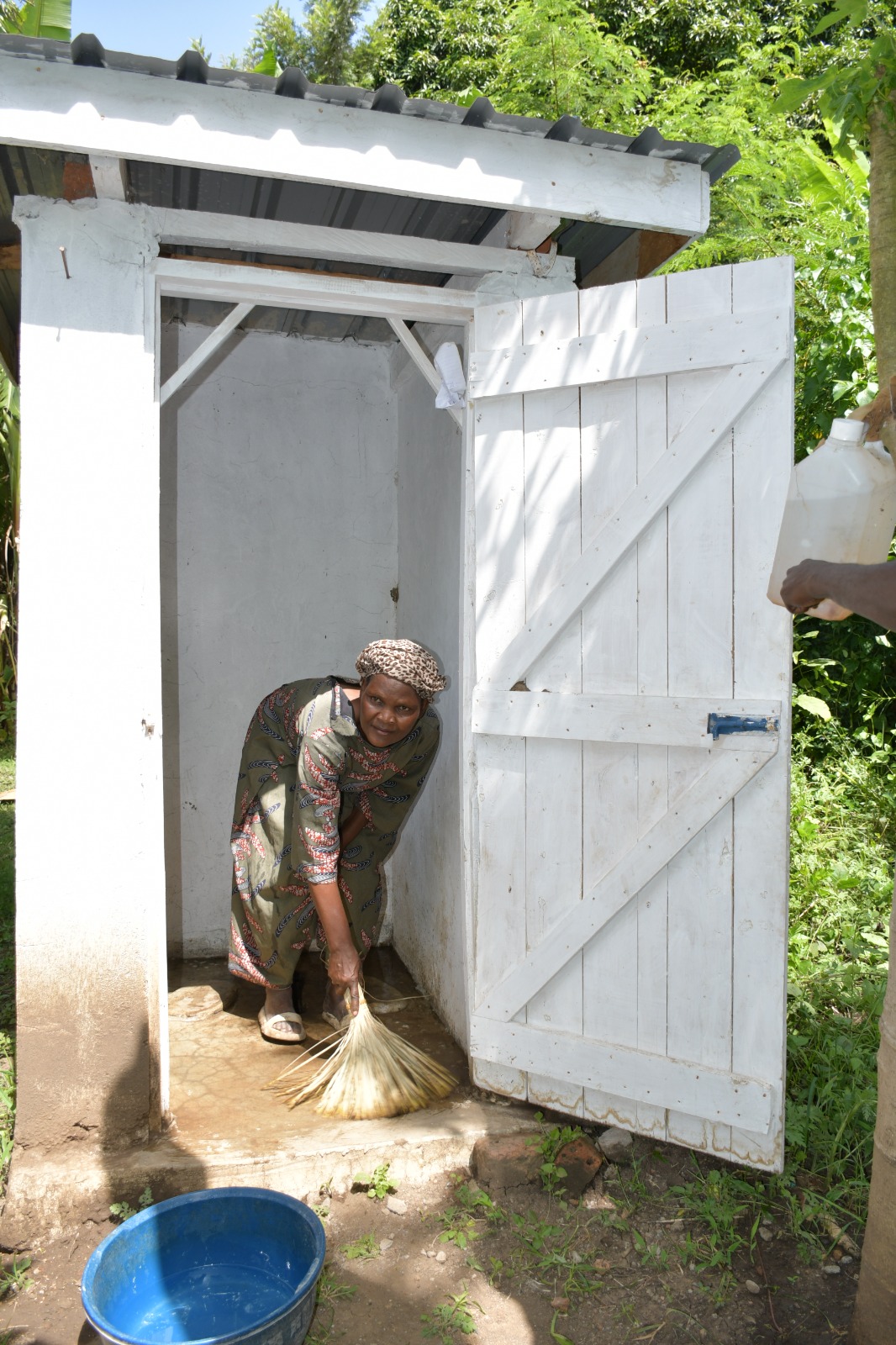
 Eunice Akinyi Ila, 53, cleaning her flood-resilient latrines built in Kagola East Village under the sanitation project by Habitat for Humanity Kenya/Faith Matete
 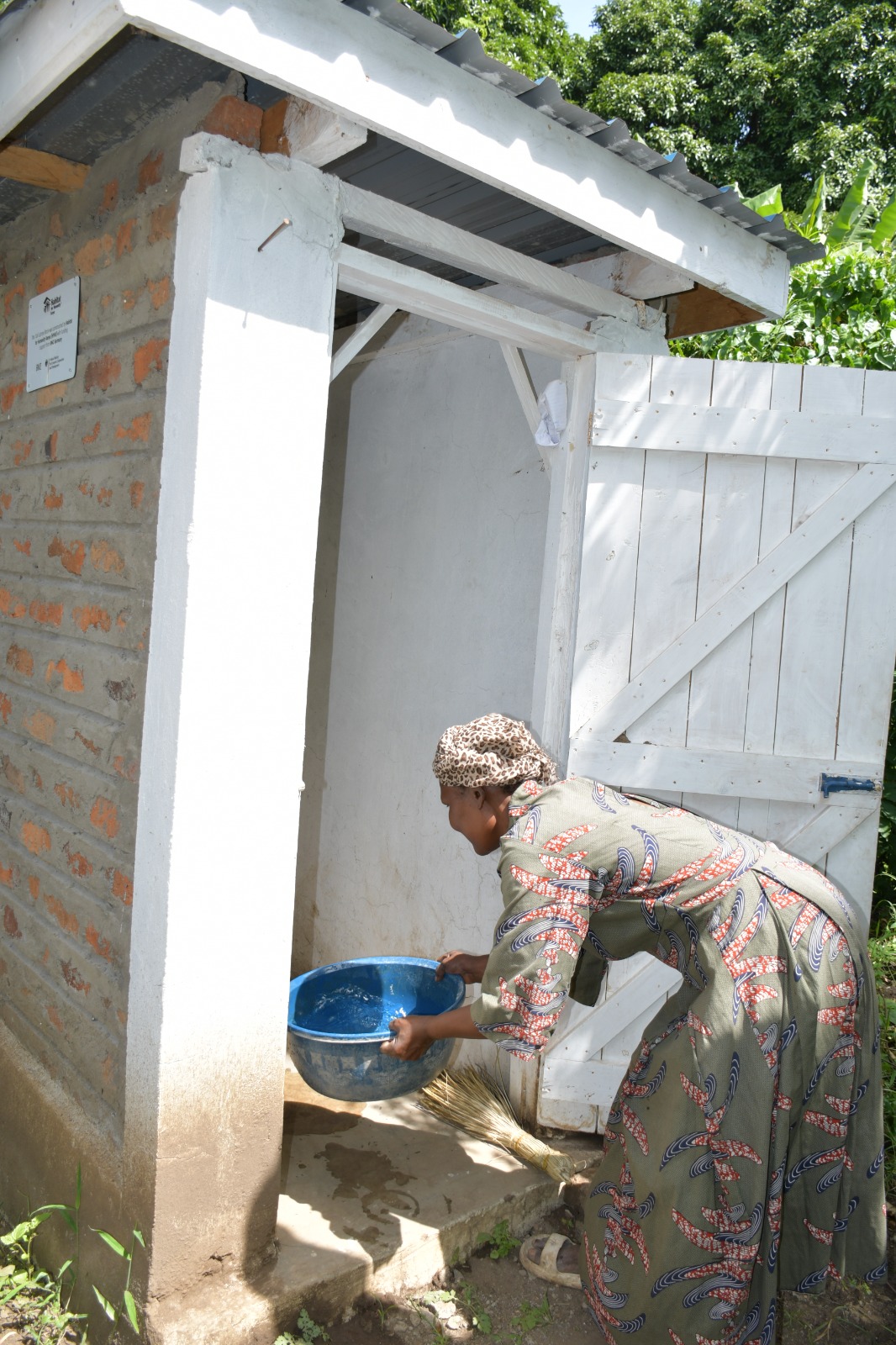 Eunice Akinyi Ila, 53, cleaning her flood-resilient latrines built in Kagola East Village under the sanitation project by Habitat for Humanity Kenya. Faith Matete
 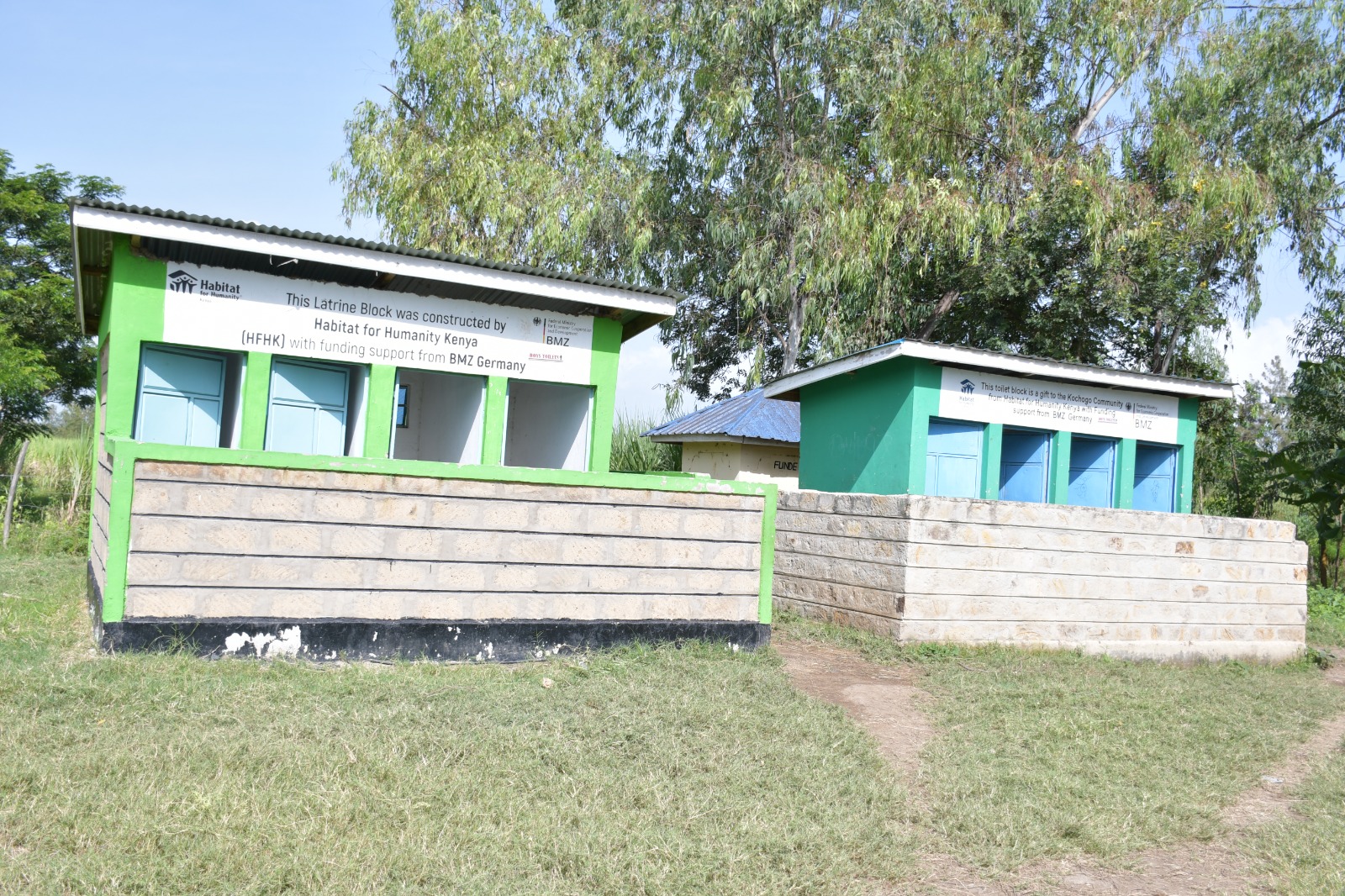 The flood-resilient latrines under the sanitation project by Habitat for Humanity Kenya built at Nyomwaro Primary School in Nyando Sub-County/Faith Matete
 For 72-year-old Jane Anyango Midi, every rainy season often came with fear.
Floodwaters crept into her homestead, swallowing her mud-walled house and washing away her latrine again and again.
At her home in Nyando, Kisumu county, she recalled years of uncertainty whenever dark clouds gathered over the River Nyando basin.
“In the last eight years, I have built more than eight toilets. All of them sank or were washed away,” she says.
During the most recent heavy rains, floodwaters rose above the windows of her house, destroying everything inside.
She escaped moments before her collapsing hut gave way.
Today, that fear has eased. Jane says a new flood-resilient house and toilet have changed her life, offering what she calls “peace of mind during rains.”
“We no longer suffer like before. Even when it rains heavily, we are safe,” she says.
For decades, sanitation in Kagola East village and surrounding areas has been fragile, with households relying on mud-walled pit latrines that rarely survived floods.
Eunice Akinyi Ila, 53, says her family of seven once shared a single pit latrine and makeshift bathing space; conditions she describes as both shameful and dangerous.
“When floods came, everything would collapse and sewage would mix with water sources. We had no choice but to use that water,” she says.
She recalls building toilets, seven in total, only for each to be destroyed by floods. Her children frequently suffered stomach illnesses linked to contaminated water.
“Sometimes we were embarrassed to even host visitors because of the smell and poor sanitation,” she adds.
Her husband, Gabriel Ila Okumu, 70, says the situation worsened during prolonged flooding, which submerged their grass-thatched house and left the family exposed.
That reality began to shift in 2023, when the family benefited from the Safi Latrine project implemented by Habitat for Humanity Kenya and partners, alongside improved housing support.
The intervention introduced flood-resilient toilets designed to withstand rising water levels and prevent collapse and contamination. Eunice says the change has been transformative.
“It has restored our dignity. We feel safe and comfortable even during floods,” she says.
Gabriel agrees, adding that the family can now use sanitation facilities without fear of contamination or destruction.
The improvements are part of a broader three-year project implemented between December 2022 and September 2025 by Habitat for Humanity Kenya, targeting flood- and drought-prone communities along the River Nyando basin.
Project manager Samwel Kiprop Kapsali says the intervention was designed to address two persistent challenges in the area: flooding during rainy seasons and severe water scarcity during dry periods.
The project combined infrastructure development with community capacity building.
“We learned that infrastructure alone is not enough. Community ownership is key for sustainability,” he says.
The project targeted about 4,000 people across 881 households in Kochogo South sublocation, covering six villages including Kokech, Kagola, Kabongo East, Kabola West and Kaswa.
At the centre of the intervention is a 201-metre borehole powered by solar energy, with a discharge capacity of 20.5 cubic metres per hour.
From this source, six village water kiosks were constructed, each serving surrounding households within recommended sphere standards of access to safe water.
Institutions such as Nyamuaro primary school, Dici primary school and Dici secondary school were also connected to the system.
Households contribute about Sh100 per month for water access, managed through a community account under the Kochogo South CBO.
Payments are made via M-Pesa or cash, with a flexible system that allows grace periods during difficult seasons.
Fighting floods with safer sanitation remains one of the biggest challenges in Nyando’s flood-prone villages.
Traditional pit latrines often collapse, contaminating water sources and increasing the risk of disease outbreaks.
In partnership with the County Government of Kisumu, the project introduced the Safi Latrine technology, lined, flood-resistant toilets designed to withstand waterlogging and prevent sewage leakage.
Local artisans were trained to construct the facilities, ensuring skills remain within the community.
So far, the project has supported multiple households and institutions, including churches, to adopt the technology.
Skills, livelihoods and community ownership: Beyond water and sanitation, the project also focused on livelihoods.
About 30 artisans were trained in construction and sanitation technologies, while 40 households received training in soap making and 30 women were trained in nursery establishments.
In total, about 100 community members directly benefited from skills development initiatives.
The community has also expanded water access independently, including connections to Riat market and selected households under approved arrangements.
Nyando subcounty water officer Emma Oginga said the sanitation intervention has significantly improved public health outcomes.
Previously, flood seasons often triggered spikes in waterborne diseases, with Ahero County Hospital reporting increased admissions and even dedicating a ward for such cases.
“Since the introduction of flood-resilient latrines and improved water systems, we have not recorded similar admissions this year despite the floods,” she says.
Preliminary data from the area suggests a decline in waterborne disease cases in 2026.
For residents like Jane and Eunice, the changes are not just about infrastructure; they are about dignity, safety and survival in a landscape where floods have long dictated daily life.