

Imagine growing up in a region rich in potential yet disconnected from one of the most basic engines of modern economic life: reliable and affordable electricity. Imagine your child doing homework by kerosene or paraffin lamp (koroboi) while the rest of the country learns, works and builds businesses in a digital economy powered by reliable electricity. Imagine trying to run a business or access healthcare in an economy increasingly powered by digital connectivity, while your native community remains dependent on costly and unreliable power systems. This is how the people of Lodwar and the wider Turkana region have had to live for years.
For decades, Northern Kenya has stood at the edge of the national economy awaiting the power promise for decades since independence- limited by inadequate infrastructure and connectivity. Today, that reality is steadily changing.
The ongoing connection of Lodwar and the wider Turkana region to Kenya’s national electricity network is not merely an energy project. It is a practical expression of the Bottom-Up Economic Transformation Agenda (BETA) priorities, is simple but profound: that development must reach every part of the country and create opportunity for every Kenyan. It recognizes that sustainable economic growth cannot be achieved if vast parts of the country remain disconnected from the infrastructure that powers enterprise, innovation and productivity. Roads, electricity, water, airports, railway and digital connectivity are not luxuries. They are the foundations upon which modern economies are built.
That is why connecting Turkana to the main power grid matters.
For years, much of Lodwar relied on isolated diesel-powered electricity systems that were expensive, unreliable and insufficient for a region with growing economic ambitions. Frequent outages and high operational costs limited business expansion, constrained public services and made investment more difficult. Weeks of darkness mean lost business, lives and livelihoods
Connection to the national grid changes that trajectory fundamentally- it is historic.
Reliable and affordable electricity means traders can preserve goods through refrigeration and cold storage. It means small enterprises can operate more efficiently and for longer hours. It means schools can access digital learning technologies, hospitals can run critical medical equipment more reliably and households can enjoy improved quality of life. It also means that the residents are assured of living in a secure region.
In essence, electricity powers productivity.
This directly supports President William Ruto’s focus on expanding economic opportunities at the grassroots level across the 47 counties. A young entrepreneur in Lodwar deserves the same opportunity to build a business, access digital markets or create jobs as someone in Nairobi, Kisumu or Mombasa. Infrastructure is what levels that playing field.
Importantly, the larger Turkana region itself represents one of Kenya’s greatest untapped growth frontiers. The region possesses immense renewable energy potential, strategic transport linkages, fishing, mineral resources and emerging oil prospects. It is already serviced by a modern Kitale-Lodwar-South Sudan (Juba) transport corridor with optic fibre backbone.
Yet for many years, local communities remained insufficiently connected to the very economic transformation taking place around them.
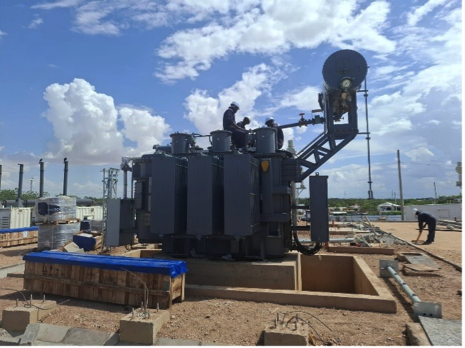
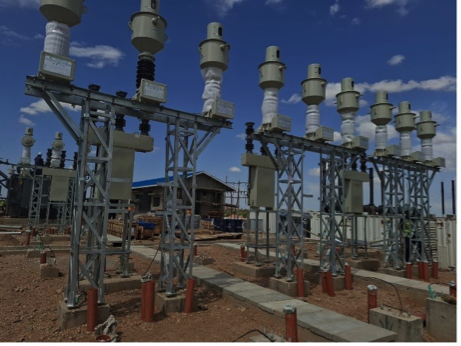
According to reports by Kenya Power, this Ksh.1.0 billion project, involving about 100 kilometres of 66kV transmission line from Turkwel side and a new sub station in Lodwar town, is expected to be completed and commissioned anytime from September 2026. This transformative investment will significantly reduce reliance on thermal diesel generation which costs approximately Ksh. 900 million annually. Engineer Jared Biwott, manager for Turnkey Projects at Kenya Power, also observes that, this project will see health facilities, digital hubs, schools, Turkana University, technical training institutions, government installations, businesses and villages powered thus promote inclusive growth anticipated under BETA.
History shows that nations which successfully transformed their economies invested heavily in infrastructure long before prosperity fully arrived. Singapore, for instance, understood that reliable electricity and connectivity were essential foundations for industrial growth, investor confidence and social mobility. Kenya’s ongoing efforts to connect historically underserved regions such as Turkana to the national grid reflect a similar understanding: that inclusive development cannot happen where opportunity remains physically disconnected from the people.
The connection of Lodwar to the national grid therefore reinforces Kenya’s commitment to sustaibable growth that will strengthen national cohesion, economic inclusion, security and social equity. By integrating Lodwar into the national grid, the country will begin to expand its access to electricity generated increasingly from renewable sources such as geothermal, wind, hydro and solar energy.
This is smart economics and responsible development. This is impact delivery.
When citizens in
historically underserved regions see infrastructure investments reaching their
communities, they see tangible proof that development belongs to them too. They
begin to feel connected not only physically, but economically and socially to
the nation’s future. We anticipate higher incomes, safer communities, better
sense of pride and nationhood – shared prosperity.