


Ensuring a reliable water supply is a collective responsibility that relies on the civic duty of all Nairobi residents.
The unauthorised diversion or stealing of water directly deprives fellow citizens of essential public resources and disrupts the entire distribution network.
In line with the updated provisions of the Water Act, enforcement measures have been heavily intensified.
Individuals or entities found guilty of water theft, meter tampering, or illegal connections face stringent legal action and steep penalties of up to Sh1 million. We urge all residents to protect our shared resources by reporting illegal activities immediately.
NCWSC believes that access to affordable water and sanitation is a fundamental public service that should be available to every Nairobian, regardless of where they live.
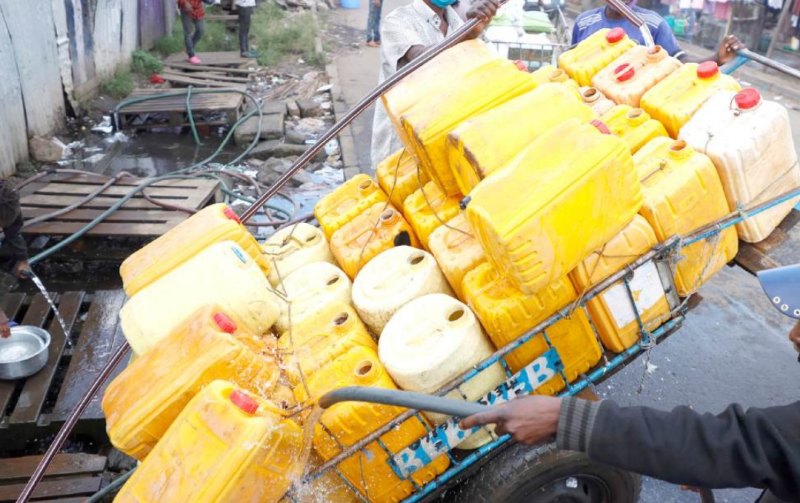
Where piped services are limited, residents often rely on private vendors and, in some instances, illegal water resellers who charge prices well above the regulated tariff.
To address this, NCWSC has installed 257 Water ATMs (also referred to as prepaid dispensers) across informal settlements, including Mukuru kwa Reuben, Mathare, Kiambiu and Githogoro, allowing thousands of residents to access clean and safe drinking water at the regulated social tariff of Sh2 per 20-litre jerrycan.
A water ATM, also referred to as a prepaid dispenser or PPD, is a smart water distribution system that allows customers to buy water in advance and access it electronically using a prepaid token, card, or digital account.
It is a smart water kiosk connected to the Nairobi water distribution system. With daily demand at 925,000 cubic metres and available supply at 669,000 cubic metres, Nairobi simply does not yet have enough water to provide a continuous supply to every customer.
Distribution schedules, where every part of Nairobi is accounted for within the days of a week, are based on reservoir levels, available production, network pressure, elevation, pipeline capacity, maintenance requirements and the need to distribute available water as equitably as possible.
NCWSC communicates the distribution schedule and any distribution interruptions through the mainstream media and has strengthened customer engagement through published schedules on social media platforms.