

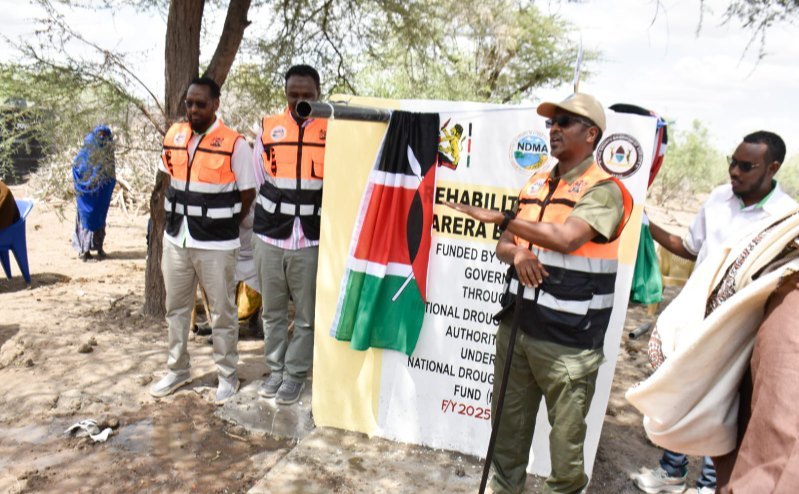
 NDMA CEO Hared Adan speaking during the commissioning of
the Arera Borehole in ShantaAbaq Sub-County. / STEPHEN ASTARIKO
NDMA CEO Hared Adan speaking during the commissioning of
the Arera Borehole in ShantaAbaq Sub-County. / STEPHEN ASTARIKO
The drought situation across the country is average with all counties now classified under the normal drought phase.
The National Drought Management Authority however said some regions may drift towards the alert phase in just two months.
"In terms of drought classification nationally, all counties are currently in the normal phase. But within the next two months, some of the counties might drift to alert phase. But between now and end of July, we expect the drought status to be normal as it is,” NDMA chief executive Hared Adan said.
He spoke when he commissioned the rehabilitated Arera Borehole in Shanta Abaq subcounty in Garissa.
Adan said investments in resilience remain
critical so that communities are protected before conditions deteriorate.
“I want to
underscore the need for continued vigilance and sustained investment in drought
resilience. This water project that we are jointly commissioning with the
county government is a clear testimony of our intention to address the drought
situation,” he said.
The
rehabilitation of the strategic borehole was undertaken in response to
increasing pressure on the existing water source, which had exposed communities
to recurrent shortages, livestock losses and declining livelihoods.
Completed
at a cost of Sh1.7 million, the project involved the construction of a
fabricated steel water tower, installation of two elevated 10,000-litre water
storage tanks with a combined storage capacity of 20,000 litres, construction
of four livestock watering troughs, and installation of new plumbing systems,
distribution pipelines and associated fittings.
The new
infrastructure replaces hand-dug watering points that communities had relied on
for years, significantly improving water efficiency, reducing water losses and
enhancing access for livestock.
It will
serve about 200 households and approximately 4,500 head of livestock, mainly
cattle, during dry seasons, making it a vital asset for residents.
Adan said the rehabilitation forms part of the government's broader drought
response and resilience programme.
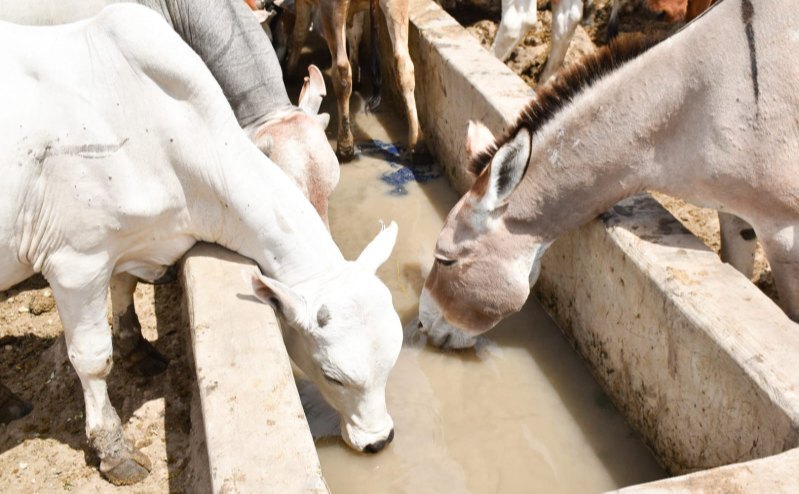
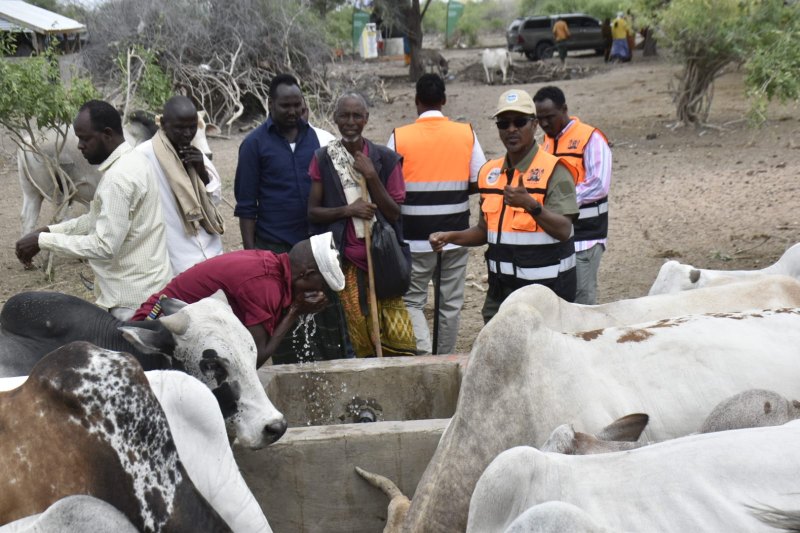
Livestock drinking water from the rehabilitated borehole in Arera, ShantaAbaq Sub-County. / STEPHEN ASTARIKO
“The
project forms part of the government's long-term strategy of strengthening
drought resilience through investments in durable water infrastructure that
reduces vulnerability and dependence on costly emergency response interventions,”
he said.
He said the authority received repeated appeals from the community to rehabilitate the borehole after livestock were forced to drink from hand-dug troughs, resulting in significant water losses and inefficient use of an already scarce resource.
"NDMA responded by mobilising resources to rehabilitate the borehole and investing in improved water storage and livestock watering infrastructure to ensure a more reliable, efficient and sustainable water supply," he said.
Investing in resilient water infrastructure remains the most
sustainable way of reducing the devastating human and economic impacts of
drought.
"Our
focus is to reduce the cost of responding to drought by investing in long-term
solutions that strengthen community resilience before crises occur. Every
resilience investment protects livelihoods, safeguards development gains and
reduces future expenditure on emergency response," Adan said.
He urged residents to take collective responsibility for protecting the
facility to ensure it serves both present and future generations.
Garissa
chief officer for water Mohamed Ibrahim lauded the partnership between
the county government and NDMA, saying the project complements investments
already undertaken by the county.
“I wish to sincerely appreciate NDMA for
its continued support. The county drilled this strategic borehole, while NDMA
came in to provide the storage facilities and livestock watering
infrastructure, making the project complete," he said.
Ibrahim noted
that Arera occupies a strategic location bordering Isiolo and Wajir counties,
making the borehole an essential water source not only for local residents but
also for neighbouring communities.
"This
is a strategic water point serving communities beyond Garissa county. We will
put in place sustainability mechanisms to ensure this borehole continues
operating efficiently and serves its intended purpose for many years," he
added.
Abdi Mohamed, speaking on behalf of the residents, welcomed the project, describing it as a life-changing intervention after years of enduring severe water shortages.
He said they had for decades walked long distances in search of water, often
using donkey carts, with women and children bearing the greatest burden.
"For many years we suffered because of lack of water. It affected our children's education because they sometimes had to accompany us instead of going to school. Pregnant women suffered greatly because of the long journeys, and our livestock also endured severe hardships," he said.
"Today, words alone cannot express how grateful we are because this project has transformed our lives."
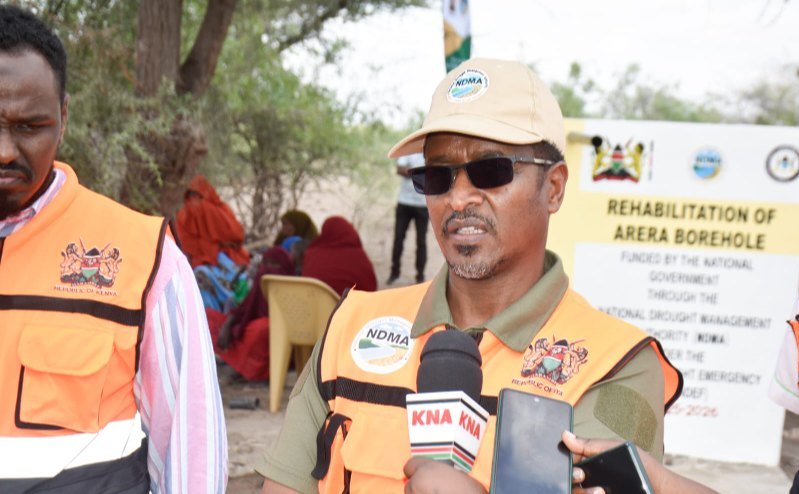 NDMA CEO Hared Adan speaking to the press after
commissioning the Arera Borehole in ShantaAbaq Sub-County. / STEPHEN ASTARIKO
NDMA CEO Hared Adan speaking to the press after
commissioning the Arera Borehole in ShantaAbaq Sub-County. / STEPHEN ASTARIKO
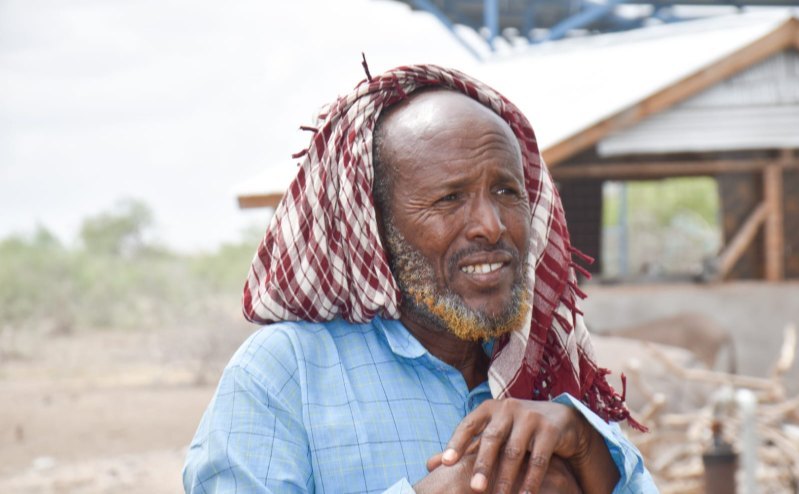 Abdi Mohamed, a resident of Arera, ShantaAbaq Sub-County. /
STEPHEN ASTARIKO
Abdi Mohamed, a resident of Arera, ShantaAbaq Sub-County. /
STEPHEN ASTARIKO
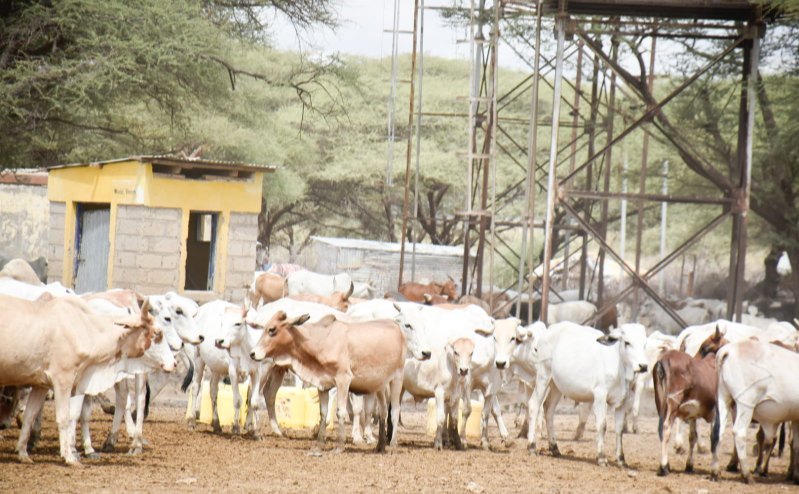 Livestock at a watering point in Arera, Shanta Abaq sub-county./STEPHEN ASTARIKO.
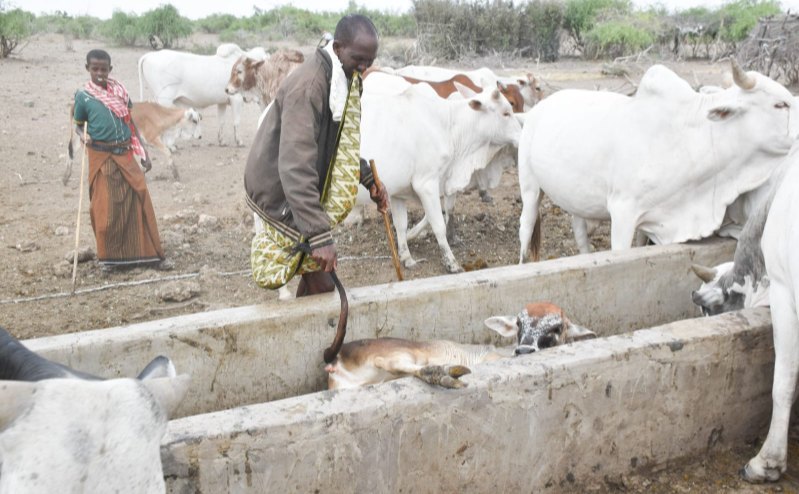 A liverstock harder pulls out a cow that had fallen in the trough while scrambling for water./STEPHEN ASTARIKO