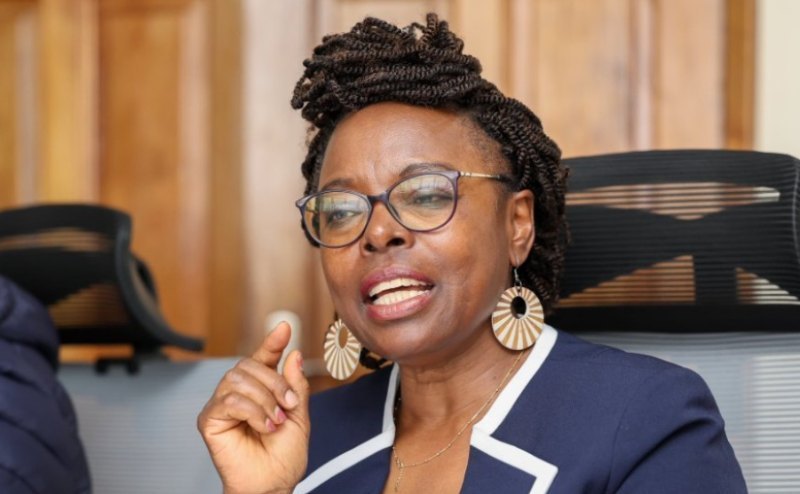


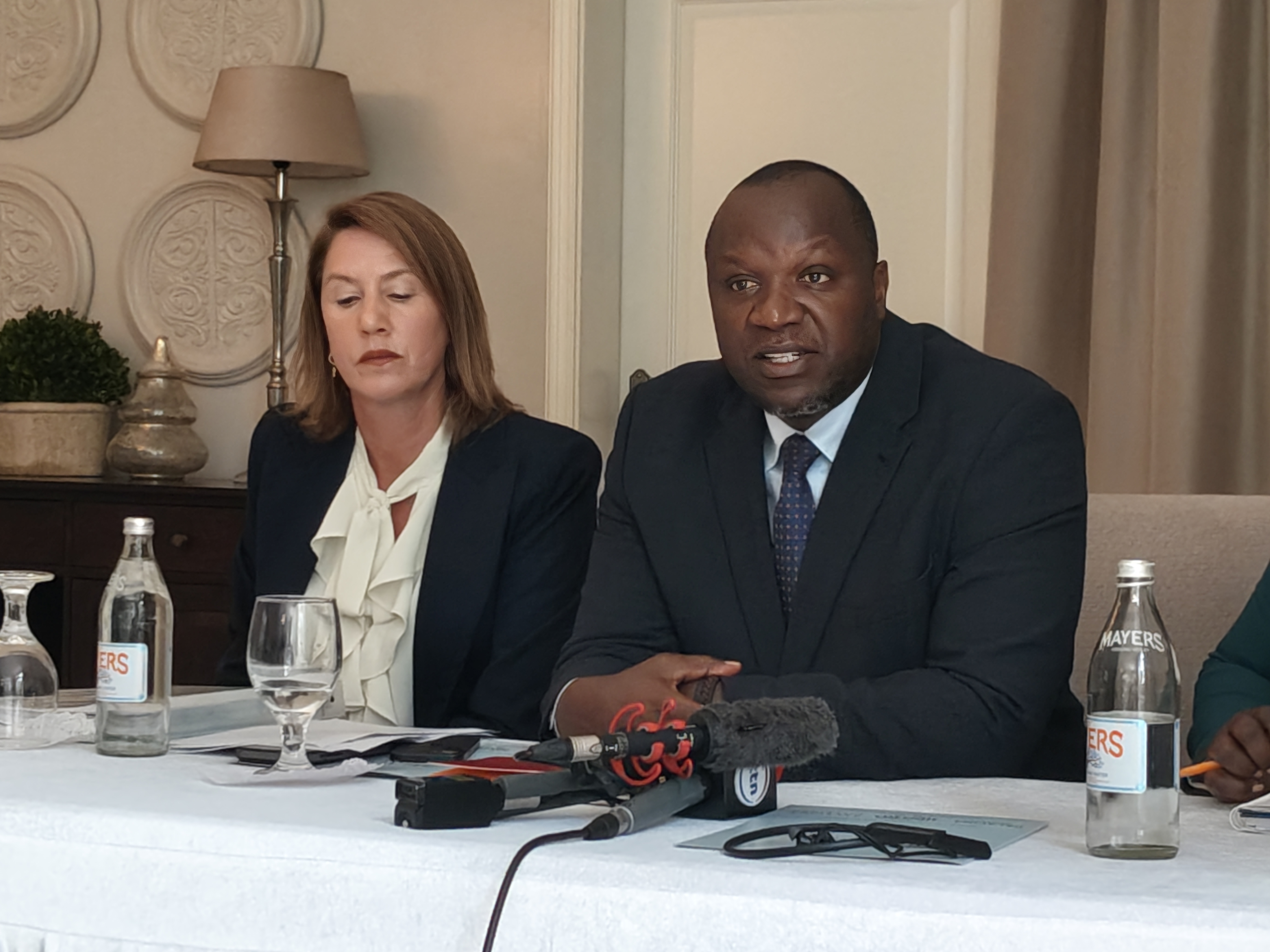
 Legal Action Worldwide (LAW) executive director Antonia Mulvey and Senior Counsel Willis Otieno during a media roundtable session in Nairobi /JACKTONE LAWI
Kenya's diplomatic relations with Sudan could face renewed pressure after international human rights organisations filed a war crimes complaint in Nairobi to investigate cases in South Sudan.
The groups are urging Kenyan authorities to investigate senior members of Sudan's Rapid Support Forces (RSF) under Kenya's universal jurisdiction laws.
Legal Action Worldwide (LAW) and the African Centre for Justice and Peace Studies (ACJPS) on Monday submitted a 196-page complaint to the Office of the Director of Public Prosecutions (DPP).
They are seeking investigations into 10 RSF commanders (whose names were withheld) accused of war crimes and crimes against humanity committed during Sudan's ongoing conflict.
The case is the first attempt to invoke Kenya's International Crimes Act of 2008 to prosecute international crimes committed outside the country's borders.
This places the country at the centre of one of Africa's most sensitive accountability battles.
"The Kenyan public is aware that some of the perpetrators are travelling freely in and out of Kenya. Kenya should not be a safe haven for war criminals," LAW executive director Antonia Mulvey said.
The complaint was filed on behalf of 12 Sudanese victims who alleged that they were tortured, raped, sexually enslaved, arbitrarily detained and witnessed family members being killed in and around Khartoum during the conflict that erupted in April 2023.
At the heart of the case are allegations that several of the persons of interest maintain citizenship, political or financial links to Kenya and have been travelling freely in and out of the country.
The rights groups argue that this creates both a legal obligation and an opportunity for Kenya to act.
The push places Kenya in a delicate position, given Nairobi has sought to maintain a diplomatic role in regional peace efforts while also deepening economic and political engagement across the Horn of Africa region.
Any decision by the DPP to open investigations into Sudanese actors could trigger diplomatic friction, particularly given Sudan's sensitivity to foreign legal actions targeting parties involved in its civil war.
Kenya had initially found itself in the middle of the conflict after arms alleged to have been supplied by the Kenyan government were found in some regions.
However, lawyers behind the complaint insist justice obligations should supersede diplomatic considerations.
Lawyer Willis Otieno said Kenya possesses sufficient legal instruments through the International Crimes Act and the Rome Statute framework to investigate and prosecute international crimes where evidence exists, regardless of where they were committed.
"Kenya, as a member of the international community, has a responsibility to act where individuals linked to atrocities are present within its jurisdiction. The case also points to a growing accountability gap in Sudan,” Otieno said.
While the International Criminal Court retains jurisdiction over crimes committed in Darfur, it does not investigate crimes committed in Khartoum, where many of the alleged abuses detailed in the complaint occurred.
According to Otieno, Sudan's domestic justice system is currently unable to effectively prosecute such cases because of the ongoing conflict.
The complaint alleges that victims were detained in locations including Soba Prison, the Al-Riyadh complex and other informal detention centres, where sexual violence, torture and other abuses were systematically used against civilians.
The case could establish a legal precedent if prosecutors proceed, as it would mark Kenya's first use of universal jurisdiction provisions to pursue foreign war crime suspects.