

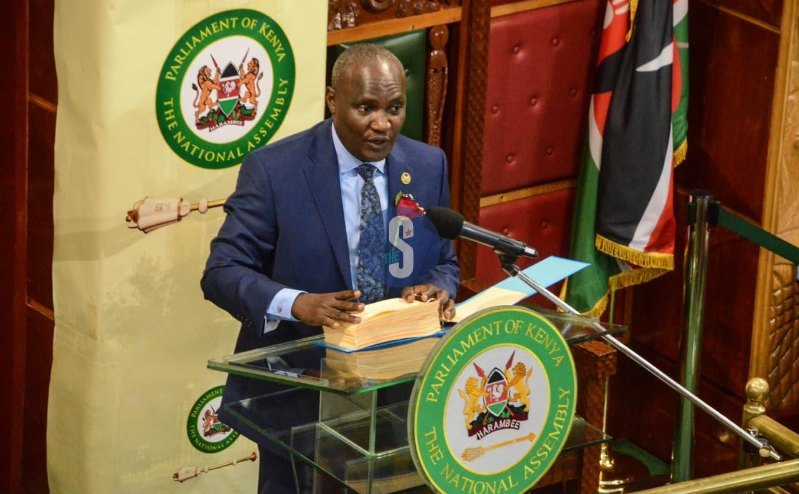
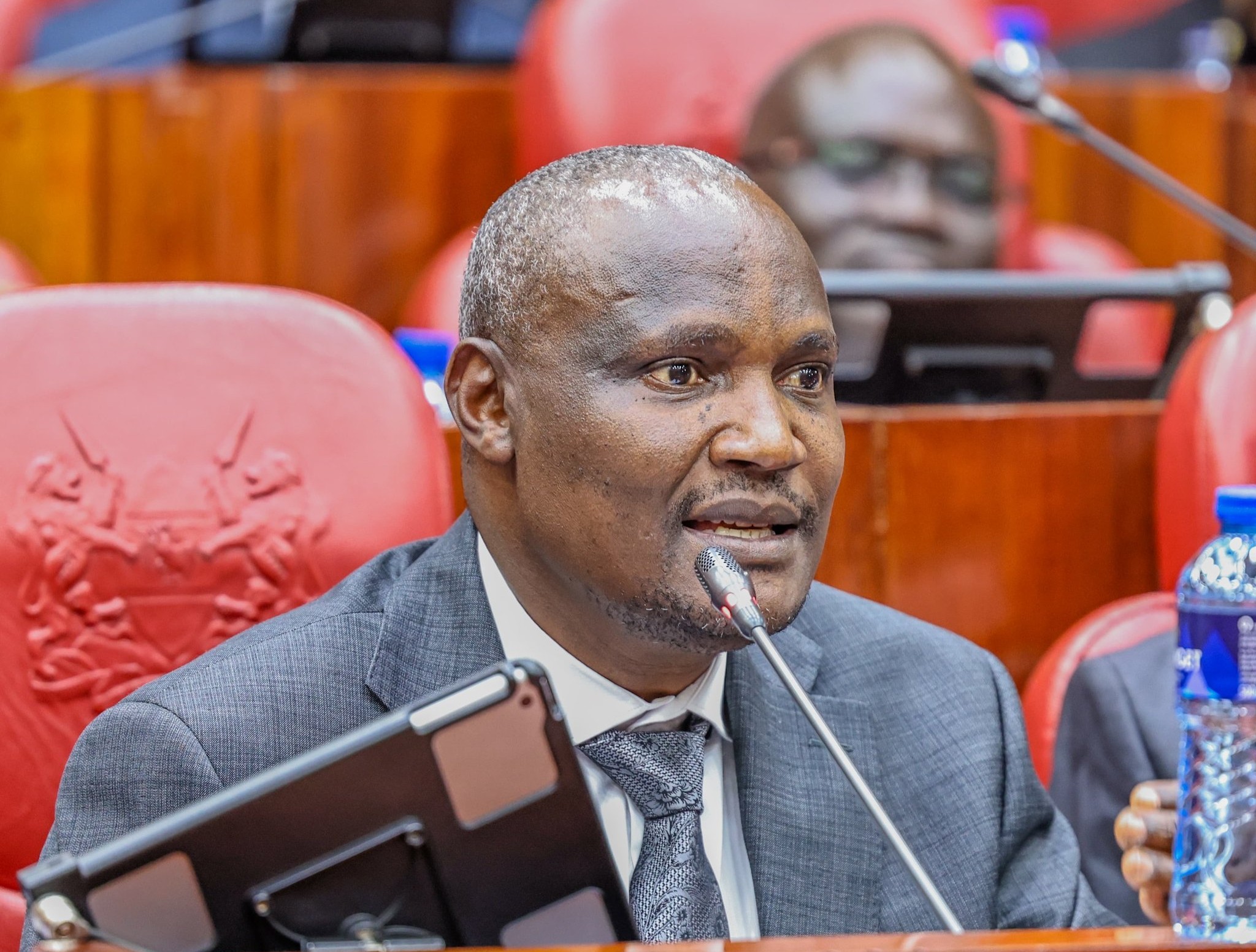
 National Treasury CS John Mbadi appearing before the National Assembly on May 25, 2026. /FILE
National Treasury and Economic Planning Cabinet Secretary John Mbadi has defended the rollout of the Electronic Government Procurement (e-GP) system, saying the platform is already improving transparency and efficiency in public procurement and could eventually save the country up to Sh85 billion.
Appearing before the Senate to respond to a question by Nominated Senator Catherine Mumma on the implementation of the system across national and county governments, Mbadi said the digital platform is steadily transforming how public entities procure goods and services.
The Treasury officially announced the e-GP system and directed all public procuring entities to migrate their procurement processes online from July 1, 2025.
Mbadi said the reform was aimed at aligning public procurement with Article 227 of the Constitution, which requires procurement systems to be fair, equitable, transparent, competitive and cost-effective.
“EGP is a system that automates procurement processes from bid submission, tender opening, to the tender award,” Mbadi said.
“The system minimises human interaction, which traditionally has been a major source of corruption, favouritism and solicitation of facilitation fees.”
According to the CS, the system is built on the Open Contracting Data Standard, enabling procurement data to be made available for public scrutiny and strengthening accountability in government spending.
He said members of the public, suppliers and oversight agencies can now monitor tenders from submission through to award.
“Members, oversight bodies, suppliers and the public can monitor the status of tenders from submission to award,” he said.
As of May 2026, Mbadi told senators, 1,543 public procuring entities had already been registered and onboarded onto the platform, with 679 entities publishing their consolidated annual procurement plans through the system.
He added that more than Sh12 billion worth of procurement transactions had been processed through the platform since its rollout, up from about Sh9 billion recorded earlier.
“As we speak, not less than Sh12 billion have been processed, and every day we are closing not less than 30 tenders,” Mbadi said.
The Treasury projects that once the system matures and is fully adopted across government, it could generate savings of up to Sh85 billion through reduced procurement costs, increased transparency and better value for money.
However, Mbadi acknowledged that it was still too early to quantify actual savings from the system, noting that existing figures remain projections rather than independently audited results.
“There is no verified figure for total savings realised from the EGP rollout yet, as the system is in the initial phase of takeoff,” he said.
The CS pointed to several early gains, including shorter procurement timelines, improved audit trails and tighter integration with government systems.
The platform has already been linked with the Integrated Financial Management Information System (IFMIS), the Kenya Revenue Authority's iTax platform, the Business Registration Service and population registries to improve verification and accountability.
“This enhances authenticity for users and embeds EGP in broader government digital infrastructure,” Mbadi said.
To support implementation, the Treasury has trained more than 2,000 procurement officers through trainers of trainers programmes, while over 40,554 public finance management officers from national and county governments have undergone virtual training.
The government has also established a technical support centre at the Kenya Institute of Supplies Management Towers in Nairobi, rolled out supplier training through the Kenya National Chamber of Commerce and Industry and set up support desks at Huduma Centres countrywide.
Despite the progress, county-level adoption of the system remains uneven, raising questions about compliance with Treasury directives.
Mbadi told senators that only 20 of Kenya’s 47 counties had at least one active contract on the e-GP system as of May, meaning 27 counties had no contracts on the platform at the time of reporting.
The disclosure is politically significant given that the Senate’s constitutional mandate includes protecting devolution and oversight of county governments.
Kisumu emerged as the leading county in the use of the platform, recording 467 contracts worth Sh1.39 billion.
Siaya followed with 163 contracts valued at Sh851 million.
Other counties with active contracts included Murang’a, Baringo, Uasin Gishu, Vihiga, Busia, Nandi, Bomet, Samburu, Migori, Homa Bay, Trans Nzoia, Lamu, Elgeyo Marakwet, Kakamega, Tharaka Nithi, West Pokot, Machakos and Kajiado.
Mbadi urged lawmakers to support the procurement reform, describing it as a critical public finance management tool capable of reducing corruption and enhancing accountability.
“I call upon this honourable House to support this critical PFM reform, which upon maturity is expected to give value for money and secure savings of up to Sh85 billion,” he said.