

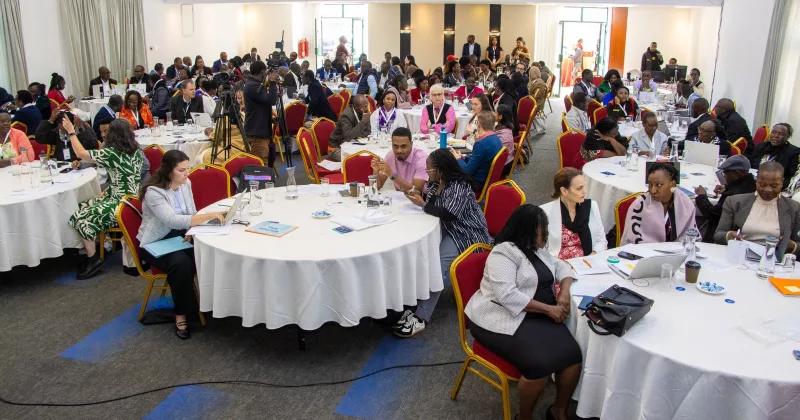
 Delegates from Africa and beyond gathered in Nairobi for the Global Symposium Series 2026. /MIZIZI AFRIKA
Young people must move from being passive recipients of education to active partners in designing the future of learning, education leaders said on Thursday as the Global Symposium Series 2026 opened in Nairobi.
The opening plenary centred on the need to place youth at the heart of education systems transformation, with speakers arguing that lasting reforms will only be achieved when learners are recognised as co-creators of knowledge whose voices help shape policy, research and practice.
The symposium, organised by Mizizi Elimu Afrika in partnership with EducAid Sierra Leone and the Center for Universal Education at Brookings, has brought together educators, researchers, policymakers, development partners and young people from Africa, Asia, Latin America and North America to explore collaborative solutions to education challenges.
Speaker after speaker returned to the idea that meaningful education reform will only succeed if learners are recognised as active partners in designing the systems meant to serve them.
Throughout the discussions, youth were portrayed not as future leaders waiting on the sidelines, but as today's innovators, researchers and decision-makers whose experiences should inform education policy from the outset.
Discussions also highlighted the need for stronger African-led research to drive education reforms across the continent.
Delegates stressed that while global collaboration remains important, African countries should increasingly generate their own evidence and locally grounded solutions capable of addressing the unique realities facing their education systems.
Climate education also featured prominently, with participants calling for greater investment in equipping learners with the knowledge and skills needed to respond to the growing climate crisis.
They argued that climate literacy should be embedded across education systems to prepare young people for a rapidly changing world.
The conversations reflected a growing consensus that transforming education requires more than curriculum reforms.
Instead, participants said, meaningful change will depend on empowering young people as partners in learning, investing in home-grown research and ensuring education systems prepare learners to tackle emerging global challenges.
The symposium comes at a time when Kenya, like many other African countries, continues to implement reforms aimed at improving learning outcomes, expanding equitable access to quality education and strengthening support for teachers.
Deliberations at the high-level forum are expected to continue focusing on practical, locally driven solutions that can strengthen education systems while contributing to global learning and collaboration.