However,
the illness is often followed by more debilitating stigma in the form of
whispers from neighbours, fear from friends and pressure to keep the condition
hidden from the public.
Now
the government is taking a major step to change that.
The
Ministry of Health has started developing a national roadmap to fight stigma
and discrimination against people living with mental and neurological
conditions, in a move aimed at helping millions of patients seek treatment
earlier and live fuller lives.
The
Ministry of Health, Aga Khan University's Brain and Mind Institute and
Newcastle University launched the process during a meeting that brought
together government officials, doctors, researchers, patient groups and
families of affected people.
The
roadmap will focus on conditions such as epilepsy, Parkinson's disease,
dementia and other neurological disorders that often leave patients isolated,
feared or excluded by families and communities.
Health
experts say stigma remains one of the biggest barriers to treatment in Kenya.
Many people delay seeking help because they fear being laughed at, rejected,
denied jobs or labelled as cursed or bewitched.
Dr
Mercy Karanja, director of the division of mental
health, said
reducing stigma is critical because fear of judgement often stops people from
seeking help.
“The
Ministry of Health remains unwavering in its commitment to ensuring that every
citizen, including those living with mental, neurological, and substance use
disorders, receives the quality care they deserve. This is not just a health
policy goal; it is a constitutional right under Article 43(1)(a) of our
Constitution (2010)."
She
added: “The creation of this roadmap encourages multisectoral collaboration,
which is our only viable path toward ensuring people living with neurological
conditions are understood, supported and able to access the care they need.”
Studies
show that up to nine per cent of Kenyan children live with neurodevelopmental
disorders, while epilepsy alone causes almost 40 per cent of neurological
disability in rural communities.
The
new roadmap aims to improve access to care and support by bringing together
policymakers, healthcare workers, advocacy groups, caregivers and people living
with the conditions themselves.
The
initiative is part of Kenya's efforts to implement the World Health
Organisation's Intersectoral Global Action Plan on Epilepsy and Other
Neurological Disorders, which calls on countries to establish national
awareness and advocacy programmes by 2031.
The
roadmap builds on findings from the British Academy-funded Canvas for Change
project led by Aga Khan University's Brain and Mind Institute in collaboration
with Newcastle University.
The
project used participatory theatre, documentary storytelling and community
dialogue to understand how stigma affects people living with neurological
conditions across Kenya.
Those
findings will help identify priority actions, define who is responsible for
carrying them out and create a coordinated national response to improve
awareness and inclusion.
According
to the WHO, one in every four Kenyans seeking
healthcare services has a mental health condition. Yet many suffer in silence
because of fear, shame and discrimination.
People
living with mental illness often face rejection from family members, friends
and employers. Some are hidden away at home while others are abandoned or
denied opportunities at school and work.
People
with epilepsy are among those most affected.
Studies
conducted in Kenya have found that many people still believe epilepsy is caused
by witchcraft, evil spirits or curses. Others wrongly think the condition is
contagious.
The
Kenya Association for the Welfare of People with Epilepsy has previously warned
that stigma causes many patients to avoid seeking treatment even when effective
medicines are available.
Health
experts say these beliefs delay diagnosis, increase suffering and make it
harder for patients to live normal lives.
Neurological
conditions are among the leading causes of disability worldwide, yet stigma
remains one of the biggest barriers to early diagnosis, treatment and social
inclusion.
Many
people continue to delay seeking care because of discrimination, myths and fear
of being ostracised, making stigma reduction a major public health priority.
The
Naivasha meeting is expected to produce a practical implementation plan
complete with activities, timelines and responsibilities. It builds on earlier
consultations that the Ministry of Health has been leading since 2024 under the
WHO action plan.
Prof Zul Merali, director at Aga Khan University Brain and Mind Institute, said research must lead to
real changes in people's lives.
“Research
should not end in academic journals. Its greatest value is realised when it
informs policy and improves people's lives,” he said.
Dr
Mary Bitta, an implementation scientist at the institute and principal
investigator of the Canvas for Change project, said the stories collected
during the research showed how deeply stigma affects patients and families.
“The
stories we heard showed us that stigma can be as limiting as the condition
itself. Seeing those experiences shape national policy is exactly what this
project set out to achieve.”



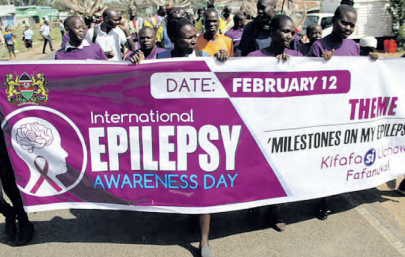 A procession to mark this year’s World Epilepsy Day at Marindi Hospital in Homa Bay town recently /FAITH MATETE












![[PHOTOS] Ruto hosts Bungoma delegation at State House](https://cdn.radioafrica.digital/image/2026/07/38c18064-4bd7-4a52-9171-4dcce631a74b.webp)