Thika is on the verge of becoming the sixth city in the country after a Senate committee endorsed its bid for elevation.
The Senate Standing Committee on Devolution and Intergovernmental Relations said the fast-growing industrial hub has met the legal requirements for elevation from a municipality.
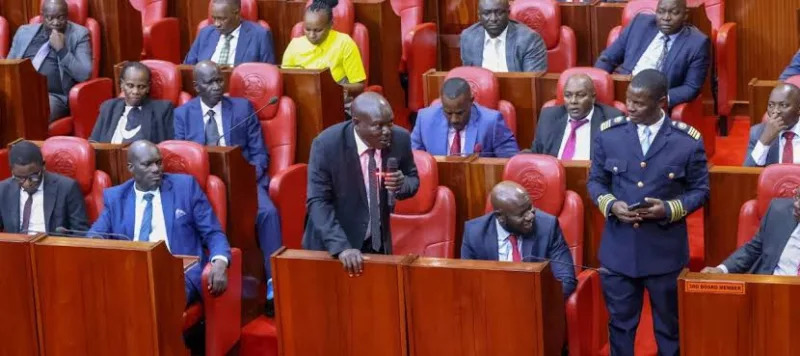
"The committee recommends that the Senate approve the conferment of city status on Thika Municipality," the committee said in a report tabled in the House.
Upon approval by the House, the resolution will be forwarded to President William Ruto for the issuance of a city charter.
If approved by the Senate and the President, Thika will join Nairobi, Mombasa, Kisumu, Nakuru and Eldoret as Kenya's cities.
The committee found Thika satisfies the criteria under the Urban Areas and Cities Act, citing its population, industrial base, revenue generation, infrastructure and public services.
Section 7 of the Urban Areas and Cities Act states, "The President may, on the resolution of the Senate, confer the status of a city on a municipality that meets the criteria set out in section 5, by grant of a charter in the prescribed form."
City status means an urban area qualifies for additional benefits, grants, national government services and increased investment.
Kiambu Governor Kimani Wamatangi told senators city status would unlock greater investment and transform Thika into a regional economic powerhouse.
He said Thika would become the first city serving the nine counties in the Mt Kenya region, home to nearly a third of Kenya's population.
"Thika is the second most industrialised town in Kenya, with more than 1,000 industries engaged in agroprocessing, manufacturing, value addition, mining and financial services," the governor said in his submissions to the committee.
He said the town is strategically located about 40 kilometres from Nairobi and is linked by the Thika Superhighway, a railway line and major highways, making it a regional trade and logistics hub.
According to the report, the 2019 Population and Housing Census recorded Thika's population at 279,429, comfortably above the legal threshold of 250,000 residents required for city status.
Later submissions by the Kenya National Bureau of Statistics placed the population at 284,727.
The committee also established that Thika has the capacity to generate sufficient revenue to sustain city operations.
The Office of the Auditor General verified the municipality collected more than Sh6.47 billion in revenue over seven financial years, while the county reported steady growth in its own-source revenue.
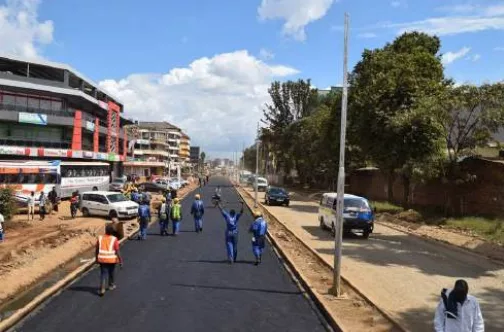
The report highlights extensive infrastructure supporting the application, including an eight-lane superhighway, a railway connection, two bus parks, upgraded roads, a modern electricity network, water and sewer services, a fire station and healthcare facilities.
Thika Water and Sewerage Company supplies about 40,000 cubic metres of water daily and plans to expand capacity through a Sh15.4 billion partnership with the Danish International Development Agency.
The municipality also hosts major learning institutions, including Jomo Kenyatta University of Agriculture and Technology, Mount Kenya University and Gretsa University, alongside national schools such as Mang'u High School and Mary Hill Girls' High School.
Despite endorsing the application, senators flagged areas requiring further improvement before and after city status is conferred.
They called for comprehensive policies on industrial accident management, waste disposal, river protection, healthcare planning, revenue collection and cemetery management.
The committee also sought clearer boundary demarcation and stronger environmental safeguards.
The county responded it has already begun implementing reforms, including disaster preparedness plans, beautification programmes, engineered landfill technology, smart waste management, healthcare upgrades and technology-driven revenue collection systems.
Public participation strongly favoured the proposal.
Residents, business groups, farmers, traders and the National Land Commission backed the elevation, arguing it would attract investment, improve infrastructure, create jobs and enhance services.
Only two stakeholders opposed the application during public hearings.









![[PHOTOS] Ruto hosts Bungoma delegation at State House](https://cdn.radioafrica.digital/image/2026/07/38c18064-4bd7-4a52-9171-4dcce631a74b.webp)