
World's inflation extremes: 2026 projection annual average (lowest)
Niger registers a minimal projected rate of 0.4%.
13d agoRosa MumanyiInfographics
Overall inflation in June 2026 was 6.4 per cent.


Audio By Vocalize
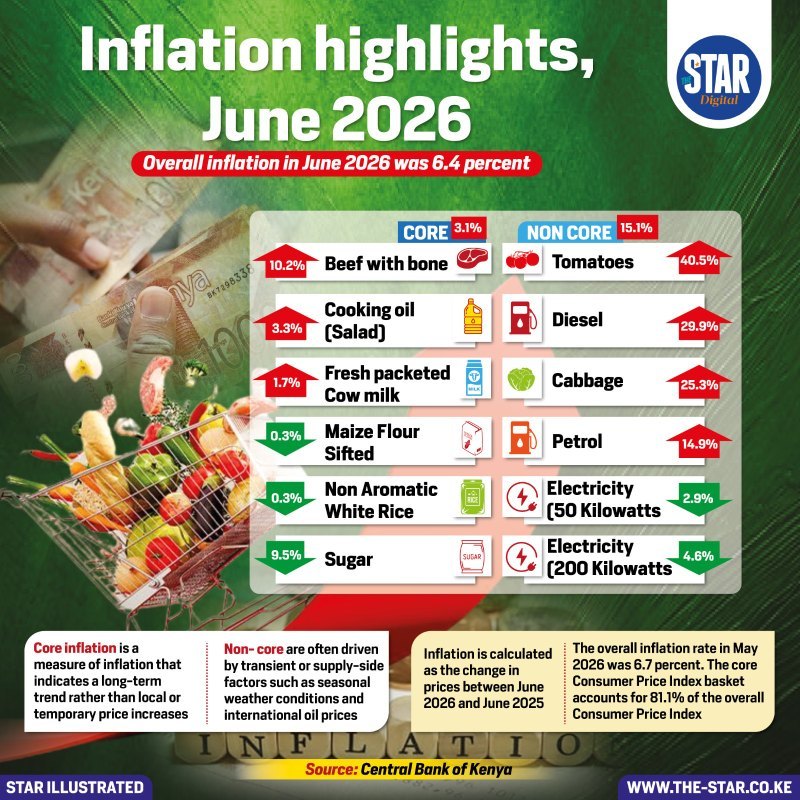
Kenya’s economic environment is experiencing divergent price pressures, with significant cost variations across essential household and energy items, according to data released for June 2026.
This assessment, tracking price changes between June 2025 and June 2026, follows an overall inflation rate of 6.7 per cent recorded in May 2026.
Financial metrics from the Central Bank of Kenya show a clear divide between core inflation, which represents long-term price trends and constitutes 81.1 per cent of the overall Consumer Price Index basket, and volatile non-core inflation driven by transient supply-side shocks like global oil prices and weather conditions.
Under the core inflation segment, which stood at 3.1 per cent, certain kitchen staples showed marked upward movements while others offered relief.
The price of beef with bone jumped by 10.2 per cent, followed by a 3.3 per cent increase in cooking oil (salad) and a 1.7 percent rise in fresh packaged cow milk.
Conversely, prices for sifted maize flour and non-aromatic white rice both eased by 0.3 per cent, while sugar costs experienced a substantial decline of 9.5 percent.
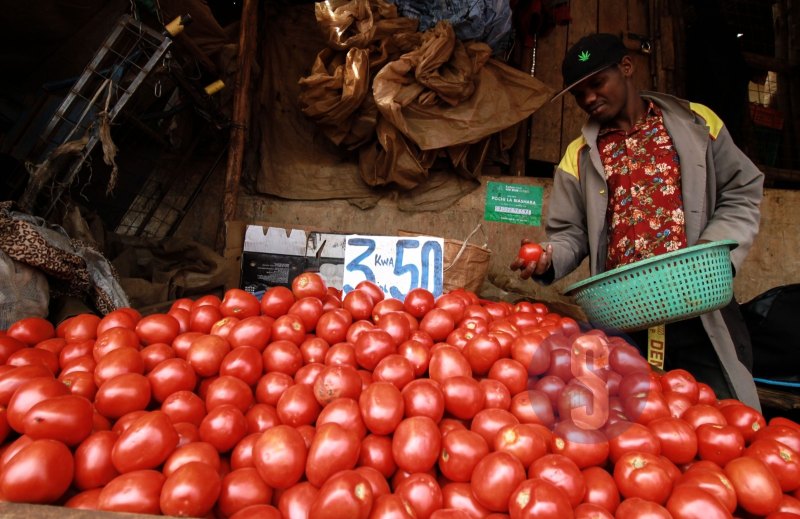
The non-core sector, logging a high inflation rate of 15.1 per cent, felt the heaviest price shocks. Tomato prices spiked dramatically by 40.5 per cent, and cabbages rose by 25.3 percent.
The energy and transport sectors faced similar constraints; diesel prices surged by 29.9 per cent, and petrol increased by 14.9 percent.
In contrast to rising fuel costs, the domestic power sector registered a downward adjustment, with electricity prices dropping by 2.9 per cent for 50 Kilowatts consumption and 4.6 per cent for 200 Kilowatts.
Niger registers a minimal projected rate of 0.4%.