

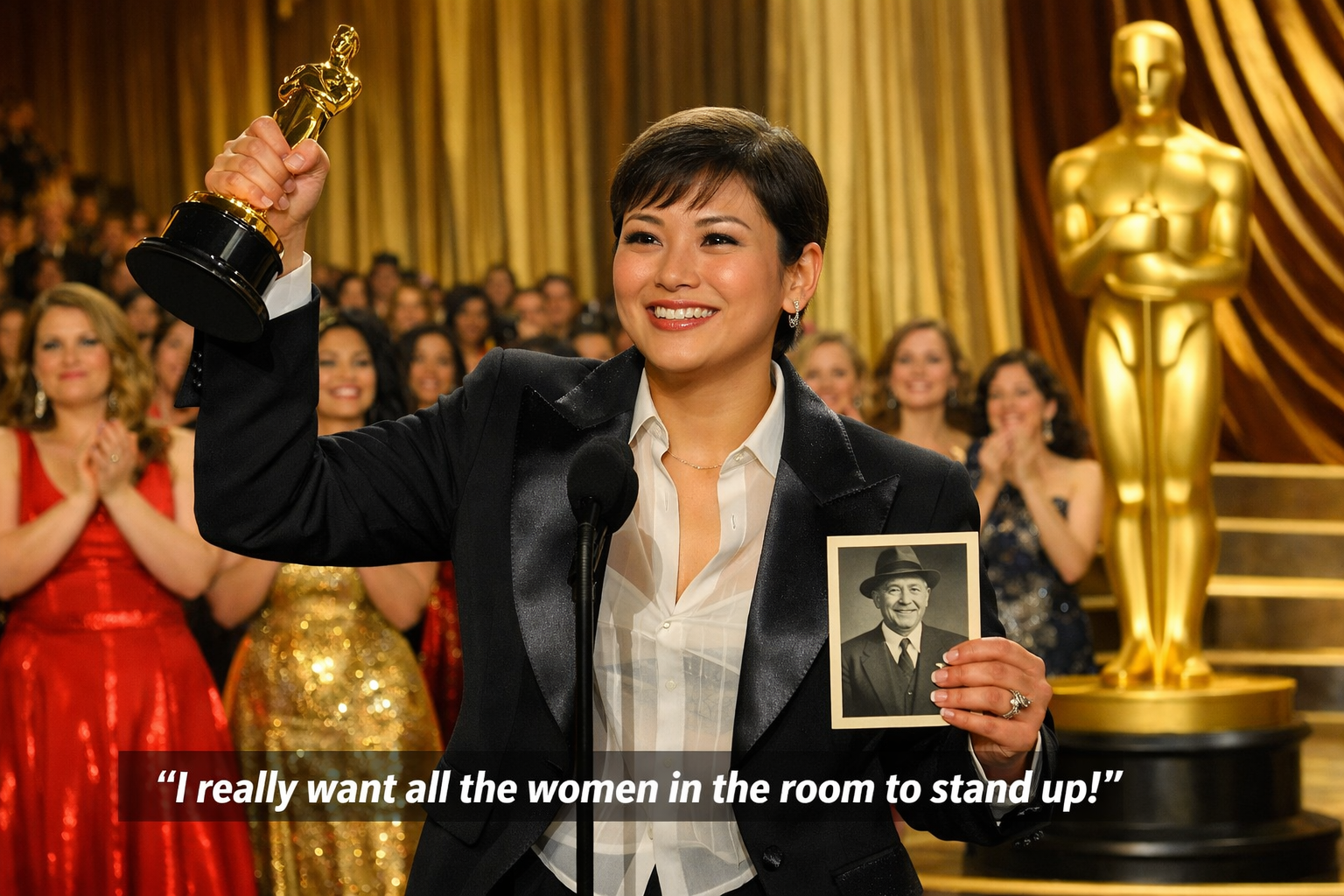
On a night often defined by glitz and glamour, the 2026 edition of the Academy Awards (Oscars), delivered something rarer: a moment of historic clarity. When Autumn Arkapaw, an American with Asian and African roots, stepped onto the stage to accept Best Cinematography award for the movie Sinners, she didn’t just claim a trophy; she reframed the lens through which the global film industry sees itself.
Her win, as the first woman and first Black cinematographer to bag the gong, resonates far beyond Hollywood. In African cities like Nairobi, Lagos and Johannesburg, where young filmmakers are negotiating access, authorship and identity, it lands as both affirmation and provocation.
“I really want all the women in the room to stand up,” she said, her voice steady, her message unmistakable. It was less an acceptance speech than a call to collective authorship; a reminder that no frame is ever composed alone.
Cinematography has long been one of the most exclusionary crafts in filmmaking. It’s technical, gate-kept and historically dominated by white men. That Arkapaw broke through with a film shot on 65mm using IMAX 15-perf and Ultra Panavision 70 is not just a technical feat; it’s symbolic. Large-format filmmaking has often been treated as the pinnacle of cinematic authority: expensive, prestigious and inaccessible.
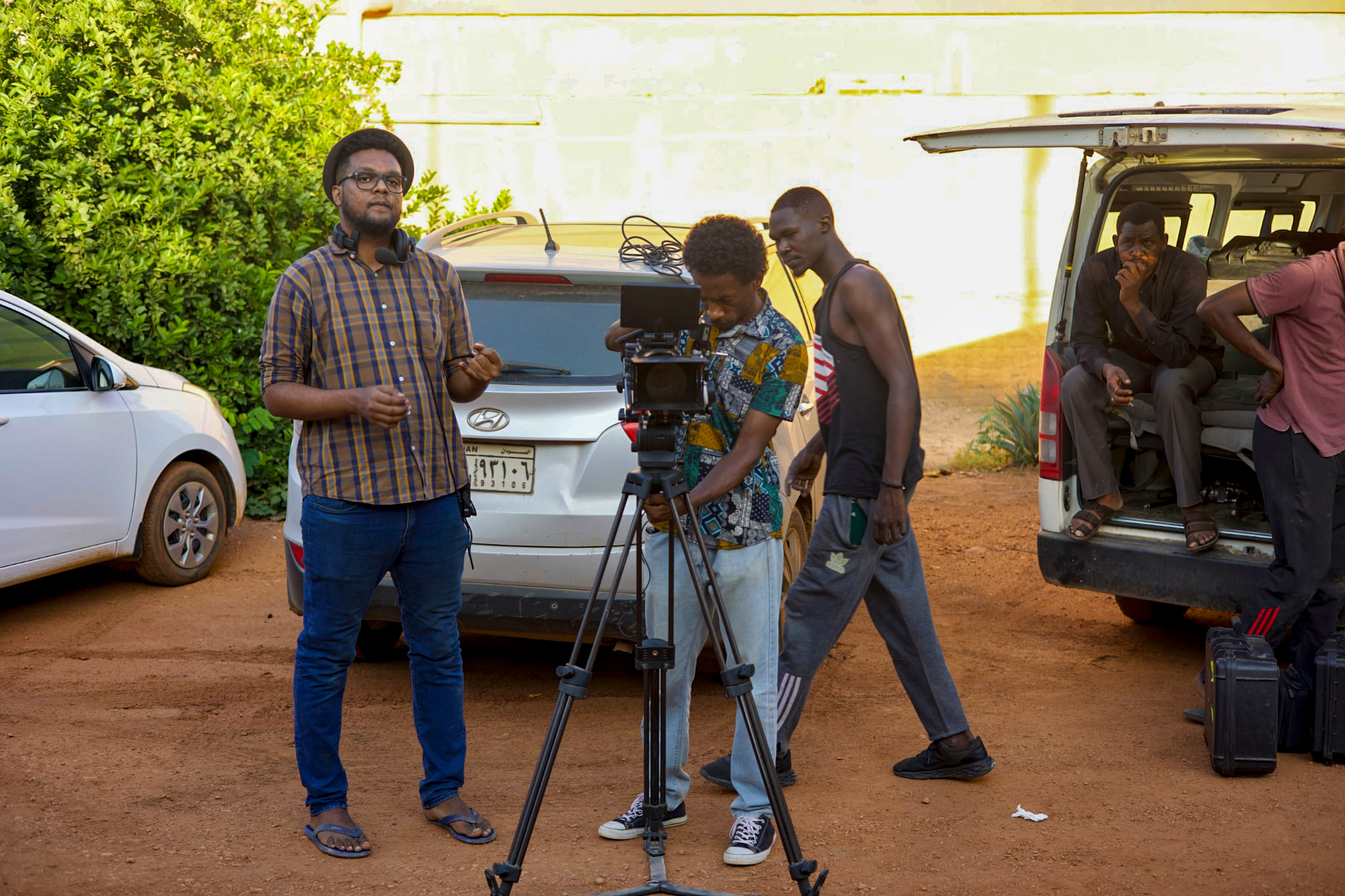
For African filmmakers, the parallels are immediate. Across Kenya, from the indie circuits of Nairobi to the grassroots film collectives in Kisumu and Mombasa, creators are constantly negotiating the gap between vision and resources. The question is not just who gets to tell stories, but who gets to tell them at scale.
Across the continent, a generation of cinematographers is already pushing those boundaries, often with fewer resources but no less ambition. Enos Olik, the acclaimed Kenyan cinematographer, for instance, has shaped the visual texture of projects like Disconnect, capturing Nairobi’s emotional and digital landscapes with intimacy and immediacy. His work reflects a distinctly urban Kenyan gaze: restless, layered and alive to contradiction.
In West Africa, Yinka Edward has built a formidable reputation through films such as The Wedding Party and Chief Daddy, helping define the polished, aspirational look of contemporary Nollywood, while maintaining cultural specificity. His cinematography balances gloss with grounded storytelling, proving that commercial scale need not dilute identity.
Meanwhile, South Africa’s Lance Gewer earned international acclaim for Tsotsi, using light and shadow to render township life with grit and lyricism. There is also the work of Pierre de Villiers, whose credits include District 9, a film that fused documentary-style realism with science fiction spectacle, demonstrating that African cinematographers can operate seamlessly within large-scale, effects-driven cinema.
What unites these practitioners is not just technical skill but a commitment to place, to rendering African spaces with nuance rather than stereotype. Their work, much like Arkapaw’s, insists on texture, specificity and emotional truth.
Arkapaw’s own filmography, seen in Black Panther: Wakanda Forever and The Last Showgirl, has consistently centred intimacy and cultural detail. In that sense, her Oscar is not an anomaly; it’s the culmination of a visual language that refuses flattening.
Even on the red carpet, Arkapaw understood the assignment. Dressed in a custom Thom Browne ensemble comprising sheer silk, a sculpted corset and a sharply tailored overcoat, her look balanced structure with vulnerability. It echoed her cinematography: precise, layered and deeply intentional.
But it was the photograph she carried, of her grandfather, Guillermo Bautista, that grounded the moment. In African storytelling traditions, memory is not ornamental, it is foundational. To carry an ancestor into a space like the Oscars is to insist that success is never singular — it is inherited, communal and historical.
For Kenyan cinematographers — many of whom operate outside formal studio systems — her win is both inspirational and challenging. It asks: what would it take to build infrastructures that allow local filmmakers to experiment with scale, with format with ambition?