IMANI: Ebola: Kenya should not be America's quarantine ward
Trump’s request smells like geopolitical exploitation, begs the question of sovereignty.
by CATHY WAMAITHA
Audio By Vocalize
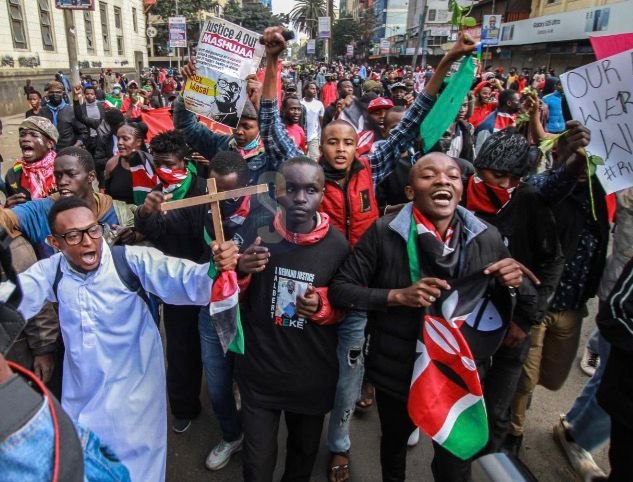
When hundreds of Laikipia residents
marched toward the military installation on Monday, June 1, their fury was fuelled by a
profound sense of betrayal.
They had discovered via social
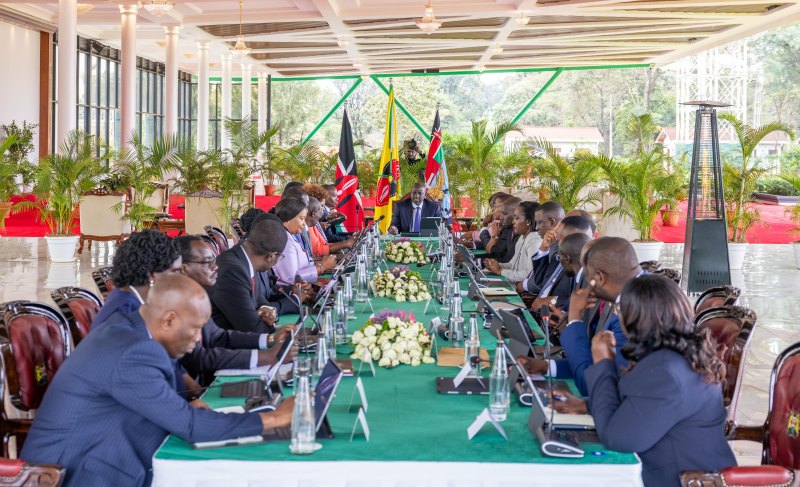
media that President William Ruto had secretly authorised a 50-bed isolation
unit in their backyard to house American citizens exposed to the Ebola strain
in the Democratic Republic of Congo and Uganda.
After the damning revelation, Kenyan authorities
did not deny the arrangement, but they conspicuously failed to disclose it
until the courts forced their hand. By nightfall, two protesters lay dead, a
third wounded.
At the heart of this crisis is a direct
challenge to the democratic rights enshrined in the 2010 Constitution. In a consolidated legal offensive,
the Katiba Institute and the Law Society of Kenya secured an extension of
conservatory orders from High Court judges Patricia Nyaundi and Lawrence
Mugambi, bringing the state’s opaque bilateral ambitions to a halt.
The petitioners argue that by greenlighting a
biosecurity facility without a single parliamentary debate, public hearing, or
published risk assessment, the Executive
directly violated Article 10, which mandates transparency and meaningful public
participation.
The Katiba Institute highlighted that the 50-bed
unit was strictly built to isolate and treat American citizens, explicitly
excluding Kenyans even in the event of a local outbreak. This raises serious
ethical and legal concerns regarding discrimination on Kenyan soil.
LSK has pointed out that the state failed to
demonstrate any compliance with the Public Health Act, domestic biosafety
regulations, or environmental impact assessments.
The lawyers hold that the arrangement
breaks international precedent and that the US is unconstitutionally attempting
to turn Kenya into an "offshore quarantine centre" or a "geopolitical isolation ward" because
America itself is reluctant to allow potentially infected citizens onto its own
mainland. That smells like geopolitical exploitation.
This lack of public disclosure
directly infringes upon the fundamental right to life, healthcare and a clean
environment under Articles 26, 43 and 42. Civil society advocates note that
deliberately importing individuals exposed to one of the world's most lethal
infectious diseases into a nation with zero recorded Ebola cases places an
unacceptable biological burden on local communities.
The state’s defence relies on its executive
mandate to direct foreign policy and manage international relations.
Government counsel argues that the
facility poses minimal risk because it is confined within a restricted military
perimeter, designed strictly for asymptomatic individuals who will be
immediately evacuated if they develop symptoms.
Furthermore, the state portrays the project as a
catalyst for technical capacity building, staffed by specialists from the US
Public Health Service Commissioned Corps, which they claim will improve
domestic medical infrastructure through emergency preparedness frameworks and
technology transfer.
While Ruto, in his defence, said Kenya has
deployed every available measure to protect the country, experts warn that the
country's fragile health infrastructure is ill‑equipped to contain any
accidental exposure.
The Kenya Medical Practitioners, Pharmacists and
Dentists Union have taken a firm stance against the project, arguing that for
outbreaks, among the best courses of action is to handle the pandemic at its
source.
Ebola treatment facilities should therefore be
located as close as possible to outbreak epicentres rather than in countries
with no recorded cases. In this sense, importing patients to Kenya from
the DRC beats best practice and logic.
Even within Washington, the arrangement has
drawn sharp criticism. The US House Committee on Foreign Affairs issued a
statement rebuking the President Donald Trump administration, arguing that the
US should treat its potentially infected citizens at home using its own
specialised facilities rather than outsourcing hazardous public health burdens
to an ill-equipped foreign partner.
As Justice Nyaundi extended the injunction, she
ordered the Cabinet Secretary for Health to publicly disclose all secret
contracts, regulatory approvals and biosafety protocols within seven days,
setting a mention date for June 23.
However, flight-tracking data showing US
military aircraft landing at Laikipia Air Base over the weekend suggests
ongoing operations in defiance of the judiciary. This apparent contempt of
court underscores an uncomfortable truth: while the state attempts to manage a
biological threat from abroad, the country faces a far more immediate crisis in
the erosion of constitutional accountability and the rule of law.
Kenyans expect their government to use domestic
resources to prepare for and manage the Ebola threat as a sovereign nation
advancing its own national interest, not as a subordinate partner in an
“America First” strategy.
This is premium content
Subscribe to Continue Reading
Help us continue bringing you unbiased news, in-depth investigations, and diverse perspectives. Your subscription keeps our mission alive and empowers us to provide high-quality, trustworthy journalism. Join us today to make a difference!