Commanding over Sh 1.2 trillion in assets and serving millions of members, they operate as engines of grassroots wealth creation, financial inclusion, and community development.
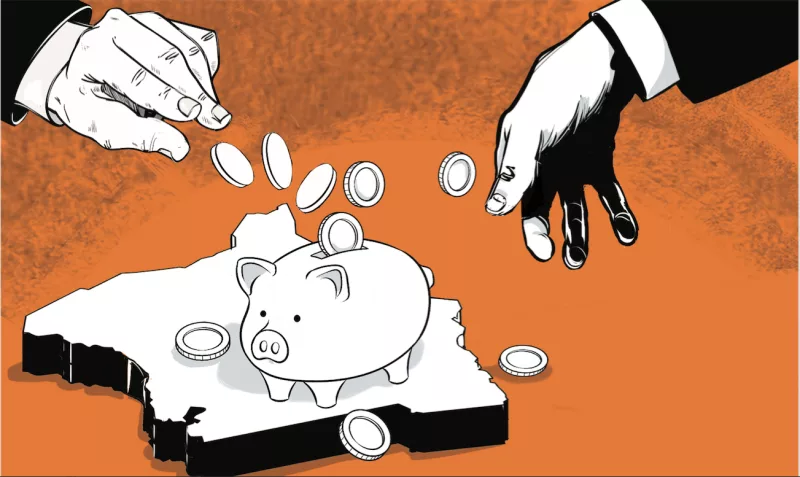
As Parliament debates the Cooperatives Bill and the Sacco Societies (Amendment) Bill, anxiety has spread among millions of Kenyans over claims that the government plans to tap Sacco savings to finance infrastructure projects.
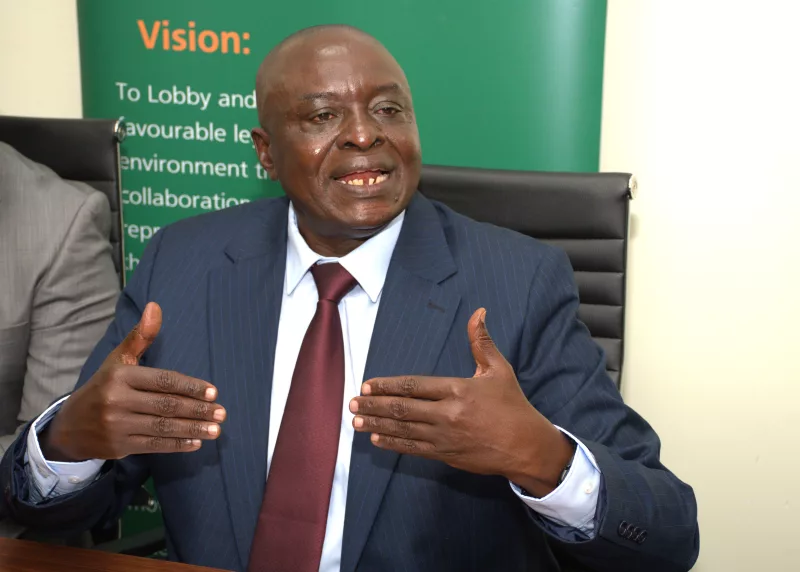
Cooperative Alliance of Kenya (CAK) chief executive Daniel Marube dives into the key issues in the bills, misinformation and what the proposed laws actually seek to achieve.
Excerpts:
There has been widespread concern that the government wants to use Sacco members' savings to finance infrastructure projects. Is there any truth to those claims?
Absolutely not. Those claims are false, misleading and have no basis in law. We have carefully reviewed both the Cooperatives Bill and the Sacco Societies (Amendment) Bill currently before Parliament, and nowhere do they give the government powers to seize, borrow, or compel Saccos to invest members' savings in infrastructure projects.
The misinformation has created unnecessary panic among millions of cooperative members. We want to assure every Kenyan that their savings remain under the control of their respective Saccos and, ultimately, the members themselves.
Then what exactly do these two Bills seek to achieve?
They are reform Bills designed to modernise the cooperative sector. The Cooperatives Bill has undergone over a decade of consultations and reflects extensive input from the movement.
The Sacco Societies (Amendment) Bill has also evolved significantly after stakeholders submitted memoranda to Parliament. Many provisions that initially caused concern have already been revised.
The objective is to strengthen governance, improve financial stability, embrace digital transformation and close regulatory loopholes that have exposed members to losses in the past
One proposal attracting attention is the creation of so-called "Super Saccos". What are they?
The term "Super Sacco" has been misunderstood. What the bill proposes is more of unions of Saccos, not a single institution where all members' money will be pooled.
For example, teacher Saccos may voluntarily form one union, dairy cooperatives another, coffee cooperatives another and so forth.
These unions will allow members to enjoy economies of scale by sharing technology platforms, legal services, audit services and procurement. Instead of each Sacco investing heavily in expensive systems independently, they can share resources and lower costs.
Will these entities hold members' money?
No. Members' deposits remain within their individual Saccos. The unions provide shared services and create opportunities for collaboration, including liquidity support between member Saccos where necessary. They are not mechanisms for transferring ownership or control of members' savings.
Another proposal is the Central Liquidity Facility. Why is it needed?
Commercial banks already lend to each other overnight at relatively low interest rates. Unfortunately, when a Sacco experiences temporary liquidity challenges, it often has to borrow from commercial banks at interest rates ranging between 18 and 22 per cent.
The proposed liquidity facility enables Saccos to support one another at much lower rates, reducing borrowing costs and improving service delivery to members. We propose that this facility should remain within the cooperative ecosystem rather than outside it.
Our recommendation to Parliament is that it should be managed within institutions owned by the cooperative movement, including the Cooperative Bank. That proposal remains under consideration by lawmakers.
The Bill also introduces a Deposit Guarantee Fund. Why?
This is one of the most important reforms. Banks have the Kenya Deposit Insurance Corporation, which protects depositors when banks collapse.
It benefits banks by preventing devastating bank runs and stabilising the financial sector. By guaranteeing deposits, it maintains public confidence, encourages steady savings, and provides structured resolutions for troubled institutions, so crises do not spread across the banking industry.
Sacco members currently have no equivalent protection. If a Sacco fails today, members risk losing everything.
The proposed Deposit Guarantee Fund would provide insurance so members recover part of their savings should a Sacco collapse. This is about protecting members, not taking their money.
There are concerns that government-appointed officials could control these funds. What is your take?
We have submitted proposals that these institutions should be governed within the cooperative movement itself. Our objective is to maintain independence while ensuring strong regulation. The final governance structure will be determined through the parliamentary process.
Critics argue that once these structures are established, the government could eventually direct Sacco funds into infrastructure bonds. Could that happen?
No. Investment decisions belong entirely to members through Annual General Meetings. Neither the government, the board, nor the CEO can decide to invest members' funds in long-term government projects without approval from members.
If a Sacco ever wishes to invest in long-term bonds, members would debate and approve such a decision themselves. The law does not empower the government to impose those investments.
Yet Saccos already invest in Treasury Bills. Why?
Yes, many Saccos invest surplus liquidity in short-term Treasury Bills lasting three months, six months, or one year. Not long-term.
These are cash management instruments. Because members may require loans at any time, Saccos need investments that can quickly mature and release cash.
Long-term investments would undermine the core purpose of Saccos, which is providing affordable credit to members.
How much of the members' money is actually available for investment?
Very little. People often hear that the sector has assets exceeding Sh1.3 trillion and imagine that amount is sitting in bank accounts.
That is incorrect. Those assets are mainly loans already advanced to members.
The money is in homes, businesses, farms, school fees, medical expenses, motor vehicles, boda bodas and other productive investments financed through Sacco lending. It is not idle cash waiting to be invested elsewhere, so there are no billions or that trillion sitting idle somewhere.
How much are members' deposits currently?
Regulated deposit-taking Sacco holds roughly Sh850 billion in members' deposits. Against those deposits, members have borrowed close to Sh1.3 trillion. That illustrates that the vast majority of funds are already supporting members' economic activities.
What lessons have these reforms drawn from the former KUSCCO crisis?
The reforms directly address weaknesses exposed by that experience. Going forward, every Sacco collecting deposits must be supervised by the Sacco Societies Regulatory Authority (SASRA).
Previously, there were regulatory gaps. The Bills also strengthen oversight, improve governance standards and tighten accountability across the movement.
What new governance safeguards are proposed?
Several. First, auditors will undergo vetting and registration to ensure only qualified professionals audit cooperatives. Second, individuals seeking leadership positions in Saccos will undergo integrity vetting before assuming office.
Third, members themselves must become more active by attending Annual General Meetings and electing credible leaders. Strong governance begins with informed members.
Will penalties for financial misconduct become tougher?
Definitely. Anyone who steals from a Sacco should face severe consequences. Besides criminal prosecution and recovery of stolen assets, individuals found guilty will effectively be barred from working elsewhere within the cooperative movement.
We want to eliminate the culture where people mismanage one Sacco and simply move to another institution. We will circulate your information everywhere to ensure that you don’t get any leadership role or a job elsewhere, including outside the Sacco and financial sector.
Some members remain suspicious of government involvement in cooperatives. How do you reassure them?
Cooperatives are private member-owned organisations. The government's role is limited to regulation. It does not own cooperatives, appoint their leaders, or decide how members invest their money.
If we ever saw genuine attempts to interfere with members' ownership rights, the Cooperative Alliance of Kenya would strongly oppose it. At present, we have seen no such intention.
Are non-remitted payroll deductions still a major problem for Saccos?
The situation has improved significantly, although challenges remain. Historically, the biggest problems have come from some county governments and public universities delaying remittance of members' deductions.
We are pushing for a system where deductions are released directly through the Exchequer before institutions receive their allocations. That would protect members and improve liquidity within Saccos.
What message do you have for Kenya's more than 15 million cooperative members?
My message is simple. Do not be misled by misinformation circulating on social media. Your savings remain safe. These reforms are designed to strengthen governance, improve efficiency, protect deposits and modernise the cooperative sector—not to take members' money.
Kenya's cooperative movement remains strong, stable and committed to improving the economic well-being of every member.