Tricked into the trenches: Agony of families whose sons went missing in Russia-Ukraine war
Their demands are simple: repatriation for the willing, information for the living and for the dead, a chance to be brought home.
by CATHY WAMAITHA
Audio By Vocalize
Peter Kamau, Bibiana Waithaka, Tabitha Wanjiru, Edith Njeri and Winnierose Wainaina during an interview with the Star at Radio Africa offices, Westlands on May 21, 2026 /LEAH MUKANGAI
Charles Waithaka was a qualified plant mechanic who believed he was travelling abroad to utilise his technical skills.
His mother, Bibiana Waithaka, met the agent, a woman named Elizabeth, for the first time at the Jomo Kenyatta International Airport on the day her only son left for Russia.
Elizabeth collected a commission of Sh160,000 and assured Bibiana that her son was incredibly lucky. She promised he was not going to do casual work. Charles travelled through the Middle East where he was received by another Kenyan, Peter Wainaina, who later took him to the airport for onward travel to Russia.
During the first week, Charles spoke daily with his mother. He said life was generally good. But the illusion dissolved within weeks. Charles called his mother, his voice laden with panic. He explained that his travel documents had been confiscated and he was forced to sign a different contract from the one they had reviewed at the airport, written entirely in Russian – a language he did not comprehend.
“He really cried, telling me, mum, when I arrived here, things changed. Mum, make arrangements for me – I would like to come back to Kenya,” Bibiana said. “Imagine as a mother, hearing your son crying for help.”
Bibiana tried everything, including faking her own death, thinking her son might be allowed to come home to bury her. Even that didn't work.
“The permission was not granted. So he told me, ‘Mum, now I have been given two options: to work or to die. Let me take the risk.’” Soon after, he was deployed into active combat despite never having held a weapon.
As Charles’ birthday approached on December 25, he had an eerie conversation with his mother.
“He told me, ‘Mum, sunrise is coming, but sunset may come early.’ It was farewell. He kept on preparing me that he might not leave that place alive.”
After sending birthday messages that went unanswered, Bibiana’s phone rang on December 27. The connection was weak and chaotic.
“I don't know whether he was in pain or what was happening. He could not even finish the sentence…And the phone went silent.”
It was the final time she would hear his voice. She kept reaching out until January 24, when the news began circulating on social media.
“Everyone else already knew that my son had died—except me. The people who called me wanted to find out whether I had the information or not. Then someone sent me a link on WhatsApp. It was my son. It was my son who was trending.”
When she visited the Ministry of Foreign Affairs the next Monday with her siblings, officials dismissed the online reports as unreliable social media gossip. The truth was eventually confirmed by Charles’ military colleagues, who texted her that her son was gone.
Official government data remains contested. Prime Cabinet Minister Musalia Mudavadi stated that 19 Kenyans have been confirmed dead and 32 remain missing.
Tabitha Wanjiru’s brother, Kelvin Kiiru, 24, is among the missing, yet not on the minister's list. Recruited by an agency as a plant mechanic engineer, the graduate viewed it as an opportunity and signed a one‑year Russian‑language contract at the KICC, paying Sh50,000.
Before departing, recruits were moved between Airbnbs from Kitengela to Athi River with no training. Kelvin was strictly instructed to travel without luggage—a claim repeated across families.
He arrived at a military camp in St Petersburg in September, where conditions changed, but turning back was impossible. After three weeks of training, he called Tabitha in October ahead of deployment, saying he would leave his phone behind but communicate in three months. That was the last she heard from him. When Tabitha contacted the agency, they denied any involvement, despite prior calls and face‑to‑face meetings.
Winnierose Wainaina’s brother, Samuel, is also not on Mudavadi’s list. Samuel travelled to Russia in October 2025, informing his family he would be offline.
“After the three weeks, nothing…but before he left, he asked us to keep him in prayers… Up to date, we’ve not heard about him again,” Winnierose says.
“It has taken a toll on my parents' health. He has a wife and two kids—nine and four years—who keep on asking where their daddy is. They want to talk to their daddy, but at the end of the day, we can't call him, we can't contact him.”
Winnierose tried to contact the agent, a woman named Julia, who dismissed her. Emails to the ministry have been met with silence.
Another common red flag was in the travel documents. Families reported their kin were given tourist visas, not work permits, processed in record time of less than 72 hours.
Edith Njeri’s son, Simon Ndegwa Mwaura, left Kenya in October to work as a driver, including heading to China for commodities.
Simon spent no money on his journey; a Russian agent paid for everything, even the taxi from home, through a local contact.
But at the airport, a woman told him to delete their conversation, use Gate C and “Don’t say you are going there through an agent. Just talk of a tourist visa. And be very confident.”
Edith recounts that the Russian, Alex, had repeatedly offered to advance Simon money, to settle his family, which they didn't take.
While initial days were spent sightseeing before training began, Simon soon messaged that they were in Ukraine and the war was raging.
On New Year’s Day, he called to say he was injured on his head and chest and receiving treatment. The family tried the contact again to no avail. Alex blocked them. Ministry authorities have told the families to wait.
Grieving families find it deeply strange that recruits never actually earned any real money. They suspect structural entrapment.
“It would have been better if we had left something. Because now he left a wife and daughter in school. And there is nothing,” Edith said.
One recruit accessed just Sh50,000, sent home to his wife. The rest ‘vanished’. Families maintain their kin were helped to open bank accounts in Russia, but the documentation was entirely in Russian.
Unable to read the fine print, they unknowingly signed away their rights. They had no personal access to their accounts, yet Russian agents had exclusive access to withdraw money.
The government insists it is acting—18 Kenyans have been rescued, issued emergency travel documents and flown home.
But Peter Kamau Gitau, whose younger brother Gerald is missing, remains frustrated. Peter has emailed Kenya’s embassy in Moscow, the State Department of Diaspora Affairs and the Russian embassy in Nairobi. "There has been no reply and I’m not aware of his status,” he admits. “But unconfirmed reports from friends and acquaintances say he has been missing in action since December 27.”
As coordinator for nearly 100 families, Peter is the de facto chairman of a group he never asked to lead.
He notes a National Intelligence Service report tabled in Parliament in February 2026 which indicated that over 1,000 Kenyans had been recruited to fight for Russia in Ukraine. Some 89 were in combat, 39 hospitalised and 28 missing.
But a senior official at the PCS office called the NIS report ‘alarmist’.
Families disagree, insisting the figures presented are still too low, arguing that many recruits were never counted because they were recruited outside Kenya.
Their want their kin repatriated, and state to provide information about those missing and ensure they are brought home, dead or alive.
“The issue of compensation can be revisited at any time,” he says. “But at the moment, we want repatriation.”
In March 2026, Mudavadi travelled to Moscow and secured a Kremlin promise to stop further recruitment. Yet families noticed a troubling detail: among his delegation was an MP who returned with the men from his own constituency.
“What magic did he perform?” Peter asks. “The magic that he performed is what Mudavadi would have performed to come back with all the Kenyans.” They submitted a list of 67 names before Mudavadi flew. He returned with nothing. “We don’t have feedback,” Peter says.
The families claim the recruitment machinery was a network—not rogue agents alone. Peter describes how Festus Omwamba, arrested in February 2026 and charged with human trafficking, told him the operation involved immigration officials, police and even the Russian embassy.
But what families want now is not vengeance or compensation. It is information. It is closure.
“We just want closure. Let them give us information, because I believe they have it. Let them tell us the way it is. We’ve cried a lot,” Edith said.
For now, they keep on waiting. For a phone call that does not come. For a name on an official list. “Can they just tell us?” Edith asks. “Because there is nothing bigger for us now. We just need to move on.”
Peter Kamau, who coordinates the families with kin in Russia, during an interview with the Star at Radio Africa offices, Westlands on May 21, 2026 /LEAH MUKANGAI
This is premium content
Subscribe to Continue Reading
Help us continue bringing you unbiased news, in-depth investigations, and diverse perspectives. Your subscription keeps our mission alive and empowers us to provide high-quality, trustworthy journalism. Join us today to make a difference!

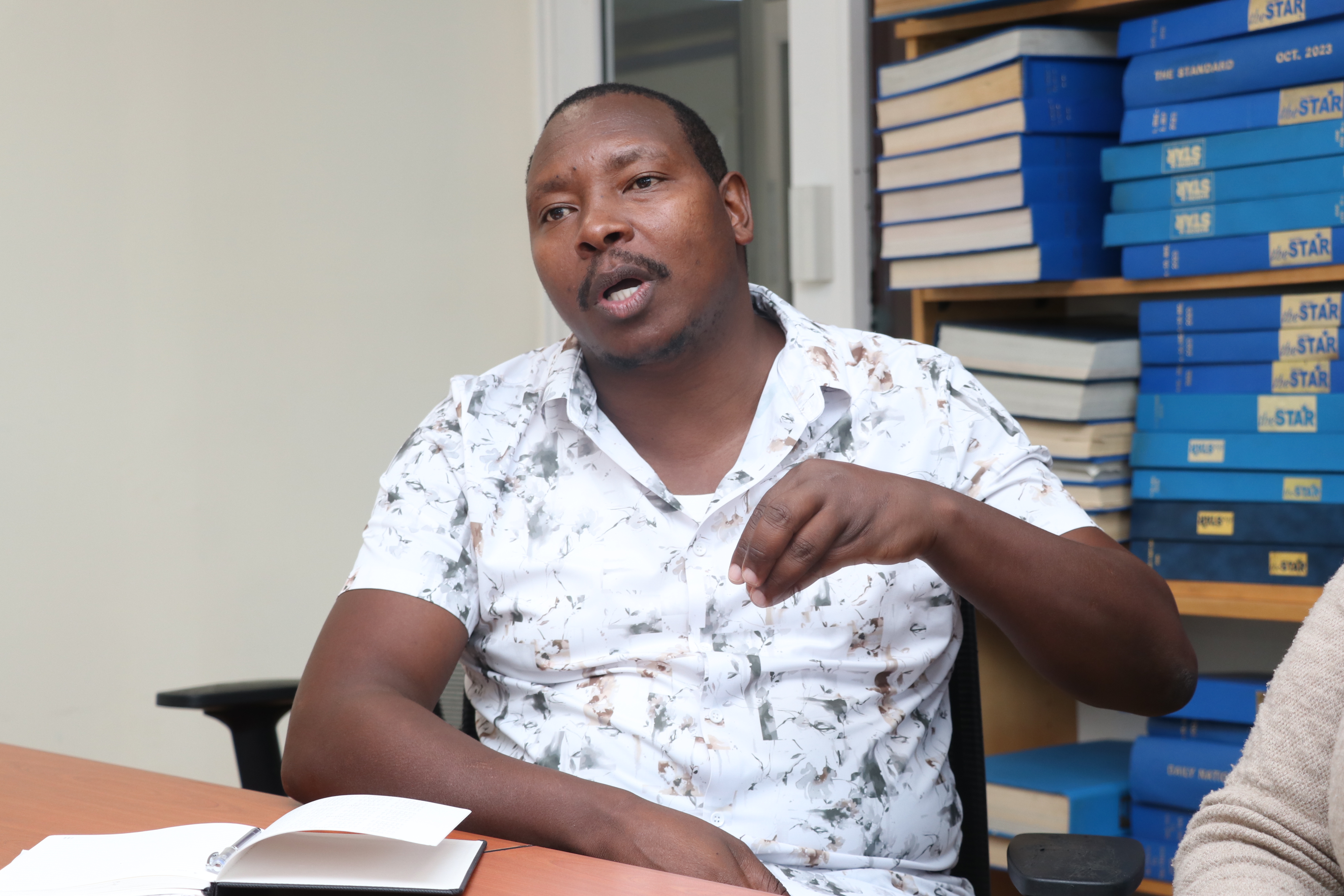 Peter Kamau, who coordinates the families with kin in Russia, during an interview with the Star at Radio Africa offices, Westlands on May 21, 2026 /LEAH MUKANGAI
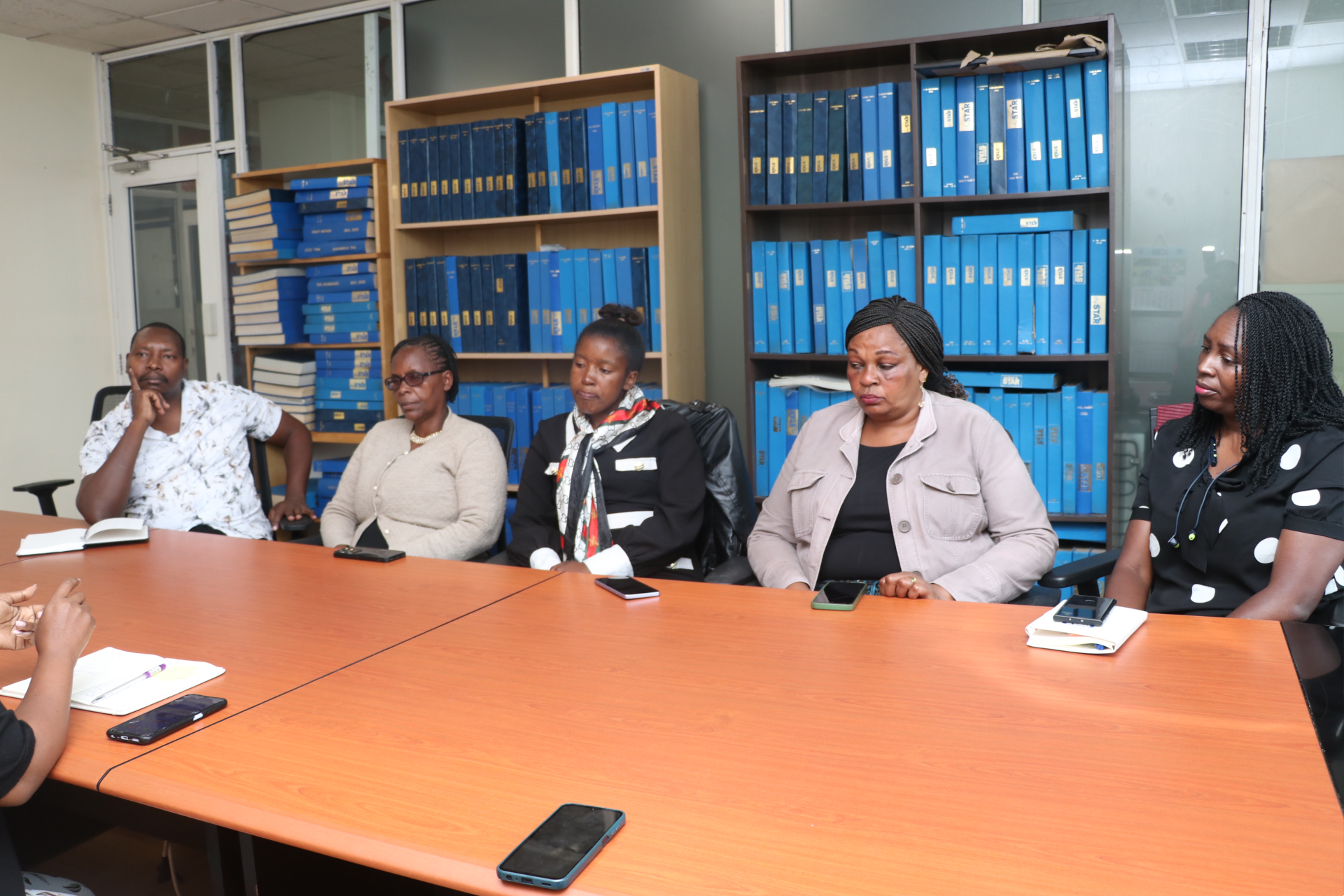 Peter Kamau, Bibiana Waithaka, Tabitha Wanjiru, Edith Njeri and Winnierose Wainaina during an interview with the Star at Radio Africa offices, Westlands on May 21, 2026 /LEAH MUKANGAI