State to foot bills for Utumishi Girls fire victims
A team will plan burial of 16 Utumishi Girls fire victims as post-mortems confirm severe burns in the Gilgil school tragedy, Kenya.
by CYRUS OMBATI
Audio By Vocalize
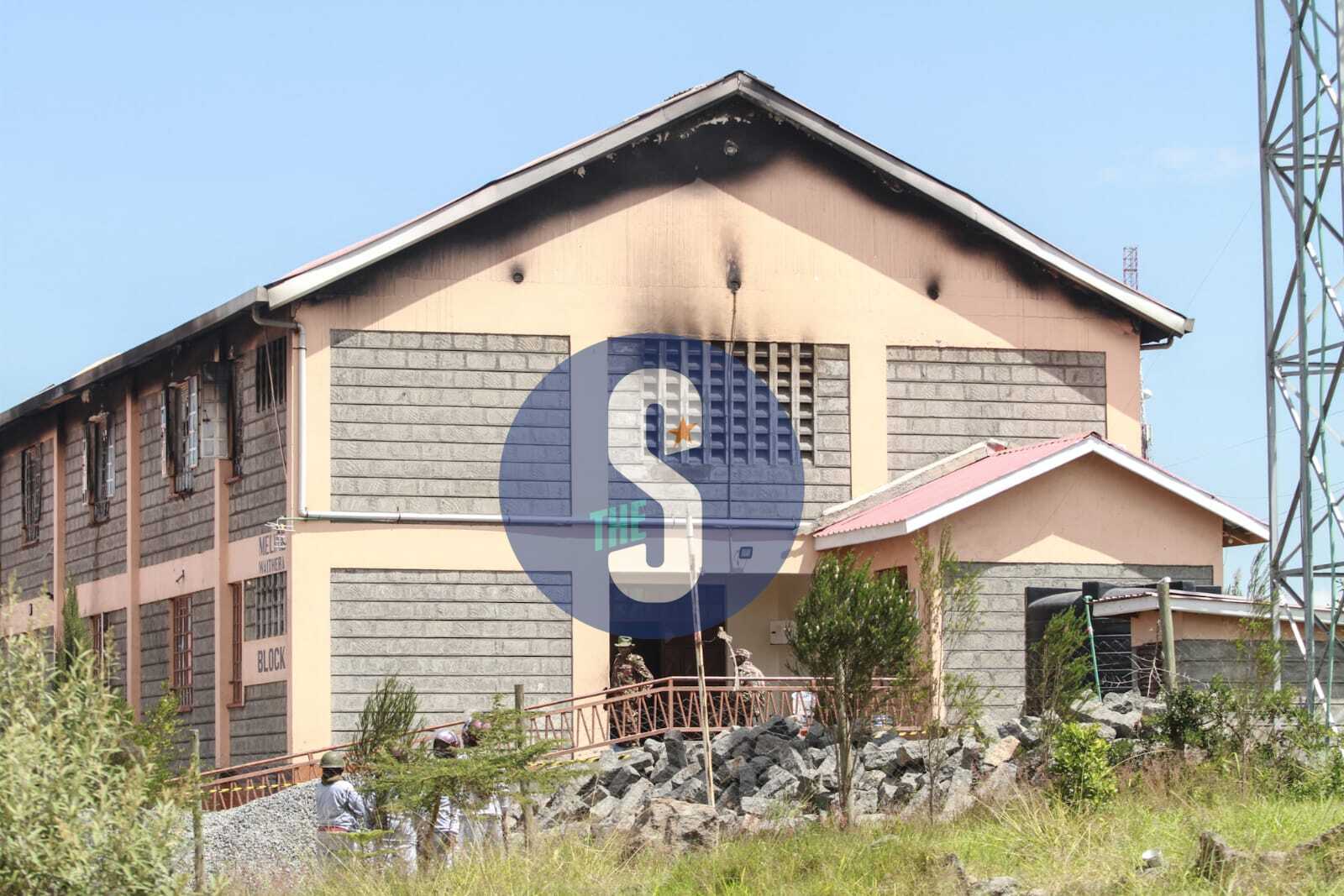
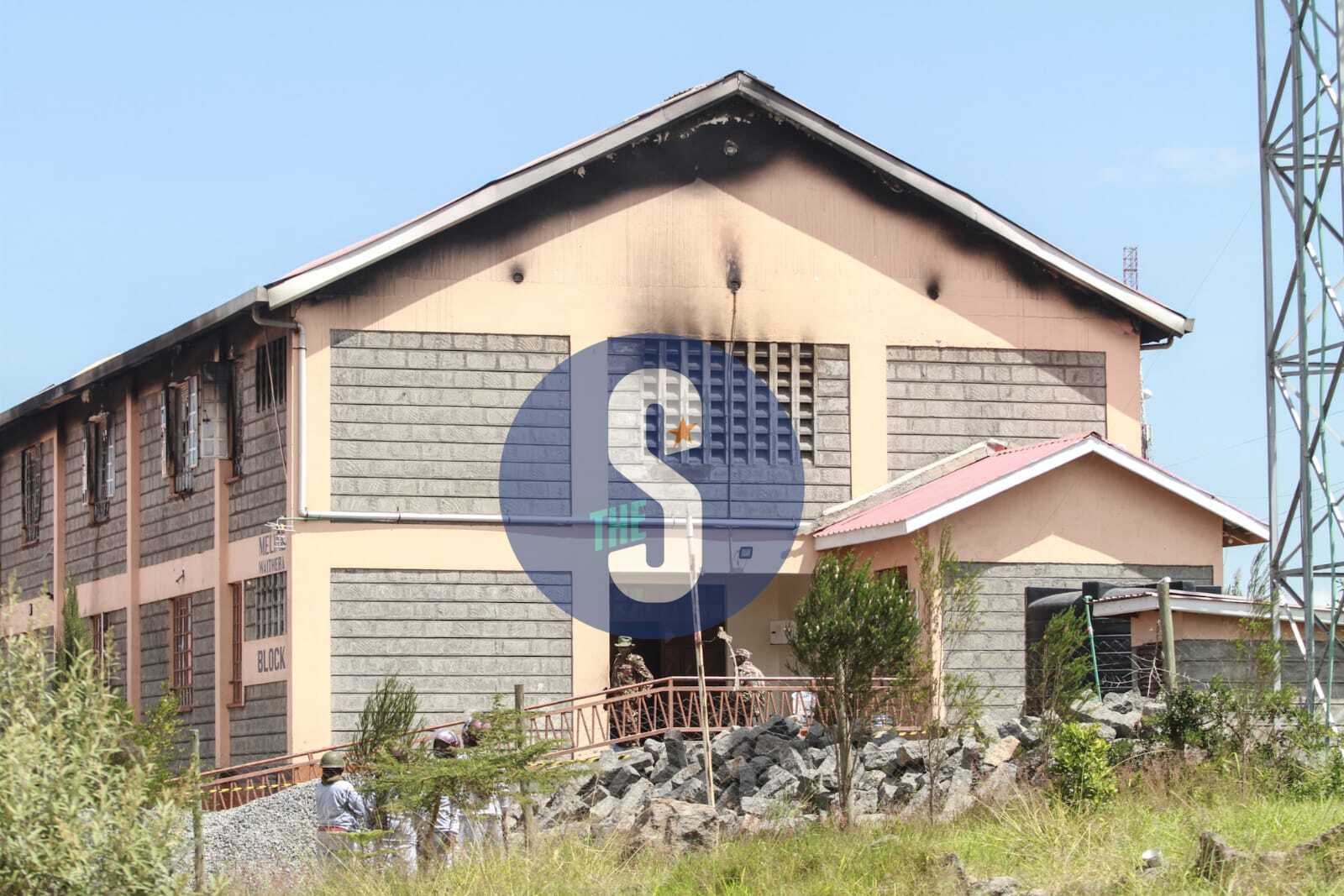
Razed dormitory at Utumishi Academy/ FILE
The government has set up a team to plan the burial of 16
students who died in the Utumishi Girls Academy fire last week.
An official in the team told the Star on Sunday that a way
forward will be announced on Tuesday.
The government will foot the bills for the burial expenses
while those in hospital will have their medical bills also paid for by the
state.
The Tuesday announcement is expected to tell whether a joint
funeral mass will be held for the victims.
The team was formed following the completion of postmortem
examinations on the 16 bodies.
The team of pathologists that conducted the autopsies at the
Naivasha Subcounty Referral Hospital Mortuary was led by Dr Dorothy Njeri.
The examinations established that all 16 students died as a
result of severe burns.
Teams from Kenya Red Cross provided psychosocial support to
bereaved families at the mortuary, where relatives were allowed to view the
bodies of their loved ones.
While some 10 victims were physically identified, DNA
sampling was required to establish the identity of the other six.
"DNA reference samples were also collected from the
families of the deceased students to facilitate formal identification of the
remains, which was necessitated by the extent of the burns," a detective
involved in the operation said.
The students died after a fire burnt their dormitory at
Utumishi Girls Senior School in Gilgil on Thursday.
Some seven students who were seriously injured were flown to
Nairobi for specialised treatment. They had multiple injuries, officials said.
The Directorate of Criminal Investigations said Sunday they
had positively identified the students who allegedly lit the fire.
The DCI said the breakthrough was achieved following a
detailed forensic analysis of CCTV footage recovered from the school.
According to the agency, investigators conducted an enhanced
review of the footage at the Forensic Imaging and Acoustic Laboratory within
the National Police Service Forensics Laboratory, leading to the identification
of the students involved in the arson incident.
“After conducting a thorough, detailed forensic analysis of
the CCTV footage recovered from the school coupled with enhanced review at the
Forensic Imaging and Acoustic Laboratory at DCI National Police Service
Forensics Laboratory, a positive identification of the students who lit the
fire has been realised,” the statement said.
The DCI further revealed that analysis conducted in
collaboration with teachers enabled investigators to confirm the identities of
seven students who participated in the arson before fleeing the scene.
Of the eight suspects who had initially been arrested, six
have been positively identified through the CCTV footage.
Authorities on Friday dissolved the board of the Utumishi
Girls Academy with displinary actions initiated against the principal.
Education Cabinet Secretary Julius Ogamba said the DCI had
established preliminary evidence pointing to deliberate ignition of the blaze.
“The tragic fire was an act of arson,” Ogamba said.
At the time of the incident, 808 learners were present at
the school.
All have since been accounted for including the 16 who lost
their lives.
Some 79 students sustained injuries of varying severity.
Authorities said the
dorm was overcrowded and at least one exit door was locked during the fire,
conditions that significantly reduced evacuation capacity in a high-risk
emergency environment.
Safety experts
describe such conditions as “predictors of mass casualty outcomes” in enclosed
residential facilities, especially boarding schools where rapid evacuation is
the difference between containment and catastrophe.
Officials familiar with the probe say the violations appear
to contravene both the School Safety Manual and Basic Education Regulations.
The question now under scrutiny is whether these were
isolated lapses or tolerated practices.
“What
we are seeing is not a single point of failure. It is a convergence of ignored
standards, physical safety, supervision and reporting mechanisms all breaking
down at once,” a senior education official involved in the probe told the Star.
The locked exit, in
particular, has become a focal point of the investigations. Detectives are
seeking to establish who locked it, when and whether it was part of routine
dormitory practice or an ad hoc decision on the night of the fire.
Perhaps the most politically and institutionally sensitive
revelation is that two teachers were allegedly informed by a section of Form 3
learners about planned unrest before the fire broke out.
Despite these warnings, no preventive measures were
reportedly taken.
“Two teachers were informed of
planned unrest by a section of Form 3 learners. However, the teachers did not
take appropriate action before the arson, despite having been informed
beforehand,” Ogamba said.
This development has
now shifted part of the investigation from reactive fire response to
pre-incident responsibility.
It raises the question of whether the tragedy could have
been prevented had early warning signals been escalated or acted upon.
Education analysts and unionists say such warnings, if
confirmed, would trigger mandatory escalation protocols in boarding school
governance structures.
The Teachers Service Commission has already instituted
disciplinary processes against the principal and is expected to summon the
teachers implicated in the failure to respond.
“Where there is evidence that warnings were received and
ignored, accountability becomes personal and institutional,” a senior TSC
official said.
Experts argue that the convergence of overcrowding, locked
exits, ignored warnings, and alleged arson reflects not just individual
failures, but systemic weaknesses in enforcement, monitoring and
accountability.
Boarding schools, particularly large institutions, rely on
layered supervision structures. When multiple layers fail simultaneously, the
result, as seen in Utumishi, can be catastrophic.
The tragedy raises uncomfortable questions for
policymakers: How many other schools operate under similar conditions? How
frequently are safety inspections conducted? And what consequences exist for
non-compliance before tragedy strikes?
According to Ogamba, 350 schools were shut after the
Endarasha fire in Nyeri in 2024 after it emerged they lacked safety mechanisms.