


Kenya has activated a nationwide Ebola preparedness plan covering surveillance, laboratory testing, case management, border screening and emergency response coordination as the government seeks to prevent and contain any potential outbreak.
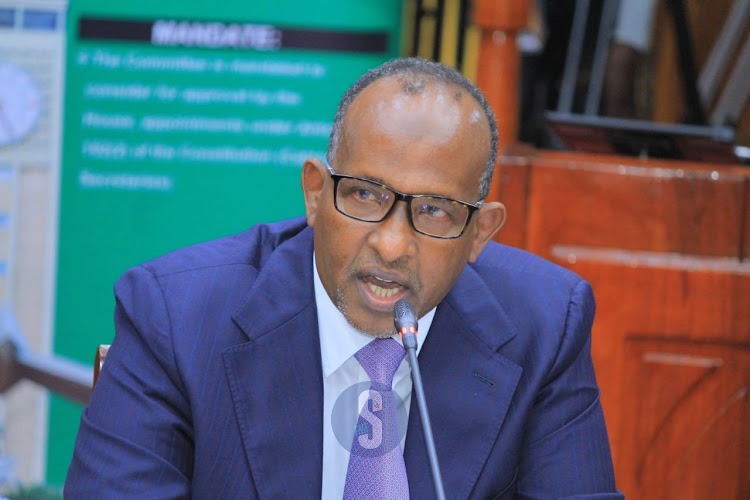
Health Cabinet Secretary Aden Duale told Parliament on Wednesday that the Ministry of Health has strengthened all key response pillars amid heightened concern over the disease in the region and the movement of Kenyans between neighboring countries.
"Mr. Speaker, the Ministry has activated preparedness measures across all key response pillars. These include coordination, surveillance and contact tracing, laboratory diagnostics, case management, infection prevention and control, risk communication, logistics, human resources and regional collaboration," Duale said.
At the center of the response is the activation of the National Incident Management System, which is coordinating preparedness efforts between the national government, counties and development partners.
"In coordination, the Ministry has activated the National Incident Management System and convenes regular coordination meetings with counties, national agencies and partners," he said.
"A national Ebola Preparedness and Response Plan has been developed, and a 4-W matrix is being used to track who is doing what, where and when, to improve accountability and reduce duplication."
The CS said surveillance systems have also been strengthened across the country to improve early detection of suspected cases.
"In surveillance, health facility and community-based surveillance have been intensified. Ebola case definitions have been distributed to counties, and Rapid Response Teams remain on 24-hour standby," he said.
He added that counties have been directed to identify and operationalize isolation facilities, holding areas and quarantine centers to ensure they can respond quickly if a suspected case is reported.
The government has also enhanced screening measures at major entry points into the country.
"At Points of Entry, screening has been strengthened through health declaration requirements, temperature screening, symptom assessment and referral protocols," he said.
"Thermo-scanners, holding rooms and ambulance systems are being reviewed and activated in priority ports, including major airports and high-volume land border points."
On laboratory preparedness, the CS said four facilities have been designated to conduct Ebola testing due to the highly hazardous nature of the virus.
"In laboratory preparedness, the virus being an extreme biohazard, four laboratories have been designated for Ebola testing: the National Public Health Laboratory, KEMRI Nairobi, KEMRI Kisumu and a mobile laboratory deployed to Busia," he said.
"These laboratories are equipped for molecular diagnosis, with the mobile laboratory positioned to reduce turnaround time in the border region."
However, Duale acknowledged that while Kenya's laboratory infrastructure is ready, available testing supplies and protective equipment remain limited.
"While laboratory capacity is strong, current stocks of specialized test kits, reagents and personal protective equipment are estimated to support only approximately the first 200 suspected cases," he told lawmakers.
"This is why additional emergency financing and partner support are required to build adequate testing capacity."
The CS also highlighted the risk posed by the large number of Kenyans living and working in countries within the region, including Uganda and the Democratic Republic of Congo.
According to Duale, many Kenyans employed by regional businesses and financial institutions travel frequently between the countries, increasing the possibility of exposure should an outbreak occur.
"In addition, Kenya has approximately 450 personnel in the DRC peacekeeping mission. Any of these Kenyans could be exposed and would require quarantine and isolation facilities back home in Kenya."
The government has maintained that no Ebola cases have been confirmed in Kenya, but says preparedness measures are being strengthened to ensure rapid detection, isolation and response should the disease cross the country's borders.