

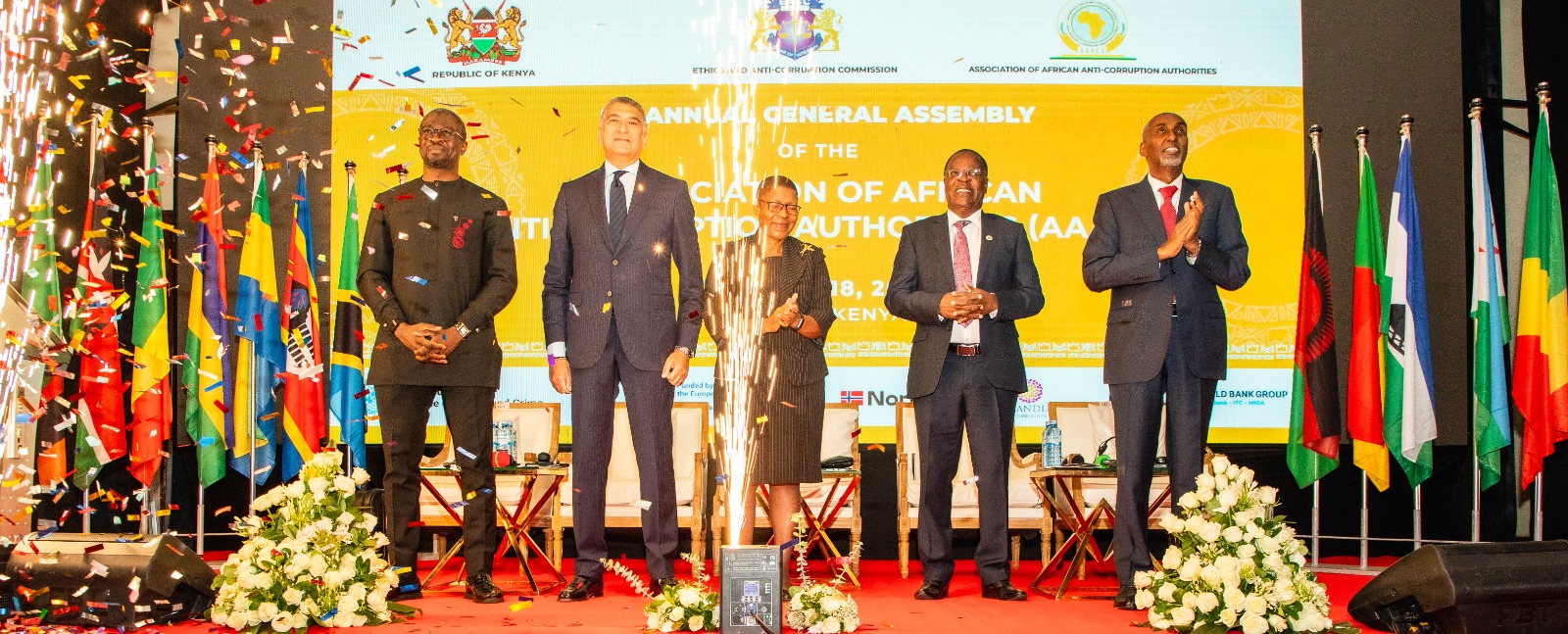
The Ethics and Anti-Corruption Commission (EACC) has launched Africa’s first anti-corruption research centre in Nairobi and called for stronger cross-border cooperation to tackle increasingly sophisticated corruption networks and illicit financial flows across the continent.
The launch of the Anti-Corruption Studies and Research Centre (CEREAC) marked a key milestone during the 8th Annual General Assembly of the Association of African Anti-Corruption Authorities (AAACA), held in Nairobi on Wednesday.
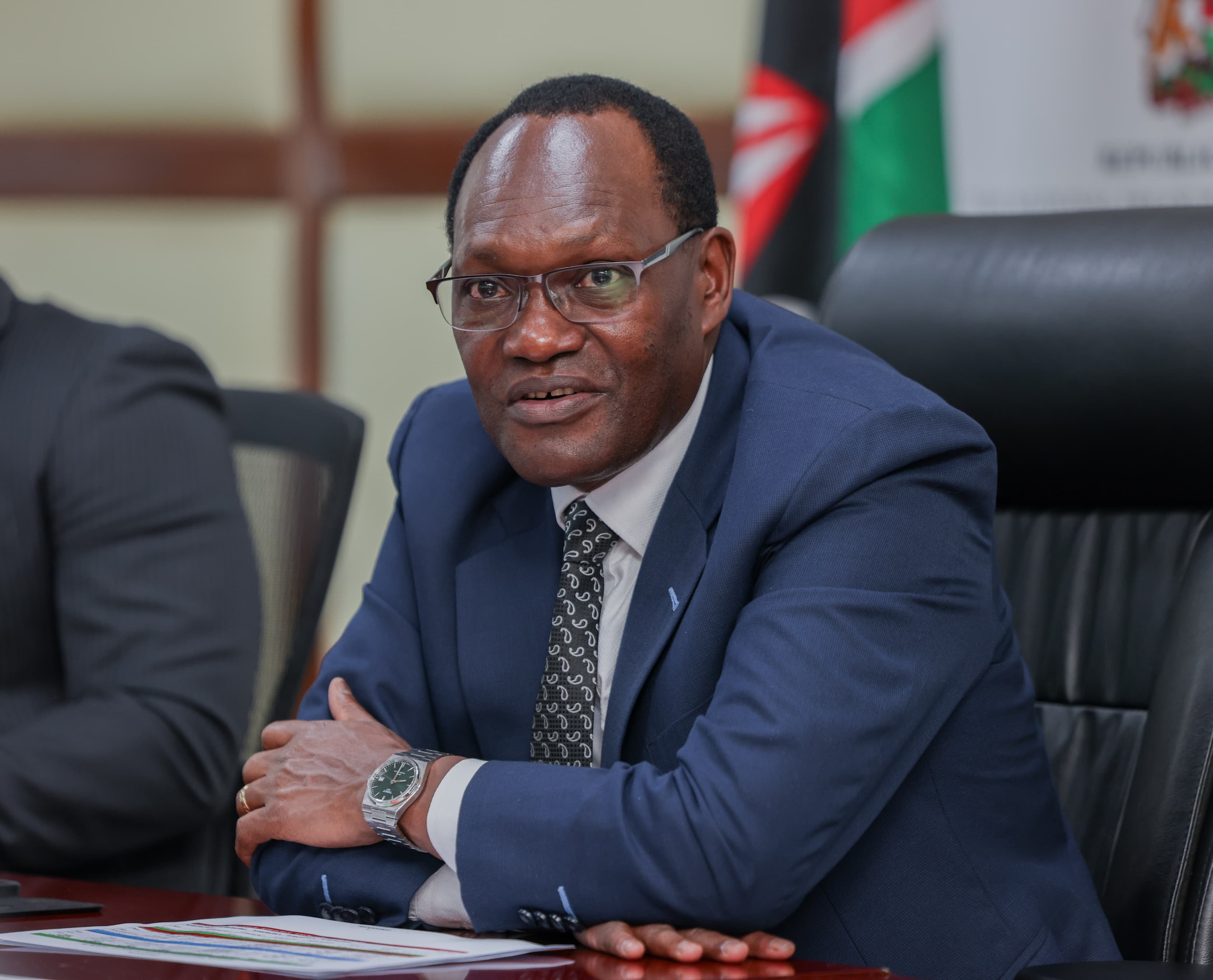
Speaking during the opening of the assembly at the Central Bank of Kenya Institute of Monetary Studies, EACC Secretary and Chief Executive Officer Abdi Mohamud said corruption has evolved beyond national borders, requiring coordinated responses by African states and institutions.
“The fight against corruption is no longer merely a national concern; it is a continental and global imperative,” Mohamud said.
He noted that corruption continues to undermine economic growth, weaken public institutions and erode public trust, making collective action among African anti-graft agencies increasingly necessary.
The assembly brought together delegates from across Africa and beyond under the theme: “Strengthening Cooperation and Institutional Innovation for Effective Anti-Corruption Efforts in Africa.”
Mohamud said anti-corruption agencies must strengthen collaboration as corruption schemes become increasingly sophisticated and transnational.
“As corruption schemes become increasingly sophisticated and transnational, our response must be equally dynamic, innovative, and collaborative,” he said.
He said delegates would deliberate on measures to strengthen mutual legal assistance, information sharing, joint investigations and coordination among regional anti-corruption networks.
“These conversations are essential if we are to effectively confront illicit financial flows and corruption networks that transcend national jurisdictions,” Mohamud said.
Mohamud observed that citizens increasingly expect anti-corruption institutions to demonstrate tangible results through the tracing, freezing, confiscation and recovery of proceeds of corruption.
According to him, sharing experiences and best practices in asset recovery would strengthen the ability of institutions to return stolen public resources for the benefit of citizens.
A major highlight of the assembly was the official launch of CEREAC, which will serve as AAACA’s research and analytical arm.
The centre, which will be hosted in Nairobi, is expected to strengthen evidence-based anti-corruption policy, research, capacity building and knowledge sharing across the continent.
“CEREAC will serve as AAACA’s research and analytical arm. Endowed with legal personality and administrative and financial autonomy, the Centre represents a major step forward in strengthening evidence-based anti-corruption policy, research, capacity building, and knowledge sharing across the continent,” Mohamud said.
The launch marks the culmination of a four-year process that began in June 2022 during the fifth AAACA General Assembly in Bujumbura, Burundi, where member institutions resolved to establish the centre.
The facility was formally created during the sixth General Assembly in Johannesburg, South Africa, in August 2023, before Kenya was unanimously selected as the host country during an extraordinary virtual assembly in January 2024.
At the seventh General Assembly held in Algiers, Algeria, in July 2025, member institutions resolved to officially launch the centre during the Nairobi meeting.
Mohamud urged member institutions to support the centre through collaborative research, technical expertise and the exchange of knowledge.
“The success of the Centre will depend on our collective commitment to generating the evidence and insights necessary to strengthen anti-corruption interventions across Africa,” he said.
He further warned that technological advancements, digital financial systems, virtual assets and complex corporate structures have created new avenues for concealing illicit wealth.
“Our institutions must therefore continually enhance their technical capabilities to detect, investigate, and prosecute corruption in the digital age,” Mohamud said.
The EACC chief said African countries must continue working together to strengthen institutions guided by integrity, accountability and transparency.
“Let us reaffirm our shared vision of an Africa where integrity prevails, public resources serve the common good, and institutions are guided by the highest standards of accountability,” he said.