MUGWE: The unseen budget: Seeing beyond the Sh4.8 trillion
This budget also deserves credit for making a harder, quieter choice on how it proposes to raise its money
by SUSAN MUGWE
Audio By Vocalize
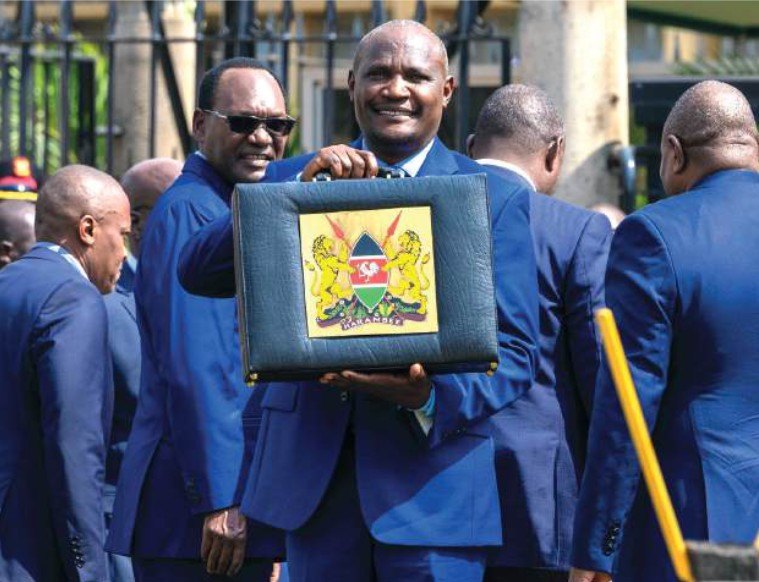
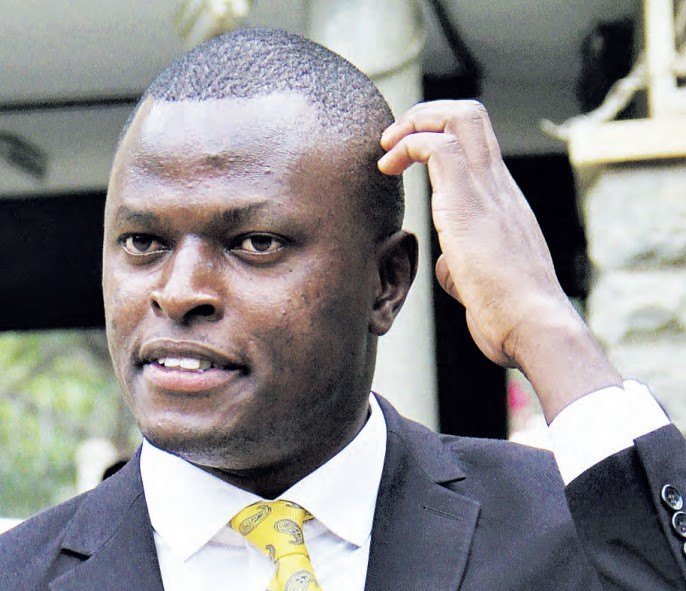
National Treasury and Economic Planning Cabinet Secretary John Mbadi outside the Parliament Buildings in Nairobi on June 11 /KELLY AYODI/ XINHUA)
Once upon a time, in a bustling village square, a young boy
playing a carefree game accidentally shattered a shopkeeper’s window. Hearing
the crash, an angry crowd quickly gathered around the glittering shards of
glass.
At first, the townsfolk muttered in annoyance, but as they
stared at the damage, a curious philosophical mood washed over them. One
observer wisely noted that the broken pane was a blessing in disguise because
it meant work for the local glazier, who would earn six francs and spend them back
in the village.
Then the brilliant French Economist, Frédéric Bastiat, let
this comforting illusion settle over the crowd before he stepped forward to
ruin it. Yes, he conceded, the glazier earns his six francs.
That is what is
seen. But the poor shopkeeper will no longer buy the new shoes or the book he
had intended to purchase. The glazier's visible gain is simply the cobbler's
silent, invisible loss. There is that which is seen, and that which is not seen
(Ce qu'on voit et ce qu'on ne voit pas).
The whole of statecraft lives in the quiet gap between the
two.
This week the National Treasury Cabinet Secretary John
Mbadi, opened the customary briefcase and read out a number. Sh4.8 trillion.
Then we listened as trillions, billions, deficits, ceilings, tax measures,
exemptions and allocations were read out.
Shortly after as has been the norm,
analysts told us who the losers and winners were, citizens asked what has gone
up and politicians attacked or defended.
Kenya is currently operating in a very difficult fiscal
environment. Debt obligations remain real and public expectations are high.
Every sector has urgent needs and citizens want lower costs, better services,
functioning institutions, reliable infrastructure, safer communities and a
government that can do more with less.
Treasury must therefore perform a
difficult balancing act of keeping the state functioning, supporting growth,
protecting vulnerable households, maintaining credibility with lenders and
investors, all while avoiding to place unbearable pressure on Kenyans.
That is not a small task.
A budget is not merely an accounting document. It is a
statement of national direction which informs us what the state considers
urgent, what it is willing to protect, what it wants to unlock, and where it
believes the future can be built.
This year’s budget comes at a time when Kenyans are not just
economically strained, but also psychologically fatigued. They have heard
allocations before and seen billions assigned. But they no longer clap. Instead,
they ask, will it reach me? Will it work? Will it be stolen? Will it change
anything?
This is not cynicism. It is lived experience.
But like Bastiat, let us examine what is unseen in this
budget by first considering what a budget is tempted to do, especially in the
year before an election. The obvious thing would be a crowd-pleasing handout,
the giveaways that buy headlines and votes. Yet this budget chose the unseen.
Allow me to unpack some of them because they are easy to
miss beneath the noise.
Let us start with the deficit. The budget aims to reduce it
from 5.5 per cent of GDP towards 3.3 by 2028-29. This is not exiting politics,
but it is responsible housekeeping.
The citizen who will fully benefit from
this is the one who today cannot yet vote, who will not inherit a mountain of
borrowing, and whose shilling will not be eaten by tomorrow’s interest bill.
Choosing restraint before a general election is not easy. It means using
political courage today for citizens who may never know who protected them.
That is the kind of long-term thinking that Bastiat valued.
Then there is the question of how we will build the future.
Infrastructure should not be reduced to pouring concrete. Good infrastructure
is an argument against waste.
A road that reduces travel time, a market that
reduces post-harvest losses, a power connection that allows a small enterprise
to operate returns value many times over.
The public often sees the
construction cost first. What is less visible is the cost that poor
infrastructure has already been imposing on the people such as lost time,
damaged goods, missed opportunities, wasted fuel and raised prices. In this
case, the budget is not simply spending money. It is buying back time.
This budget also deserves credit for making a harder,
quieter choice on how it proposes to raise its money. It recognised that the
government cannot and should not carry every development burden alone.
So it
reached past its own balance sheet for the unseen private patience through an
expanded use of public-private-partnerships and the new National Infrastructure
Fund by summoning capital it cannot tax into being.
Treasury acknowledged that
the real budget is not the money it commands, but rather the investment it can
persuade others to make. This is because private money is a cautious animal.
It goes where the
shilling holds its value between signing contracts and settlement, where
inflation does not yo-yo, and where one year’s rules will resemble the
following year’s.
This PPP model was not
a retreat from responsibility. It was fiscal adulting in acknowledging that
national ambition must be financed creatively so that public money goes only
where public money can go, while commercially viable projects should attract capital
from those willing to invest for a return.
The other budget unseens were the fertiliser subsidy that
held at Sh18 billion so that a farmer in Trans Nzoia can plant with confidence,
or the Sh9.4 billion to settle the landless, who appear in no growth statistic.
These may not be the lines that dominate the evening news, but they speak to
the quiet moral architecture of the budget.
For instance, a fertiliser subsidy
is a bet on the next harvest and is the unseen bag of maize that will be
cheaper, the school fees that will be paid because the yields improved and the
miller whose machine will not sit idle.
Likewise, land settlement is not simply a welfare gesture
but an act of inclusion. A family with land has an address, dignity,
collateral, identity and an inheritance from which they can plan.
The economy
often measures output, but a serious state must also measure belonging. This
budget brought invisible citizens into the national ledger.
One of the most positive unseens in this budget is the quiet
movement towards better public finance disciple. The use of zero-based
budgeting may sound technical to many people, but its promise is priceless.
Do
not fund something merely because it existed in the previous budget but make
every shilling justify itself. This was an important shift. It told ministries,
departments and agencies that the age of automatic entitlement must give way to
the age of demonstrated value.
A government that is willing to question
inherited spending habits is shifting away from the hidden cost of lazy
expenditure.
Another positive unseen in the budget is the treatment of
small traders and ordinary livelihoods. By reducing VAT burdens on mitumba, the
budget acknowledged that the informal economy is not an embarrassment to be
wished away. It is where millions of Kenyans survive with dignity. This was an
important philosophical shift.
For far too long, the economic debate has treated formality
as virtue and informality as failure. But for many Kenyans, informality is not
a choice but the easiest available pathway into enterprise.
A supportive budget
must therefore avoid crushing small traders in the name of perfect order. On
this, the budget demonstrated a useful instinct.
And consider the teacher. The budget confirmed 20,000 intern
teachers into permanent and pensionable terms from January 2027, with a further
24,000 to follow.
The unseen is a young Kenyan who can now plan a family, buy
an asset and show up in class confident of the security of an assured income.
Dignity, too, is a fiscal outcome. It simply never makes the headline.
Underneath all of this sat the quietest number of all. The
economy grew at an average of about five per cent between 2022 and 2025, ahead
of the global average of 3.4 per cent and Sub-Saharan Africa's 4.1 per cent.
The unseen here is confidence. Growth at that level, in a period of global
uncertainty, tells a story of quiet resilience, and of a country that is still
expanding even under fiscal pressure.
The budget should therefore be read as a disciplined attempt
to do several difficult things at once. Consolidate without strangling growth,
invest without pretending resources are unlimited, protect households without abandoning
fiscal responsibility and invite private capital without surrendering public purpose.
In an election season, that is not the easiest path. It is the quiet work of
national renewal. And because much of that work is unseen, it deserves to be
celebrated.
Finally, my unsolicited advice is twofold. First, to
Treasury. The unseen is a virtue only if it eventually becomes seen.
Allocations must become services. Programmes must become livelihoods. Borrowing
must become productivity. And taxes must become visible public value.
Conversion must be the operative word.
Second, is to Wanjiku. Let us learn to read both the seen
and unseen in budgets. So before we ask what we got, let us also ask the burden
that was never imposed in the form of new levies. The seen will always shout
but the discipline is in choosing to look at the columns that do not. The
window, after all, was never the point.
There is only one difference between a bad economist and a
good one: the bad economist confines himself to the visible effect; the good
economist takes into account both the effect that can be seen and those effects
that must be foreseen - Frédéric Bastiat
The writer is a political economist
This is premium content
Subscribe to Continue Reading
Help us continue bringing you unbiased news, in-depth investigations, and diverse perspectives. Your subscription keeps our mission alive and empowers us to provide high-quality, trustworthy journalism. Join us today to make a difference!