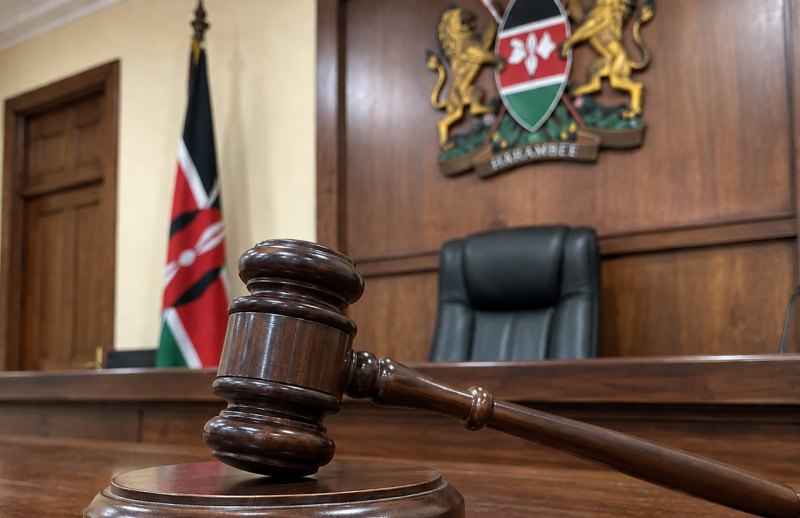



A man sentenced to death for robbery with violence has lost his bid to overturn his conviction and sentence after the High Court in Nyandarua dismissed his petition.
Joseph Njuguna Muhia had challenged the legality of his conviction and death sentence, arguing that although the death penalty has not been abolished, its mandatory imposition on convicted persons regardless of their personal circumstances is arbitrary.
He argued that imposing the same punishment on all offenders without regard to the specific facts of each case amounts to degrading treatment.
Muhia asked the court to find that his rights under Articles 25(c) and 50 of the Constitution had been violated. He sought a declaration that his conviction and sentence were unconstitutional, invalid and a nullity.
He also asked the court to set aside the conviction and sentence or order a fresh trial before a different magistrate. He further sought compensation.
The State opposed the petition, maintaining that Muhia was lawfully tried and convicted and that his subsequent appeals before the High Court and the Court of Appeal had already been dismissed.
“The petitioner’s rights under Articles 25, 29 and 50 were not violated as he was accorded a fair trial, was allowed to defend himself before being convicted and a lawful sentence was imposed as permitted by Article 26(3) of the constitution; therefore, no violation,” the court heard.
“Re-sentencing would therefore be misconceived and should not be available as of right in the circumstances herein.”
The State also relied on the Supreme Court’s directions in Muruatetu 2, which held that the declaration on the unconstitutionality of the mandatory death sentence applied only to murder cases and did not extend to other offences, including robbery with violence under Section 296(2).
Justice Kiarie Waweru agreed with the State, noting that the death penalty remains lawful under the Constitution.
The court emphasised that Article 26(3) of the Constitution permits deprivation of life only where it is authorised by the Constitution or other written law.
Justice Waweru found that Muhia had already exhausted the normal appellate process, observing that the issues raised in the petition ought to have been addressed during the first appeal, which had access to the trial court record.
"Based on the previous analysis, I conclude that the petitioner is attempting a second attempt, albeit disguised. Therefore, the petition is dismissed," Justice Waweru ruled.