

 Absenteeism reignites debate over parliamentary accountability and representation.
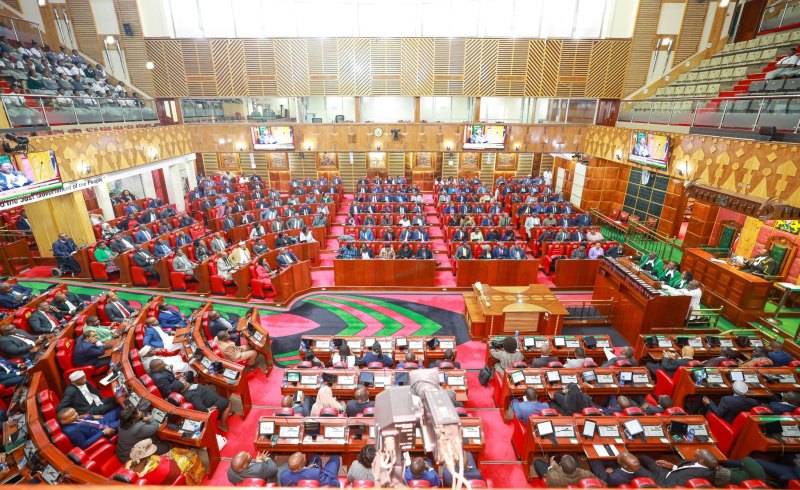
More than half of Members of the National Assembly did not participate in a vote that will shape taxation and public spending for millions of Kenyans in the next financial year, raising questions about their commitment to their constitutional mandate of representing the electorate at a critical moment.
In a House comprising 349 elected and nominated members, only 162 MPs participated in the final vote on the Finance Bill, 2026 at the Third Reading stage, with 122 voting in support and 40 opposing the legislation.
The passage of the Bill now clears the way for it to be forwarded to President William Ruto for assent before it becomes law.
Government-allied MPs and members of the broad-based administration provided the numbers needed to pass the Bill, with support accounting for 75.3 per cent of those who voted, compared to 24.7 per cent who opposed it.
The outcome means that only 46.4 per cent of all MPs took part in the vote, while 187 members — representing 53.6 per cent of the House — were absent or did not cast a vote during one of the most closely watched parliamentary processes of the year.
The Bill was passed with amendments after MPs adopted recommendations by the Finance and National Planning Committee to drop several contentious tax proposals.
The changes could reduce the government's projected additional revenue collections of Sh120 billion intended to support financing of the Sh4.8 trillion 2026-27 budget.
The revenue target is significantly lower than projections associated with the controversial Finance Bill, 2024 which was dropped after widespread rejection, reflecting the government's effort to avoid introducing sweeping new taxes on households after similar proposals triggered nationwide protests two years ago.
Attempts by opposition MPs led by allies of former Deputy President Rigathi Gachagua to secure a recorded division vote were unsuccessful.
Such a vote would have publicly identified how each MP voted and provided constituents with a clear record of their representatives' positions on the Bill.
The legislation had earlier sailed through its Second Reading by acclamation rather than through a roll-call vote, similarly denying the public a detailed breakdown of individual voting positions.
Some observers have suggested that reluctance to pursue a recorded vote may have been informed by the experience of the Finance Bill, 2024, when some MPs who supported the legislation faced intense public backlash, including the targeting of their homes and businesses.
As the vote brought to a close weeks of political lobbying and debate both inside and outside Parliament, questions persisted over the large number of lawmakers who stayed away from the chamber as the House considered the decisive legislation.
On social media, some Kenyans argued that failing to attend the session amounted to avoiding accountability on an issue with far-reaching implications for taxpayers.
"Absconding was a well planned way of voting YES. They simply played with our minds," one commenter wrote.
The high absenteeism also reignited calls for a reduction in the number of elected representatives.
"Let us reduce the number of MPs to 47. Each county to elect one MP. With MCAs and county governments, we do not need huge representation. They just proved that Kenyans are not important," another commenter said.
Others questioned whether a decision affecting millions of Kenyans should be made with participation from less than half of the House.
"You read my mind. This begs the question, how many Members of Parliament can represent the millions of Kenyans, and why would less than half the current number make a binding decision? Do we need the rest?" posed another.
"They thought by missing the session they were playing safe. It's same as voting yes and yet in the eyes of Kenyans they didn't vote," another commenter said.
"Absentees vote yes indirectly. It also means that the 187 MPs are an unnecessary load to Kenyans and need to be shed off. We are overrepresented. No value for money," wrote another.