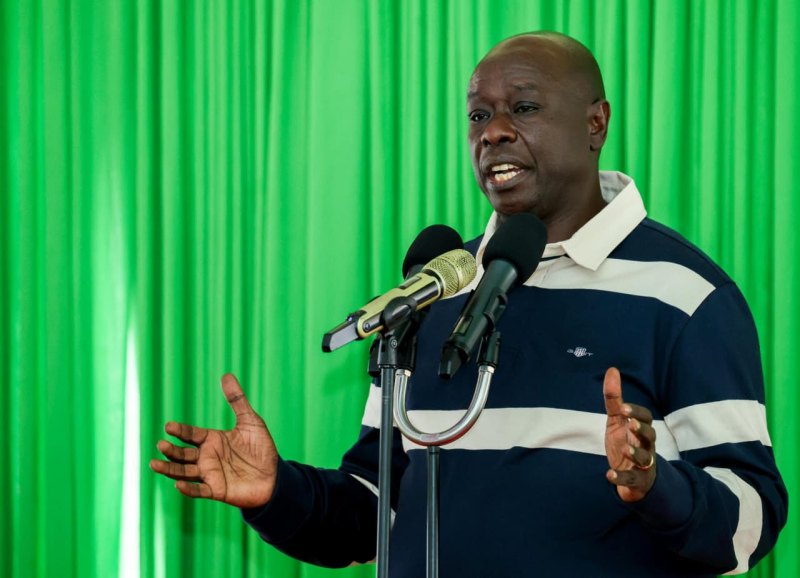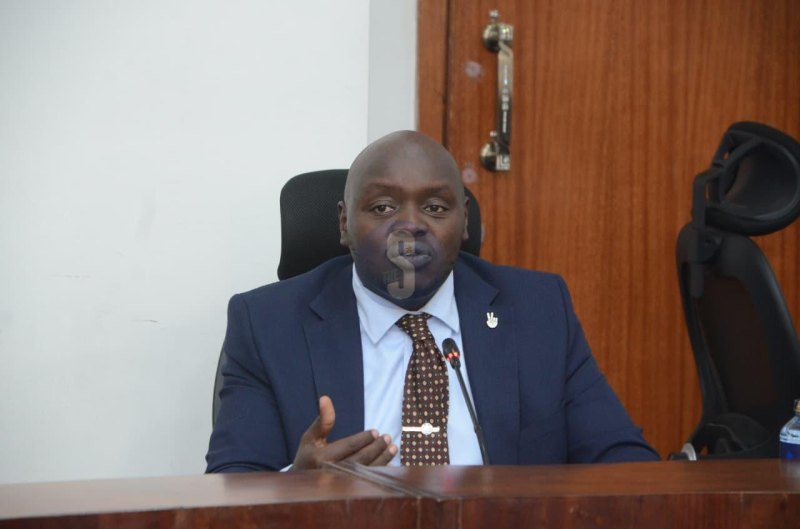


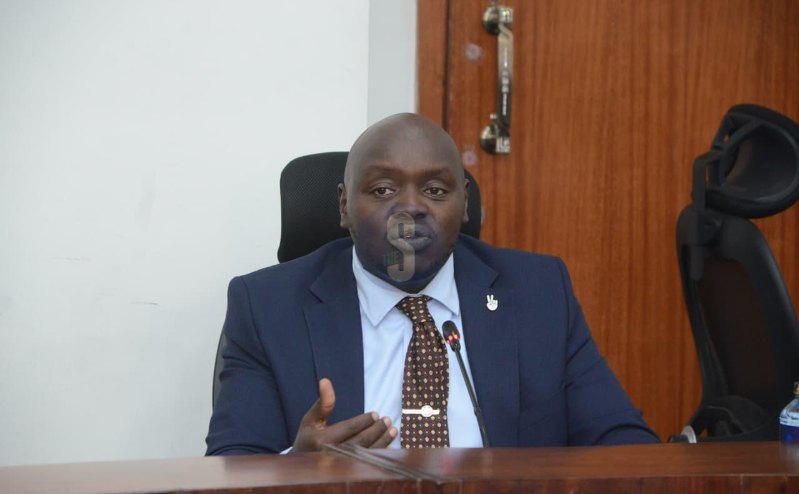
 Nandi Senator Samson Cherargei addressing journalists on yesterday's Finance Bill 2026, at Bunge Towers on June 19, 2026./DOUGLAS OKIDDY
Nandi Senator Samson Cherargei has sparked fresh political controversy after calling for constituencies represented by MPs who voted against the Finance Bill, 2026, to be denied development funding.
The vocal lawmaker argued that legislators who opposed the tax measures cannot expect to benefit from projects financed by the same revenue.
Addressing journalists a day after the National Assembly passed the contentious Bill, Cherargei defended the legislation as critical to financing the Sh4.82 trillion national budget.
He reckoned that Parliament had no option but to approve revenue-raising measures to sustain government operations and development projects.
"The Bill is supposed to raise money to do development in their constituencies and counties. Going into the future, such MPs and their constituencies should receive zero development," Cherargei said.
"It cannot be that they are undermining the raising of revenue to finance development in their constituencies, but then they want to benefit. You cannot have your cake and eat it,” he added.
The senator praised MPs who voted in favour of the Bill, saying they had acted in the country's best interests by supporting measures aimed at financing roads, schools, markets, affordable housing and other public projects.
He, however, criticised more than 180 MPs who were absent during the vote, singling out Kiharu MP Ndindi Nyoro for failing to participate despite frequently commenting on budgetary matters.
"Kenyans should note he is a hypocrite. He has been commenting on budgeting, borrowing and revenue raising, but when it mattered most, he was not in the House," Cherargei said.
The senator was equally harsh on the 40 legislators who voted against the Finance Bill, claiming they were frustrating the government’s development agenda.
"Those 40 MPs have betrayed the trust of Kenyans in terms of raising the necessary resources to build schools, roads, markets and finance development," he said.
Cherargei argued that raising revenue remains the only sustainable way of funding the expanded budget, noting that county allocations had been increased from Sh415 billion to Sh428 billion, requiring additional resources from the national government.
"There will be no development without raising revenue. To finance the budget, we must raise revenue, and the only way is to pass the Finance Bill," he said.
The senator maintained that the passage of both the Finance Bill and the Supplementary Appropriations Bill would unlock funds for stalled infrastructure projects across the country.
He cited the Mau Summit-Rironi highway, which serves motorists travelling to western Kenya, as one of the projects expected to benefit.
"We sleep on the road during Christmas because of congestion. This road will be a major relief for our people," he said.
Cherargei also defended funding for other infrastructure projects, including the Isiolo-Mandera road, saying development should not be politicised.
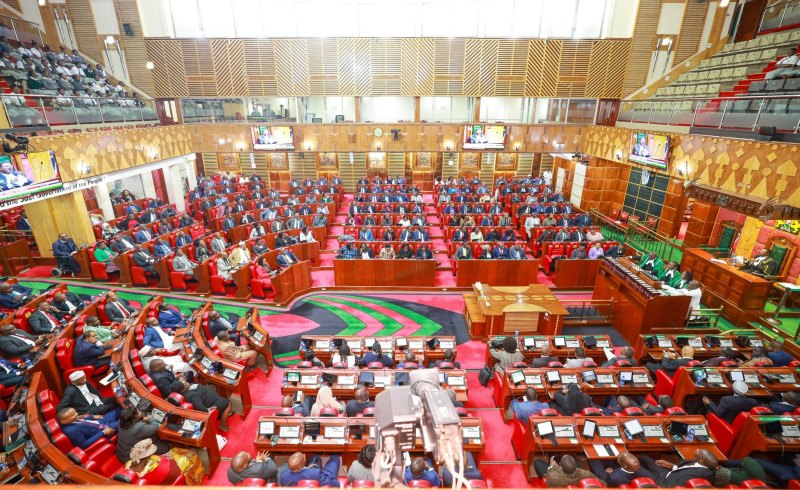
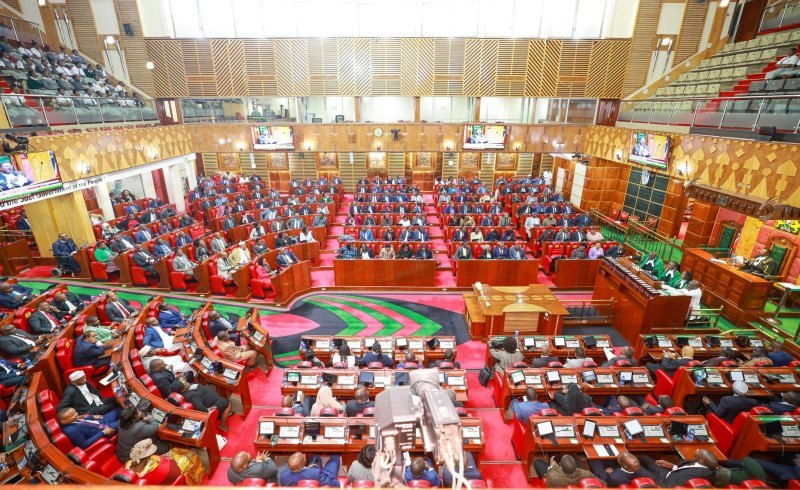
The National Assembly passed the Finance Bill, 2026 after a lengthy debate that sharply divided lawmakers.
While supporters argued that the legislation is necessary to finance government programmes and reduce reliance on borrowing, opponents maintained that some of its proposals would place an additional burden on taxpayers already grappling with the high cost of living.
But Cherargei said the tax bill came with several tax reliefs for ordinary Kenyans.
The vote comes nearly two years after widespread anti-Finance Bill protests forced the government to withdraw the Finance Bill, 2024.
This followed nationwide demonstrations that left dozens dead and prompted President William Ruto to decline assent to the legislation.