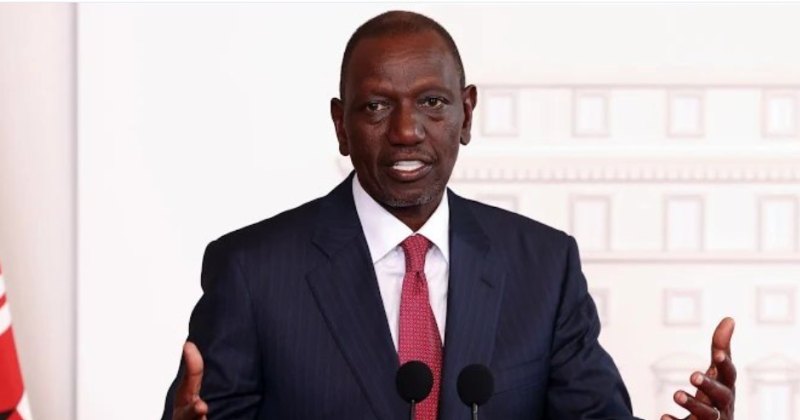

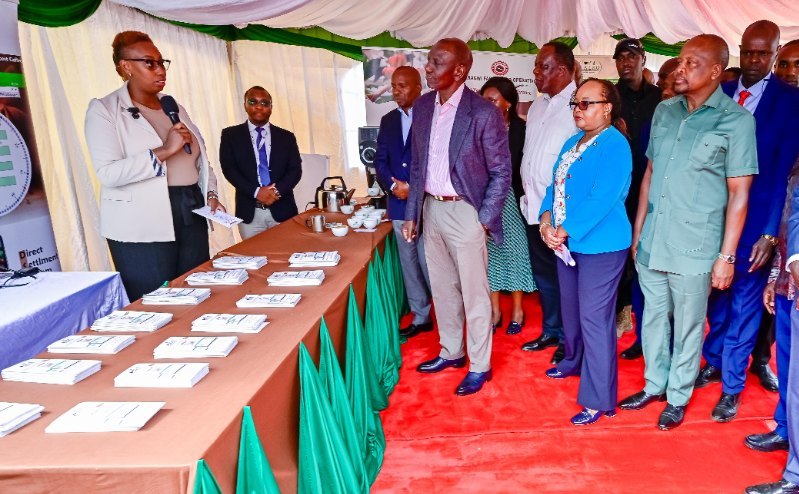
 President William Ruto during the coffee revival meeting at Kassam Stadium in Kirinyaga County on June 22, 2026/ALICE WAITHERA
Coffee farmers in Kirinyaga have received a major boost after President William Ruto waived more than Sh1 billion in debts owed by 14 coffee cooperative societies in the county.
The debt waiver follows an appeal by Kirinyaga Governor Anne Waiguru, who said the historical debts had continued to weigh down farmers and slow the full revival of the coffee sector.
Speaking during the national launch of the Coffee Sector Revitalisation Programme at General Kassam Stadium in Kianyaga, Gichugu Constituency, Ruto announced that the government had set aside Sh2 billion in the 2026/27 budget to clear debts owed by coffee cooperatives across the country.
The President said the move is aimed at easing the financial burden on farmers and strengthening reforms in the sector.
He said Kirinyaga was selected to host the national launch because of its outstanding performance in coffee production, quality and farmer earnings.
"The government has allocated Sh2 billion in the next financial year to settle debts owed by coffee cooperatives and support the ongoing revival of the coffee sector," Ruto said.
Waiguru welcomed the announcement, saying coffee remains the backbone of Kirinyaga's economy, supporting more than 120,000 farmers and thousands of households along the value chain.
Addressing thousands of farmers drawn from 34 coffee-growing counties, the governor urged the national government to fully implement its promise to waive debts owed by cooperative societies.
She noted that Kirinyaga has 14 coffee cooperative societies and 74 coffee factories, which have played a key role in driving the county's agricultural economy.
According to the governor, annual coffee production in the county has increased from 28,000 metric tonnes of cherry in 2017 to 49,100 metric tonnes in the 2025/26 season, generating Sh7.48 billion for farmers.
"Coffee production has continued to rise due to deliberate investments in seedlings, extension services, subsidised fertiliser and modern processing infrastructure," Waiguru said.
She said farmers earned between Sh104 and Sh157.40 per kilogramme of cherry this season, with average payouts rising to Sh139 per kilogramme from Sh134 last year.
The governor attributed the improved returns to interventions such as the installation of eco-pulpers and solar dryers, farmer training programmes and the construction of a modern warehouse at the Kirinyaga County Cooperative Union premises in Kimicha.
She also cited the acquisition of a brokerage licence for the Kirinyaga Slopes Coffee Brokerage Company, which has marketed about 18,255 metric tonnes of clean coffee between 2023 and 2026, earning farmers Sh14.6 billion.
Kirinyaga Central MP Gachoki Gitari called for the speedy implementation of the debt waiver programme, saying it would further accelerate the sector's recovery.
Deputy President Kithure Kindiki praised Kirinyaga's progress, describing the county as a model for coffee production and farmer earnings.
"Kirinyaga has demonstrated that with proper leadership and reforms, coffee farming can become highly profitable for farmers," Kindiki said.
Kindiki also credited government reforms for improved earnings, noting that coffee payouts have risen from an average of about Sh50 per kilogramme in previous years to nearly Sh160 in some factories.
Ruto said the government's long-term goal is to increase farmers' earnings to between Sh250 and Sh300 per kilogramme through improved productivity and expanded acreage.
He said the programme targets production of 150,000 metric tonnes of coffee by 2029, up from current levels, through the adoption of improved varieties and better farming practices.
"The plan is to raise productivity from about two kilogrammes per tree to five kilogrammes per tree while expanding coffee acreage by an additional 100,000 acres," the President said.
Ruto further announced that the government would provide an additional Sh1 billion to counties for the modernisation of coffee factories and another Sh1 billion for the production and distribution of quality coffee seedlings.
He directed that coffee marketing reforms be fully implemented to ensure farmers receive at least 80 per cent of coffee sale proceeds directly through digital payment systems.
The President also challenged Kenyans and public institutions to increase consumption of locally produced coffee to help expand the domestic market.
Farmers attending the forum welcomed the government's commitments but raised concerns over the sale of counterfeit and banned agrochemicals, calling for stricter enforcement to protect coffee production and ensure only approved products reach the market.
"We want stronger action against counterfeit agrochemicals because many farmers cannot easily distinguish genuine products from fake ones," one farmer said.