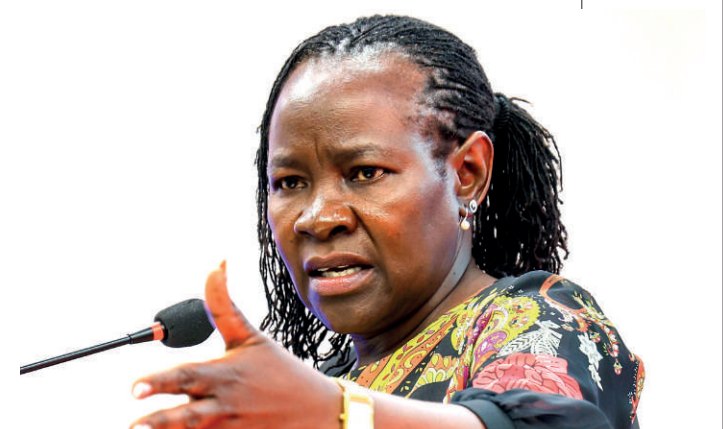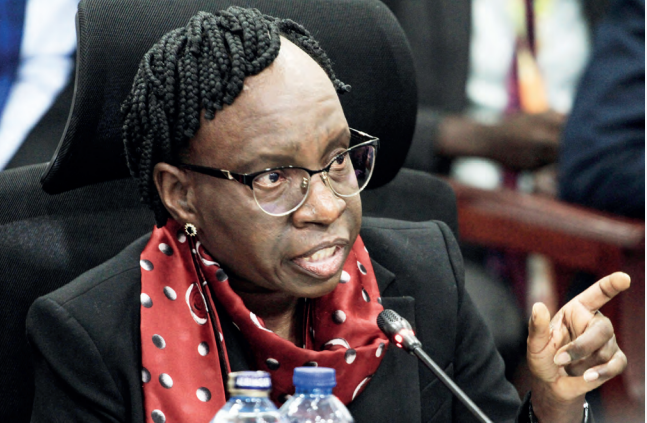


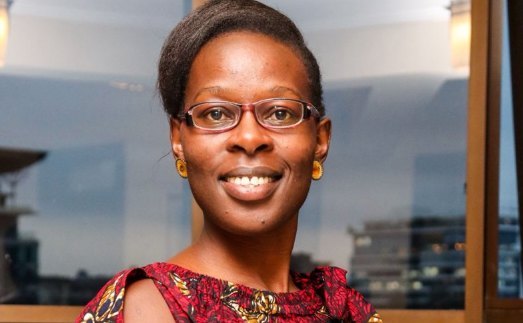
 Jackie Odhiambo, founder and executive director Nyanam Widows rising /HANDOUT
When Betty's husband died 25 years ago, grief was not the only burden she had to bear.
The 50-year-old widow says the deepest wound came not from death itself, but from rejection.
"Rejection is the most painful experience in widowhood," she says.
Betty had been married for only three years when her husband died, leaving her with three young sons, the eldest not yet in school.
The couple lived in Nyeri, where her husband owned a garage business. When illness struck, they relocated to their ancestral home in Kisumu.
As she travelled back to Nyeri to collect her children, tragedy struck. Her husband died.
"My world changed from that moment," she recalls.
Even before he was buried, Betty says her in-laws had taken over everything she and her husband had built together.
A fortnight after the burial, her father-in-law summoned her and informed her that one of her brothers-in-law would take over the garage. He also instructed her to leave the homestead but without her children.
"He wanted me to leave his grandchildren behind," she says.
Betty refused.
Determined to secure her children's future, she returned to Nyeri and embarked on a lengthy fight to reclaim her husband's property.
"When I took back my husband's garage, I knew my relationship with my in-laws would never be the same again."
The battle came at a cost. Beyond property disputes, she faced suspicion and social isolation.
"No woman wanted to see me walking with their husbands because they feared I would snatch them," she says.
Her experience mirrors that of many widows whose struggles begin after the funeral.
For 74-year-old Risper from Nyahera in Kisumu, widowhood became a battle for survival and dignity.
She married in 1965 and lost her husband in 2001, leaving her to care for six children alone.
"For 22 years now, I have had no one to share my burdens with," she says.
Although her children had completed secondary school when their father died, she struggled to ensure they advanced to tertiary education.
But first, she had to defend her land.
"My in-laws claimed all the parcels, including my husband's share. They thought I would die soon after him."
Neighbours also attempted to grab portions of the land, taking advantage of her vulnerability.
Like Betty, Risper learned that widowhood often exposes women to exploitation at the very moment they are grieving.
For Verine, widowhood shattered the future she had envisioned.
"My plan was to get married to a loving husband, have children and raise them together. But God had other plans," she says.
She was only 22 years old and a mother of two when her husband died in 2002.
"Just like that, my world turned topsy-turvy."
At the time, she was a homemaker with no source of income and depended entirely on her husband.
More than two decades later, she says grief does not follow a predictable path.
"There is no formula to mourn a loved one. Sometimes what starts as a wonderful day ends up ruined by endless reminders of your departed loved one."
She describes the journey from denial to acceptance as emotionally exhausting.
Yet, through her pain, Verine found purpose.
After joining Nyanam Widows Rising, a Kisumu-based organisation that equips widows with leadership skills and livelihood opportunities, she began using her story to encourage other women navigating widowhood.
According to Jackie Odhiambo, founder and executive director of Nyanam Widows Rising, stigma remains one of the biggest challenges widows face.
"One in three widows in Kenya experiences stigma linked to widowhood," she says.
"Stigma is the root cause of many of the health, economic and social inequalities widows face. Addressing it is the reason Nyanam exists."
Founded in 2012, the organisation focuses on leadership development, health, livelihoods, justice and youth education.
"Our work helps alleviate widowhood-related poverty, mitigate the impact of HIV/AIDS, and equip widows with tools to challenge oppressive cultural, economic and social practices that undermine their dignity and limit their agency," Odhiambo says.
Over the past four years, the organisation has expanded its reach from supporting 80 widows to more than 800.
Evelyne Odhiambo says the courage displayed by widows inspired the organisation's storytelling initiatives.
"The courage these women showed in the face of stigma and their fight to be seen, heard and respected inspired this anthology," she says.
The organisation also supports widows' children through school fees assistance and youth mentorship programmes focused on environmental stewardship, health education and technology.
Their stories come into focus as the world marks International Widows' Day on June 23, a United Nations-recognised day dedicated to addressing the poverty, discrimination, social exclusion and human rights violations experienced by millions of widows and their dependants worldwide.
The United Nations says the day is an opportunity to push for widows' rights, including access to inheritance, land ownership, pensions, social protection, decent work, equal pay, education and justice.
For women like Betty, Risper and Verine, these rights are not abstract ideals. They are daily realities fought for through courage, resilience and determination.
Their stories reveal that widowhood is not only about the loss of a spouse. It is also about confronting rejection, defending dignity and rebuilding life against overwhelming odds.
And as the world observes International Widows' Day, their call is clear: widows do not need pity. They need recognition, protection and equal rights.