Taxpayers face a potential Sh261.63 billion burden from court awards, pending lawsuits, disputed claims, unpaid contracts and other contingent liabilities accumulated across government ministries, departments and agencies.
A review by
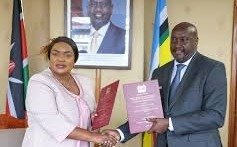
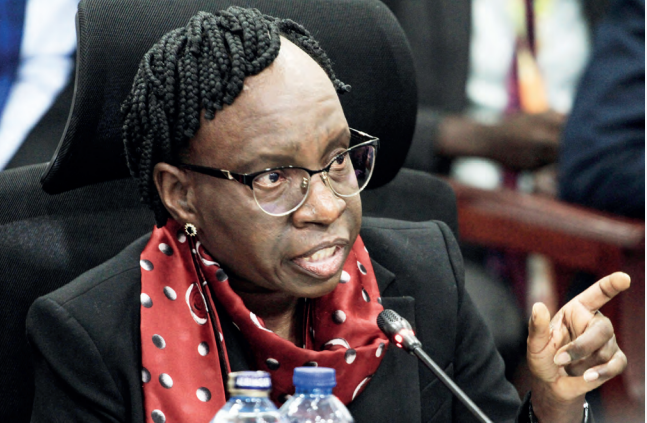
Auditor General Nancy Gathungu for the financial year ended June 30, 2025,
reveals dozens of state entities are exposed to claims running into
hundreds of billions of shillings.
The findings
raise concerns over the growing cost of litigation, contractual disputes and administrative
failures in government.
In her
audit review, Gathungu warned the liabilities have not been provided for
in the government’s financial statements.
The long
and short of this is that they could crystallise into actual debts that
taxpayers would eventually be required to settle.
“The
statement of contingent liabilities reflects a balance of Sh261,632,457,818 in
respect of contingent liabilities as disclosed in financial statements,”
Gathungu says in the report.
“The
significant amount of contingent liabilities poses a potential risk of loss of
public funds,” the auditor general asserted.
She further
notes the amount excludes liabilities relating to constitutional
obligations such as the Equalisation Fund, meaning the exposure could be even
higher.
Contingent
liabilities are potential financial obligations that may arise depending on the
outcome of court cases, arbitration, contractual disputes or other uncertain
events.
Data shared
by the Auditor General shows the largest exposure stems from guaranteed
loans reported under public debt expenditure, amounting to Sh83.24 billion.
The second
biggest liability is under the State Department for Medical Services, which
faces claims worth Sh71.32 billion.
According
to the audit report, the amount includes an avoidable court award of Sh68.42
billion linked to the controversial Managed Equipment Services (MES) programme
and debts owed to the Kenya Medical Supplies Authority (Kemsa).
The MES
programme has been the subject of intense scrutiny for years, with questions
raised over procurement arrangements and contractual obligations entered into
by the government.
President
William Ruto’s administration has since changed its structure, rebranding it as
National Equipment Service Programme (NESP).
The State
Department for Agriculture ranks third with contingent liabilities amounting to
Sh57.17 billion arising from court awards made against the department.
The State
Department for Sports is also facing a potentially costly payout of Sh15.39
billion.
The report
indicates the amount relates to compensation awarded to Telkom Kenya for
the loss of Posta Sports Grounds, which was used by the government in the
construction of Talanta Stadium.
Should the
award be upheld and settled, taxpayers would bear one of the largest single
compensation claims arising from a government infrastructure project.
The State
Department for Internal Security and National Administration has contingent
liabilities amounting to Sh9.4 billion arising from court cases filed against
the department.
The
National Land Commission follows with liabilities worth Sh6.05 billion, while
the State Department for Correctional Services has contingent liabilities of
Sh5.48 billion relating to pending bills that are yet to be verified.
The State
Department for Livestock Development faces a Sh4 billion liability after Halal
Meat Products Limited successfully sued the department and obtained a court
award.
According
to the report, the amount remains unpaid due to a lack of budgetary allocation.
The State
Department for Arid and Semi-Arid Lands (ASALs) and Regional Development is
exposed to claims worth Sh2.43 billion.
The Auditor
General says the liabilities relate to pending bills that were under
verification by the Presidential Verification Committee and to active
litigation matters that were not disclosed.
The
Ministry of Defence has contingent liabilities of Sh2.36 billion arising from
court cases against the ministry.
The
National Police Service faces claims amounting to Sh1.96 billion. The report
shows the amount includes contested electricity charges of Sh323.65
million and disputed insurance premium claims amounting to Sh1.64 billion.
The State
Department for Housing and Urban Development has liabilities of Sh846 million
from court cases, while the Independent Electoral and Boundaries Commission
(IEBC) faces exposure of Sh670.13 million.
The
liabilities facing the electoral agency include court awards and disputes
arising from election-related contracts.
The
Judiciary is listed among institutions with pending liabilities, with
claims amounting to Sh576.59 million.
According
to the report, these are claims by merchants awaiting verification by the
Pending Bills Verification Committee.
The Ethics
and Anti-Corruption Commission faces court-related liabilities worth Sh418.51
million.
Other
agencies listed include the State Department for Environment and Climate
Change, which has contingent liabilities of Sh161.25 million arising from a
court case, and the State Department for Wildlife with liabilities of Sh48.83
million.
The State
Department for Foreign Affairs is exposed to claims worth Sh47.78 million from
court cases, while the Judicial Service Commission has liabilities amounting to
Sh33.04 million.
The State
Department for Technical Vocational Education and Training has contingent
liabilities of Sh20.16 million from court cases and arbitration proceedings.
The
National Police Service Commission is facing claims worth Sh16.17 million
linked to a pending court case.
The
Independent Policing Oversight Authority has contingent liabilities amounting
to Sh898,000, while the State Department for East African Community Affairs
faces claims worth Sh733,573.
The
Commission on Administrative Justice, commonly known as the Ombudsman, has
contingent liabilities of Sh699,500 arising from court cases.
The audit
findings point to the growing financial risks facing the Exchequer from
litigation and contractual disputes involving public institutions.
Experts say
the mounting liabilities point to weaknesses in contract management,
procurement processes, dispute resolution mechanisms and compliance with legal
obligations across government.
Several of
the claims cited by the Auditor General stem from court awards that have
already been issued against state entities, meaning the government may have
little room to avoid eventual payment.
Others
relate to disputes that are still before courts and tribunals but could
ultimately mature into obligations if judgments go against the state.
According
to recent Controller of Budget reports, court awards now form a significant
share of pending bills across both levels of government.
Treasury
data shows while ministries and agencies are required to budget for legal
liabilities, many continue to treat decrees as contingent obligations rather
than fixed debts, allowing interest to accumulate unchecked.
Parliament’s
Public Accounts Committee has repeatedly raised concerns over the trend,
faulting ministries and counties for poor legal risk management and weak
defence of cases, sometimes leading to avoidable losses.
In several
sittings, MPs have questioned why government lawyers fail to pursue appeals
promptly or negotiate out-of-court settlements, allowing interest to pile up
while accounting officers rotate out of office without facing personal liability.
The latest
exposure comes at a time when the government is grappling with rising public
debt, growing expenditure pressures and limited fiscal space.
Any
substantial settlement of the claims would place additional strain on taxpayers
and could force the Treasury to divert resources from development programmes
and public services.
INSTANT
ANALYSIS
The
Sh261.63 billion exposure is equivalent to the annual budgets of several
ministries combined and highlights the potentially enormous cost of government
mistakes, delayed payments, disputed contracts and adverse court rulings. If
even a fraction of the liabilities crystallise into actual obligations,
taxpayers could find themselves footing one of the largest legal and
contractual bills ever accumulated by the public sector.

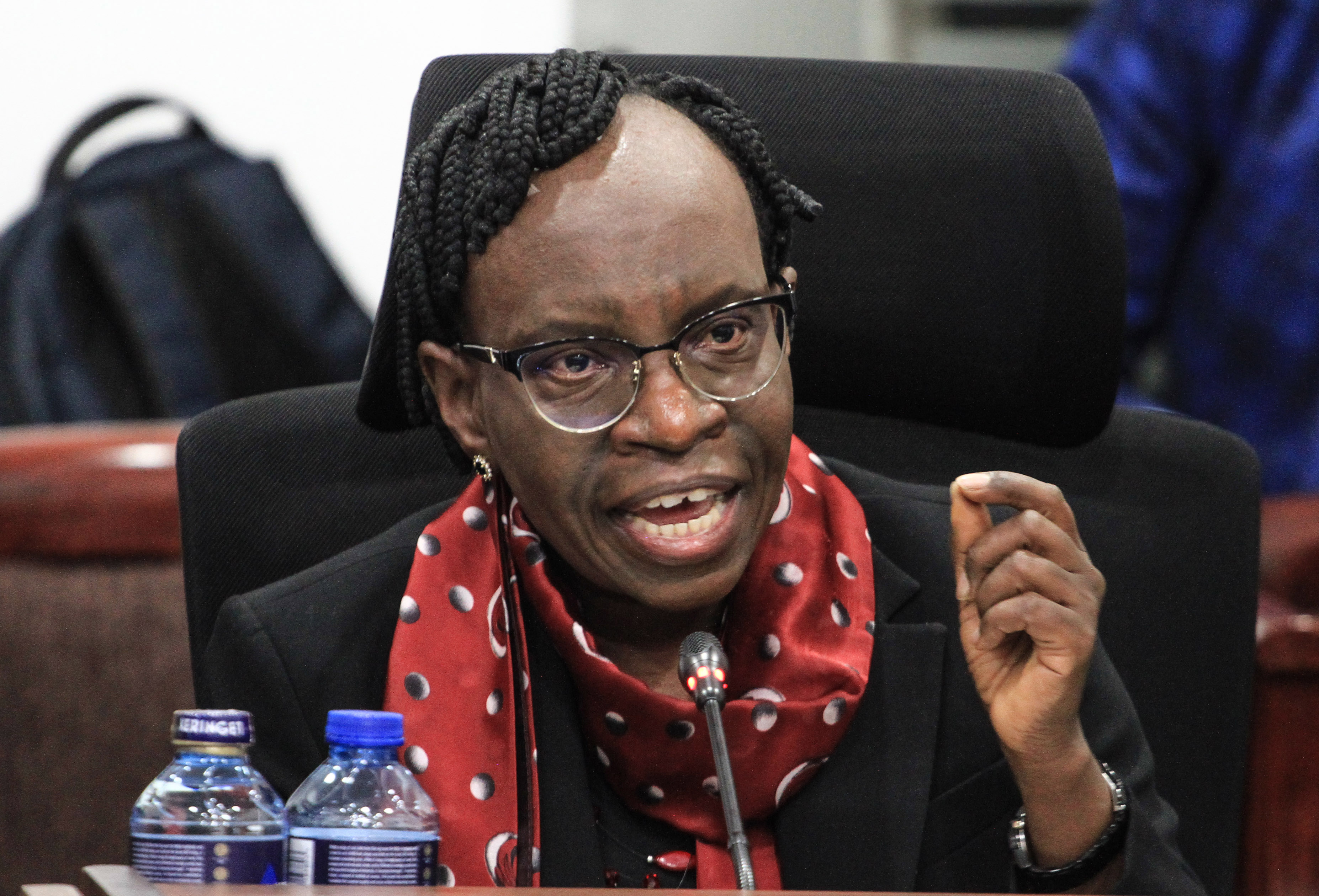 Auditor General Nancy Gathungu./FILE