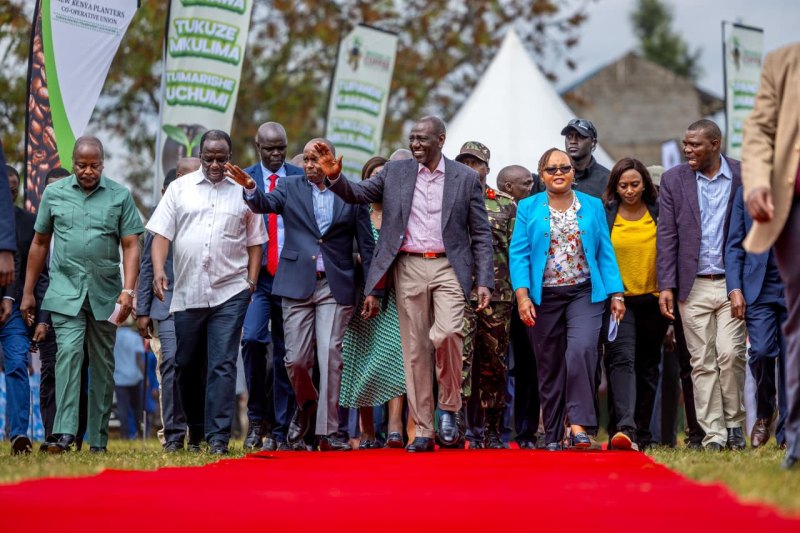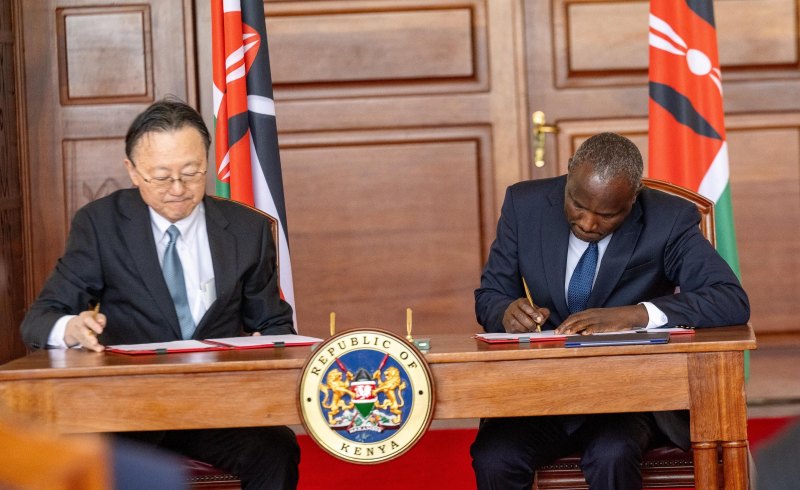


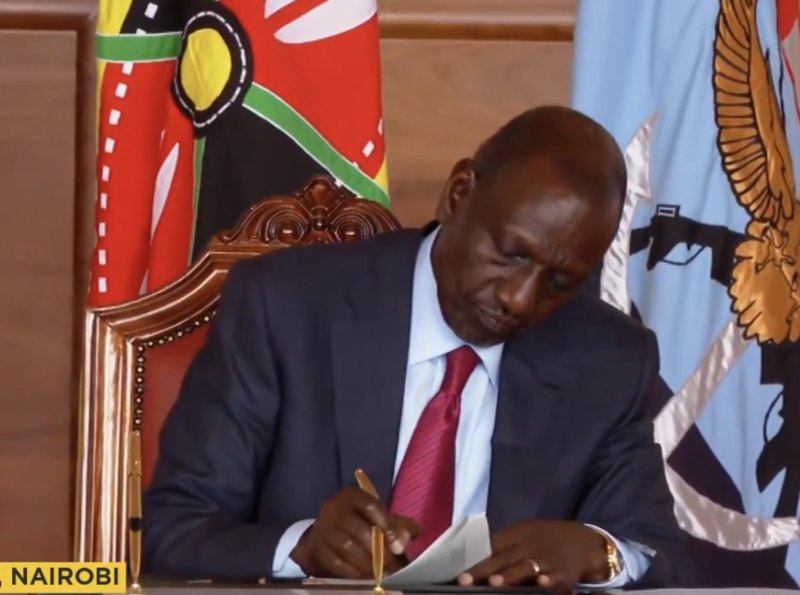
President William Ruto on Tuesday signed the Finance Bill 2026 into law at State House, Nairobi, paving the way for the implementation of a raft of tax and revenue measures contained in the legislation.
The signing ceremony was attended by senior government officials, including National Treasury representatives and lawmakers who spearheaded the Bill's passage through Parliament.
Speaking during the event, Ruto said the new law was the product of extensive public engagement and was designed to enhance fairness in tax administration without imposing new burdens on ordinary Kenyans.
“Before the passage of the Bill, Parliament conducted extensive public participation and opened digital platforms for Kenyans to share their views and suggestions. This law does not raise taxes on ordinary Kenyans; instead, it improves fairness by strengthening compliance, closing loopholes, and ensuring that every person and business pays what is lawfully due,” he said.
The President said the enactment of the Finance Act and the Appropriation Act equips the government with the resources needed to implement its development priorities.
“With my assent to the Finance Bill Kenya now has both the legal framework and the resources to finance its priorities, create jobs, strengthen livelihoods and invest in the future under the Bottom-Up Economic Transformation Agenda,” Ruto said.
He added that the national budget is more than a statement of revenues and expenditures.
“Budget is more than an accounting exercise; it is a statement of national priorities,” he said.
Ruto also dismissed claims that the government had proposed new taxes on land, second-hand clothing and bottled water, saying such assertions were false.
“Contrary to propaganda, misinformation, disinformation and fake news, the government did not propose any taxes that were largely alleged. Specifically, there was no proposal to introduce taxes on freehold land or any land for that matter," he said.
"There was no proposal to introduce taxes on mitumba. There was no change to the rental income tax as alleged. There was no proposal to introduce a tax on bottled water."
The President maintained that public debate surrounding the Finance Bill had in some instances been driven by inaccurate information and reiterated that the measures contained in the law are intended to improve tax compliance, seal revenue leakages and create a more equitable tax system.
Last week, National Assembly passed the Finance Bill, 2026, in its Third Reading with 122 votes in favour against 40 nays.
The vote is among efforts by the government to fund the Sh4.8 trillion budget for the 2026-27 fiscal year.
The vote saw the government's numerical strength prevail despite a consolidated opposition bloc.
Members of President William Ruto's side and the broad-based government coalition backed the Bill, against a camp led by allies of impeached Deputy President Rigathi Gachagua.
Gachagua had directed DCP-allied MPs to reject the Bill and force a division vote to publicly record each legislator's position.
The passage now clears the way for the Bill to be forwarded to President Ruto for assent before it becomes law.