Secrecy, weak oversight expose Kenya's mega projects to graft risks, TI report warns
SGR, Kenya's most ambitious infrastructure project, recorded the highest corruption vulnerability score
by ELIUD KIBII
Audio By Vocalize
AI-GENERATED IMAGE/FILE
Kenya's flagship infrastructure projects remain vulnerable to corruption risks due to secrecy in procurement, weak oversight mechanisms and limited public access to project information, a new report has warned.
The assessment by Transparency International Kenya found that governance weaknesses continue to expose large public investments to risks of conflicts of interest, cost overruns and poor value for money despite years of anti-corruption reforms.
The Corruption Risk Assessment of Infrastructure Projects in Kenya reviewed three major infrastructure projects: the standard gauge railway, the Vihiga Affordable Housing Project and the Kiambu Civil Servants Housing Scheme.
In undertaking the assessment, TI-Kenya acknowledged support from TI-Australia through the use of the Infrastructure Corruption Risk Assessment Tool.
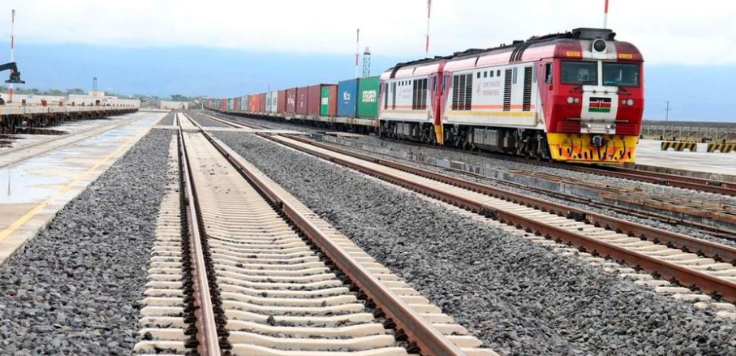
The SGR, Kenya's most ambitious infrastructure project in recent decades, recorded the highest corruption vulnerability score among the projects reviewed, followed by the Vihiga project and the Kiambu Civil Servants Housing Scheme.
While the report stops short of alleging corruption in any of the projects, it evaluates systems and processes that could increase exposure to corruption risks, including procurement practices, transparency, accountability and public participation.
It notes that Kenya is losing more than Sh600 billion through stalled and mismanaged public infrastructure projects. The losses stem from mismanagement of funds, stalled projects, corruption and poor implementation of relevant legislative frameworks.
According to the report, the SGR scored 4.49 out of 5, placing it in the "very high risk" category. The Vihiga housing project scored 3.56, while the Kiambu Civil Servants Housing Scheme scored 3.24, both falling within the "moderately high risk" category.
The Kiambu scheme was executed during President Uhuru Kenyatta's tenure under the affordable housing pillar of the Big Four Agenda, while the Vihiga project was undertaken under President William Ruto’s Affordable Housing Programme.
Transparency International Kenya says the findings point to broader governance challenges affecting infrastructure delivery in the country.
"The results indicate that while Kenya has made progress in establishing legal and institutional frameworks for public procurement and anti-corruption oversight, significant weaknesses remain in implementation, transparency and accountability," the report says.
The organisation identifies limited disclosure of contracts, inadequate access to project documentation, weak grievance mechanisms and insufficient public participation as some of the factors driving corruption vulnerabilities.
The SGR, a multibillion-shilling railway linking Mombasa and Nairobi and financed largely through Chinese loans, was highlighted because of concerns surrounding public access to contracts and financing agreements.
According to the report, key project documents remained inaccessible to the public, making it difficult for citizens, oversight institutions and civil society organisations to independently scrutinise procurement decisions, project costs and implementation arrangements.
The report argues that transparency gaps increase the risk of corruption by limiting external oversight and reducing accountability.
However, analysts note that such concerns are not unique to the SGR or to projects financed through bilateral arrangements.
Similar governance challenges have been raised in relation to infrastructure projects funded through various financing models, including public-private partnerships and multilateral lending arrangements.
The report also flags concerns in Kenya's affordable housing sector, one of the flagship programmes under Ruto's administration.
In the Vihiga Affordable Housing Project, researchers cited limited access to feasibility studies and environmental assessment reports, raising concerns about transparency and public participation.
The Kiambu Civil Servants Housing Scheme was similarly flagged over procurement risks, budget transparency concerns and questions surrounding project implementation.
Beyond individual projects, TI-Kenya flags systemic weaknesses in infrastructure governance.
Kenya received an overall country-context score of 4.125 out of 5, placing it in the high-risk category.
Among the concerns highlighted are weak whistleblower protection mechanisms, procurement irregularities, political influence in public decision-making, limited access to information and persistent public perceptions of corruption.
The report warns that unless these issues are addressed, future infrastructure projects could continue facing governance challenges regardless of who finances them.
"Corruption risks are not confined to specific projects but are embedded within broader institutional and governance systems," the report notes.
The findings come at a time when Kenya is pursuing an ambitious infrastructure agenda spanning housing, roads, energy, transport and industrial development.
The government has repeatedly argued that infrastructure investment remains critical to economic growth, job creation and improved service delivery.
Major projects such as the Affordable Housing Programme, road expansion initiatives and energy infrastructure investments are expected to play a central role in the country's long-term development plans.
Against this backdrop, the global anti-graft agency is calling for greater disclosure of contracts and project information, stronger public participation processes, enhanced whistleblower protections and more robust oversight mechanisms to reduce corruption vulnerabilities.
It argues that transparency should not be viewed as an obstacle to infrastructure delivery but as a safeguard that helps ensure public resources are used effectively.
The report also takes issue with Public-Private Partnership projects, especially privately initiated proposals such as the Adani deals, citing concerns over the misuse of the procurement method.
The 2025 Projects Progress and Status Report indicated that Kenya had a total of 37 Public-Private Partnership projects. Eight projects are currently in the implementation phase, while the remaining 29 are at various stages of development.
This is premium content
Subscribe to Continue Reading
Help us continue bringing you unbiased news, in-depth investigations, and diverse perspectives. Your subscription keeps our mission alive and empowers us to provide high-quality, trustworthy journalism. Join us today to make a difference!




 AI-GENERATED IMAGE/FILE