The government wants Parliament to take sole responsibility for conducting public participation on proposed laws, government policies and programmes.
Prime Cabinet Secretary Musalia Mudavadi argues that the current system of multiple consultations by ministries, state agencies and Parliament is costing taxpayers in excess of Sh20 billion per year.
He said the costs would reduce significantly if Parliament were vested with the exclusive mandate to conduct public participation, while government agencies limited themselves to stakeholder consultations.
Appearing before the Senate National Security, Defence and Foreign Relations Committee on Monday, Mudavadi said the current framework has created costly duplication.
He said the same stakeholders are being consulted repeatedly by ministries before bills are forwarded to Parliament, only for Parliament to conduct another round of public participation.
"We actually need Parliament to help us conclude the law around public participation," Mudavadi told senators.
"Through the government legislative agenda alone, if we were to pursue all the stages required, it could cost Kenyan taxpayers up to Sh20 billion in the process of public participation, based on estimates from various departments," he said.
He said the government wants Parliament to enact legislation making it the only institution with the constitutional responsibility of undertaking public participation on bills.
"Others should do consultations or stakeholder consultations, but Parliament should be vested with the ultimate public participation mandate so that we don't have these multiple centres all purporting to say they are doing public participation," he said.
The proposal comes as the government seeks to cut expenditure amid mounting pressure to reduce the cost of governance.
The move has also revived debate over Parliament's failure, more than 15 years after the promulgation of the constitution, to enact a comprehensive law governing public participation.
Articles 10, 118, 174 and 196 of the constitution make public participation a national value and require both Parliament and county assemblies to facilitate public involvement in legislative processes.
However, the country still lacks a single legal framework prescribing how the exercise should be conducted.
Instead, public participation is currently guided by constitutional provisions, court decisions and scattered requirements contained in different statutes.
Successive attempts to enact a Public Participation Bill have stalled in Parliament despite repeated court pronouncements calling for a clear legal framework to standardise the process.
The absence of such a law has left public participation open to varying interpretations, with different government institutions adopting different procedures, timelines and standards.
The uncertainty has also fuelled frequent legal challenges, with courts striking down laws and government decisions after finding the public was not adequately consulted.
Mudavadi argued that assigning Parliament the exclusive statutory mandate would eliminate duplication, reduce costs and bring consistency to the legislative process while still safeguarding citizens' constitutional right to participate in law-making.
The proposal is expected to generate intense debate, with governance experts and civil society organisations likely to oppose any move they perceive as limiting public engagement during the policy formulation stage before Bills reach Parliament.
INSTANT ANALYSIS
The proposal seeks to address a genuine problem—the rising cost and duplication of public participation—but it also exposes Parliament's long-standing failure to enact a comprehensive Public Participation Act despite constitutional requirements. While centralising the process in Parliament could reduce costs and streamline law-making, critics argue it risks weakening citizen influence during policy formulation, when government proposals are still flexible. The debate therefore pits fiscal efficiency against meaningful public engagement, a cornerstone of Kenya's 2010 Constitution and participatory democracy.
This is premium content
Subscribe to Continue Reading
Help us continue bringing you unbiased news, in-depth investigations, and diverse perspectives. Your subscription keeps our mission alive and empowers us to provide high-quality, trustworthy journalism. Join us today to make a difference!

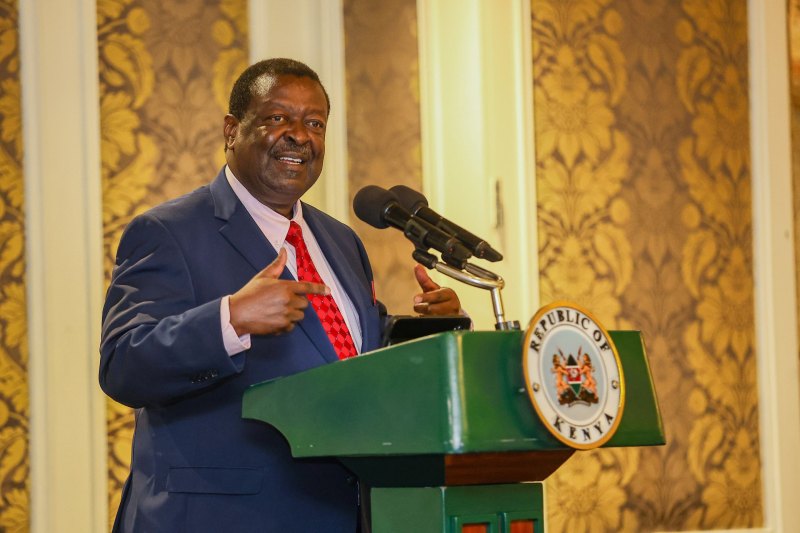
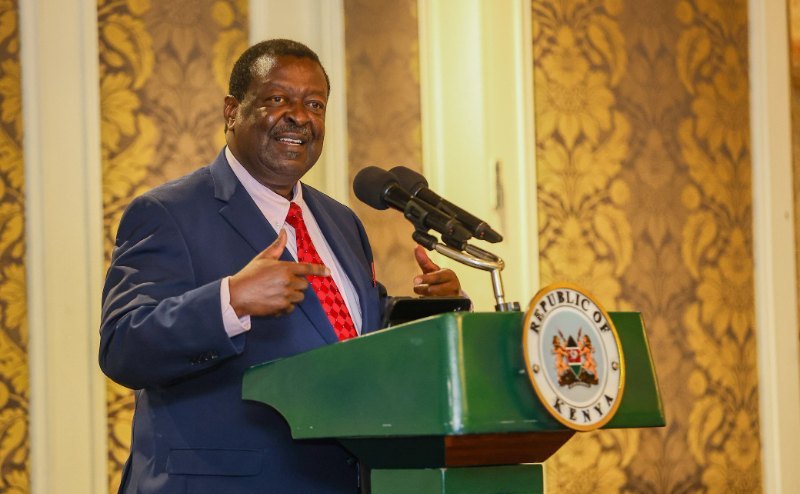 Foreign Affairs Cabinet Secretary Musalia Mudavadi/FILE.