

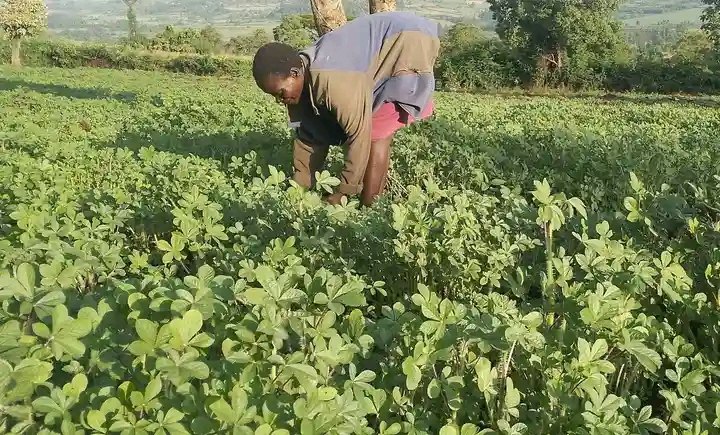
Traditional vegetables, once dismissed as food for the poor, are emerging as one of the most profitable crops for farmers in Lugari Subcounty, Kakamega county, as growing consumer awareness of their nutritional and medicinal value results in a higher demand for the vegetables.
Farmers cultivating black nightshade (managu), amaranth (terere), spider plant (saga), cowpea leaves (kunde) and pumpkin leaves say the crops are generating better returns than conventional vegetables such as kale and cabbage due to their short maturity period, multiple harvests and ready market.
"I harvest after one week and rarely keep the vegetables for long because traders buy everything directly from the farm," says Peter Wekesa, a farmer from Lumakanda.
Wekesa says a 90-kilogramme sack of indigenous vegetables sells between Sh3,500 and Sh5,000, depending on the season and variety, compared to Sh1,500 to Sh2,500 for a similar quantity of kale and cabbage.
Mary Nanjala, a trader at Lumakanda Market, says supplies have become increasingly scarce despite the growing number of customers.
"Five years ago, these vegetables were readily available, but today we struggle to get enough. By 8 am, most of my stock is already bought by consumers," she says.
According to Lugari Subcounty Agriculture Officer Kakai Wekesa, changing consumer preferences have transformed indigenous vegetables from subsistence crops into commercial enterprises.
"Traditional vegetables are rich in iron, calcium, vitamins A and C, as well as antioxidants. More consumers are embracing healthier diets, making these crops commercially attractive to farmers," says Wekesa.
He adds that the vegetables require fewer chemical inputs, mature quickly and can be harvested several times, providing farmers with a steady source of income throughout the year.
The Agriculture Officer attributes the growing market to increased public awareness of nutrition, urban consumers returning to traditional diets, and institutions such as hospitals, schools and hotels incorporating indigenous vegetables into their menus.
Despite the expanding market, production has failed to keep pace with demand.
Agricultural experts cite shrinking land sizes, prolonged dry spells, unreliable rainfall, declining household kitchen gardens and the gradual replacement of indigenous vegetables with exotic crops as the main constraints.
The Kenya Agricultural and Livestock Research Organization says African Indigenous Vegetables contribute significantly to household nutrition while providing smallholder farmers with a profitable enterprise because of their low production costs and frequent harvesting. The crops are also more resilient to changing weather conditions than many exotic vegetables.
Wekesa is encouraging more farmers in Lugari to venture into commercial production and embrace irrigation and farmer groups to bridge the widening supply gap.
"If farmers organise themselves into producer groups and invest in irrigation, they can meet the growing demand while improving household incomes and strengthening food security," he noted
With demand continuing to rise, traditional vegetables are shedding their long-held image as subsistence crops and becoming one of Lugari's fastest-growing agribusiness opportunities.