Kenya has long been celebrated as the birthplace of mobile money,
but the next battle for financial leadership is shifting beyond digital wallets
to artificial intelligence, cybersecurity and seamless cross-border payments.
As consumers demand faster, safer and more personalised financial
services, the country's payments ecosystem is entering a new phase of
transformation.
For global payments giant Mastercard, that future will be built
less on competition and more on collaboration.
The company argues that partnerships between banks, fintechs,
telecom operators and governments will determine how quickly Africa unlocks
inclusive digital commerce, expands access to credit and protects consumers
from increasingly sophisticated cyber threats.
In an exclusive interview with The Star, Vice President and
Mastercard East Africa head of business development Victor Ndlovu, discusses
why AI is becoming the new engine of financial inclusion, how the company is
adapting to Kenya's mobile-first economy and what it will take to make digital
payments cheaper, more secure and accessible across Africa.
Kenya is widely
seen as a global leader in mobile money innovation. How does Mastercard view
the evolution from mobile payments to AI-driven financial ecosystems?
Kenya’s leadership in mobile money
innovation has helped redefine financial inclusion globally, and we are now
seeing the ecosystem evolve beyond digital payments toward more intelligent,
AI-driven financial ecosystems.
The next phase of growth will be shaped
by technologies that can deliver smarter, more secure and more personalized
financial experiences for consumers and businesses.
AI has the potential to strengthen
fraud prevention, improve credit accessibility, enhance cybersecurity and help
SMEs participate more effectively in the digital economy.
The AI in Africa Whitepaper of 2025 says
the African market is projected to grow from $4.51 billion in 2025 to 16.53
billion by 2030,
and intelligent,
secure payments will help drive that growth.
As fintechs,
banks, telcos, and digital asset platforms compete for customers, who do you
believe is best positioned to shape Africa’s financial future — and why?
Africa’s financial future will not be
shaped by a single player, but by the strength of collaboration across the
ecosystem.
Banks, fintechs, telcos and emerging
digital asset platforms each bring distinct capabilities to the table, and the
greatest progress will come from how effectively those strengths are combined
to drive inclusive growth at scale.
The organizations best positioned to
shape Africa’s financial future are those focused on building interoperable,
secure and inclusive ecosystems rather than operating in silos.
The future of payments on the continent
will be defined by partnerships that connect consumers, businesses, governments
and financial institutions seamlessly across markets and platforms.
Cross-border
payments remain expensive and slow across Africa. What practical steps are
needed to make regional digital payments seamless for businesses and consumers?
Creating seamless regional digital
payments across Africa requires greater interoperability between financial
systems, stronger public-private collaboration and continued investment in
modern payments infrastructure.
For instance Mastercard is working with
partners such as Equity Bank and Access Bank to
bring this to life by enabling businesses and customers to seamlessly send and
receive money to and from more than 150 countries using Mastercard Move.
In Kenya, our multi-currency prepaid
card with KCB Bank supports 18 hard currencies, giving
students, frequent travelers and businesses a cost-effective way to manage
international transactions.
How can artificial intelligence improve
fraud detection and cybersecurity in Kenya’s rapidly growing digital
payments market?
The National KE-CIRT/CC, cyber security
report detected over 4.5 billion cyber threat events in a single three-month
period (April–June 2025), an 80.7% quarter-on-quarter increase.
As Kenya’s digital payments ecosystem
continues to grow, AI is becoming increasingly important in strengthening fraud
detection and cybersecurity capabilities.
AI can help financial institutions
identify suspicious activity in real time, detect evolving fraud patterns
faster, and respond more proactively to cyber threats before they impact
consumers or businesses.
As cyber threats become more
sophisticated, continued collaboration between payment providers, financial
institutions, fintechs and regulators will be critical to ensuring that
innovation is matched with strong security, resilience and consumer protection
measures.
Kenya has a strong mobile money culture
led by platforms like M-Pesa. How is Mastercard adapting its strategy to
remain relevant in a market where cards are not always the primary payment
tool?
Mastercard recognises that in markets like Kenya, consumers are
increasingly choosing payment experiences that are convenient, mobile-first and
deeply embedded into their everyday lives.
Our strategy is therefore designed to go beyond cards. We enable a
broader range of digital payment experiences that support how people and
businesses transact today.
This includes working closely with banks, fintechs, mobile network
operators and merchants to enable greater interoperability across the payments
ecosystem.
In Kenya, we are working with Safaricom to expand
payment acceptance and cross-border remittances for more than 900,000 merchants
who use M-PESA.
We
launched Africa’s first rollout of QR Pay by Link service in Tanzania, with NMB Bank Plc.
With Diamond Trust Bank (DTB), Mastercard is offering customized
payment solutions in Kenya, Uganda and Tanzania and has launched Kenya’s first tokenization-based passive payment
wearables.
Many SMEs in Kenya still operate largely
in cash. What will it take to accelerate digital payment adoption among
small businesses and informal traders?
Small and Medium
Enterprises (SMEs) are the backbone of Africa’s economy, and there is a major
opportunity to bring more of them into the digital economy.
Kenya alone is
home to 7.4 million SMEs
that contribute around 40 per cent of GDP and employ nearly 14.9 million people. In
East Africa, our work with KCB and NMB has
supported the digitization of more than 200,000 SMEs.
Solutions like Tap on Phone
and QR Pay by Link make
accepting payments low-cost and
simple. The credentials and data these tools generate then help SMEs build a
credit profile and access financing.
With solutions
like our Business
Credit Card with I&M Bank gives SMEs expense-management tools and clearer visibility over
company spending. That is how small businesses go digital, grow digital and
benefit from the efficiencies of digital commerce.
Digital
lending and fintech innovation have expanded financial access, but
concerns around debt, fraud, and data privacy are growing. How should the
industry balance innovation with consumer protection?
Digital lending and fintech innovation have played an important
role in expanding financial access across Africa, particularly for underserved
consumers and SMEs.
However, as the ecosystem grows, it is equally important that
innovation is supported by strong consumer protection frameworks that promote
transparency, responsible lending practices, data privacy and cybersecurity.
Achieving
the right balance requires close collaboration between fintechs, financial
institutions, regulators and technology partners. Innovation is most impactful
when it is both inclusive and trusted.
What
role do you see digital assets and blockchain-based payment systems
playing in Africa’s future financial infrastructure?
Digital assets
and blockchain-based payment systems have the potential to play an important
role in Africa’s evolving financial infrastructure, particularly in improving
payment efficiency, transparency and cross-border transaction capabilities.
Mastercard
is currently collaborating with more than 60 leading crypto wallets and
platforms to launch a range of products and services.
We are also working with
the NFT market and infrastructure partners to enable simple and safe NFT
commerce. Our crypto
card program is making it simpler and more secure for consumers to transact
across 150+ million acceptance locations.
AI
is transforming industries from agriculture to banking. How can financial
technology companies ensure that AI-driven innovation does not widen
inequality or exclude vulnerable populations?
As AI continues to transform industries across Africa, it is
critical that innovation is developed with inclusion and accessibility at its
core.
Financial technology companies have a responsibility to ensure that
AI-driven solutions do not unintentionally exclude underserved communities,
particularly those with limited digital access, thin credit histories or lower
levels of financial literacy Mastercard’s Strive program partnered
with MESH, a digital community of young informal entrepreneurs under
Shujaaz Inc, to pilot and scale access to formal credit.
Looking
ahead five years, what major shifts do you expect to see in Kenya’s
payment ecosystem, and what role does Mastercard want to play in that
transformation?
Over the next three to five years,
AI is expected to play an increasingly important role in supporting smarter
credit decisioning and advancing financial inclusion by helping lenders assess
risk through broader datasets and enabling more consumers and businesses to
access financial services.
Crucially,
AI will accelerate Africa’s economy and create jobs. It is forecast to generate
up to 230 million digital roles
across Sub-Saharan Africa by 2030 (Mastercard AI in
Africa whitepaper, 2025).
At
Mastercard, we
have been using AI for the past two decades, especially in cybersecurity, investing
around $12.6 billion (Sh1.6 trillion) in cyber resilience
since 2019. Today our AI engine protects more than 175 billion transactions
from fraud every year, and our Decision Intelligence Pro
technology uses generative AI to analyze over a trillion data points in real
time, delivering 200 per cent higher fraud detection.
We need proactive systems that bring
our secure technology, innovation, expertise and insights to an ecosystem where
collaboration between financial institutions, fintechs, telecom operators and
other partners is driving meaningful impact and localized success stories
across Africa.
As we expand
our acceptance network and footprint across the continent, we remain committed
to bringing more people and businesses into the digital economy.

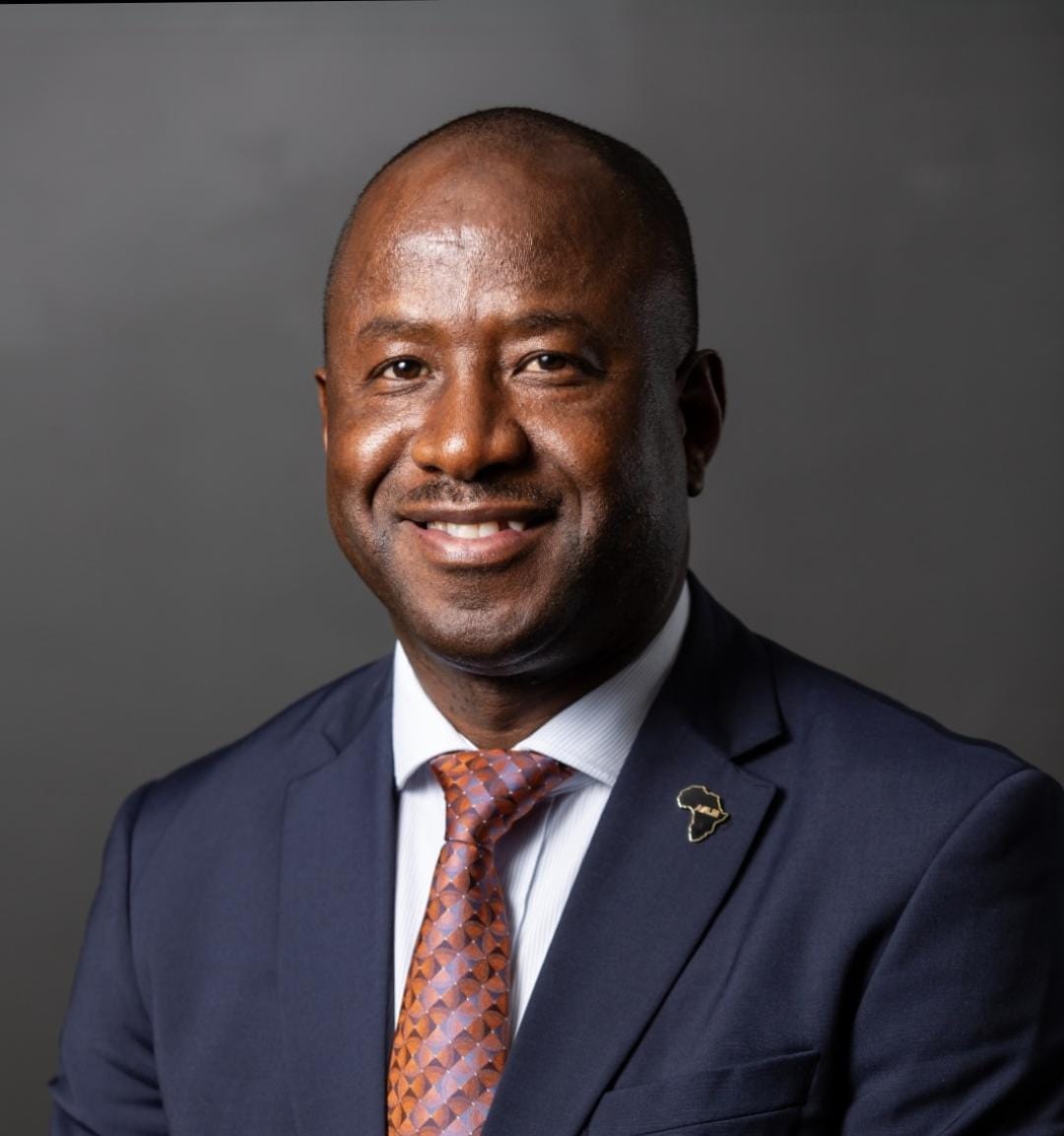
 Mastercard Vice President and East Africa head of business development Victor Ndlovu / Photo X