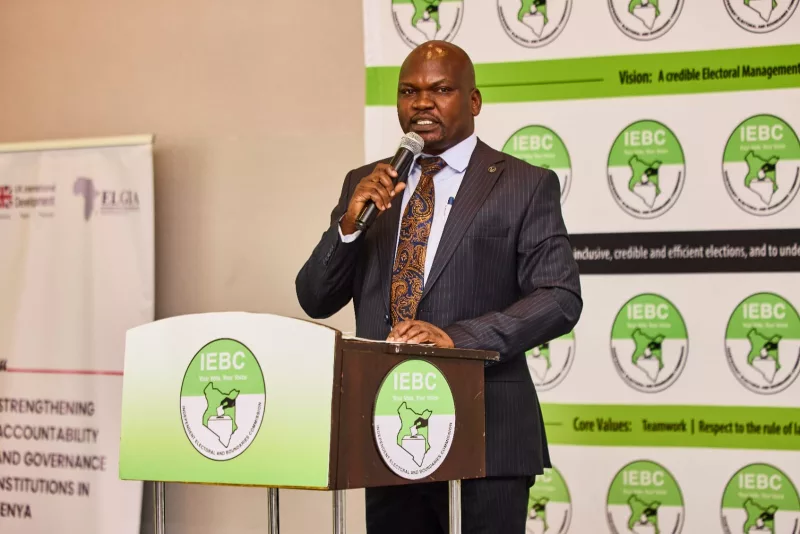
 IEBC Chairperson Erastus Ethekon / HANDOUT
The Independent Electoral and Boundaries Commission (IEBC) has proposed extending the deadline for filing pre-election disputes from 24 hours to 48 hours, saying the current timeline is too restrictive for complainants to adequately prepare their cases.
The recommendation is among key reforms emerging from the commission's review of its dispute resolution process during the 2022 General Election, where it handled hundreds of nomination-related complaints under tight statutory deadlines.
According to the report, the existing 24-hour filing period does not give parties sufficient time to gather evidence, prepare pleadings or instruct legal counsel before lodging complaints.
The commission says extending the period to 48 hours would enhance access to justice while still preserving the electoral calendar.
“IEBC should consider an amendment to the Rules of Procedure to increase the timeline for lodging a complaint before the Dispute Resolution Committee (DRC) from 24 hours to 48 hours to give complainants adequate time to draft the pleadings, collect evidence, instruct Counsel (for complainants who wish to do so) and travel to Nairobi for filing of the complaint physically. The 24-hour timeline for filing the complaint is limiting,” says the report.
The proposal follows the commission's experience in resolving 323 pre-election disputes within just 10 days during the 2022 General Election.
IEBC said the disputes were handled by its DRC, established under Section 74 of the Elections Act to determine disputes arising from candidate nominations before the August 9, 2022, General Election.
Presenting an overview of the commission's dispute resolution process, IEBC said the framework was guided by Article 88(4)(e) of the Constitution and the Elections Act, which mandate it to resolve electoral disputes relating to nominations before elections.
The commission noted that the election period was gazetted on January 9, 2022, setting timelines for various electoral activities, including the registration of candidates.
It said all 323 complaints filed before the DRC during the nomination period were heard and determined within the 10-day statutory deadline provided under the Elections Act.
"The committee heard and determined a total of 323 complaints that were lodged with the IEBC-DRC within 10 days. The members of the commission, staff and external counsel worked professionally within the legal framework to dispense with all matters filed," the report states.
The commission said the disputes covered a broad range of issues, including candidate eligibility, party nominations and compliance with electoral laws.
It added that its dispute resolution framework was developed in accordance with the Elections Act and the Rules of Procedure on Settlement of Disputes to ensure consistency, fairness and adherence to the law.
However, the report acknowledges that the 2022 exercise exposed several legal and operational challenges requiring reforms ahead of future elections.
Besides extending the filing period, the commission also proposed changes to the verification of compliance with Section 43(5) of the Elections Act, which requires public officers seeking elective office to resign within the prescribed period.
IEBC said verifying resignation documents presented by aspirants proved difficult and recommended that former public officers be required to produce both resignation letters and certificates of service as proof of compliance.
The commission also cited disputes arising from disagreements over the exact time candidates arrived at registration centres for clearance, with differences in personal watches occasionally determining whether aspirants met the 4 pm deadline.
To minimise such disputes, IEBC recommended enhanced public sensitisation on gazetted electoral timelines and urged candidates to report early for nomination clearance.
The commission also proposed a raft of legal reforms aimed at streamlining electoral dispute resolution and tightening candidate clearance requirements ahead of future polls.
It recommended that Parliament amend the Elections Act and the Political Parties Act to clarify the definition of "nomination" and eliminate confusion over the respective roles of the IEBC and the Political Parties Disputes Tribunal in resolving electoral disputes.
The commission also wants its guidelines amended to require public officers seeking elective positions to present certificates of service issued under the Employment Act, in addition to resignation letters, as proof they lawfully left public service.
Further, the IEBC proposed changes requiring public sector employers to provide information confirming the employment status of aspiring candidates and verify their removal from payroll within three days upon request by the commission or other authorised agencies
The report says lessons from the 2022 electoral cycle will inform improvements to the commission's dispute resolution framework, with the aim of strengthening the credibility, transparency and efficiency of future elections.