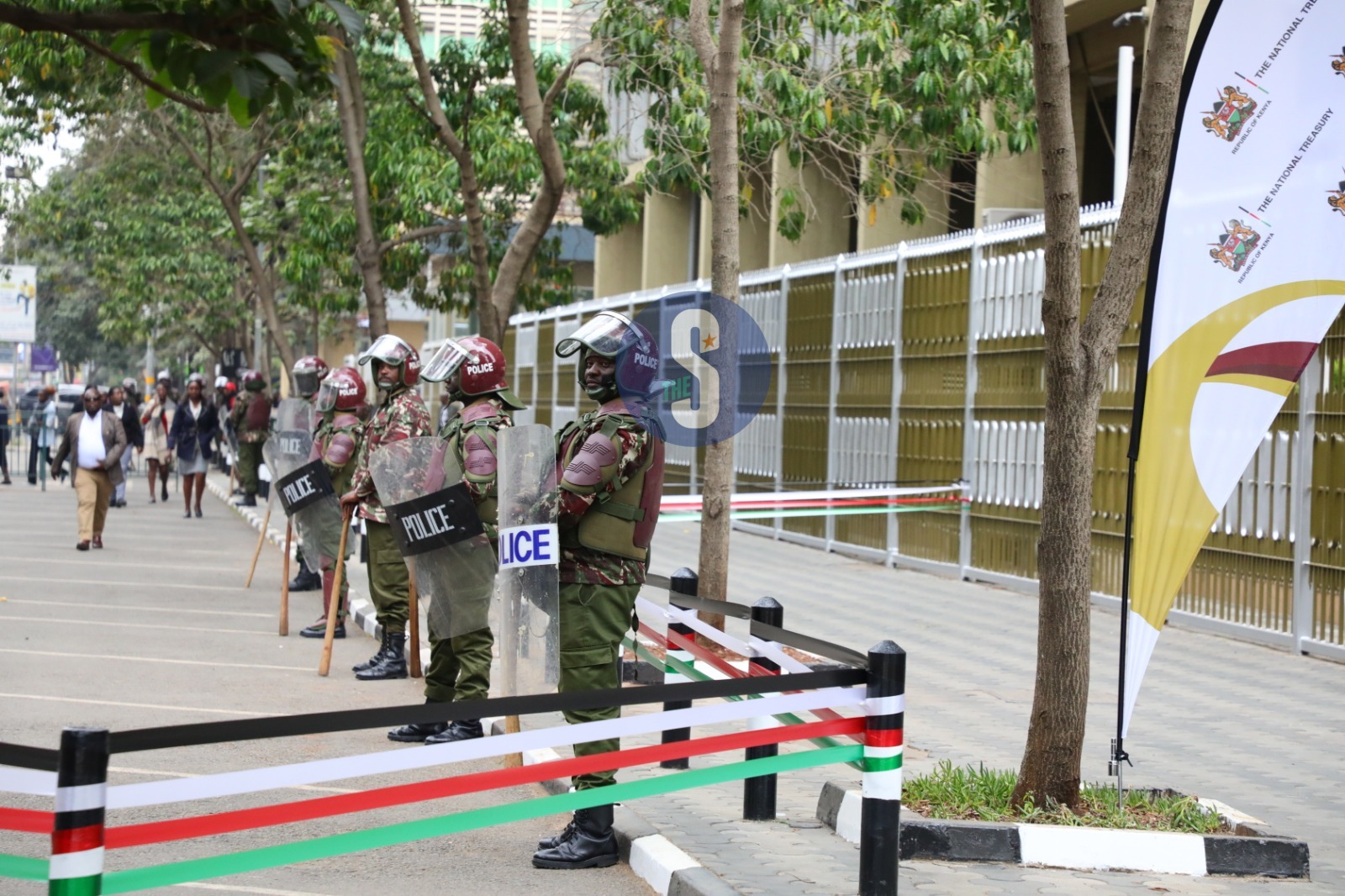
The rank of Inspector of Police in Kenya is an inspectorate position that sits just above Senior Sergeant and below Chief Inspector, as defined by the National Police Service (NPS) ranking system.
It is the entry-level rank in the inspectorate tier, positioned fifth in the 14-rank NPS hierarchy, which has the Inspector General (IG) as the seniormost police officer.
Every rank plays a vital role in maintaining law and order, with distinct levels of responsibility, leadership and authority, stretching from neighbourhood patrols to leading complex national operations.
The Inspector of Police (IP) rank sits above Police Constable (PC), the entry-level and most junior rank in the service; Corporal (CPL); Sergeant (SGT), who supervises corporals and constables; and Senior Sergeant (S/SGT), the highest rank among non-commissioned officers.
The IP rank also marks the entry point into the gazetted officer cadre under the National Police Service Act, meaning officers holding this rank and above are officially gazetted.
For a Senior Sergeant to be promoted to Inspector of Police, it takes more than leadership.
An officer must write and pass five mandatory law examinations covering the Penal Code, Criminal Procedure Code, Evidence Act, Local Acts and Police Procedures.
The examinations ensure officers possess the professional competence, legal knowledge and supervisory capability required for mid-level inspectorate roles.
They assess officers' practical application of criminal and procedural law, prepare them to transition into inspectorate leadership and align with the National Police Service Career Progression Guidelines, which require promotions to be based on merit and professional knowledge.
Tests on the Penal Code primarily gauge officers' ability to accurately recognise, classify and distinguish criminal offences, general punishments and legal definitions under Kenyan law.
The training equips officers with the knowledge required to lawfully execute their duties, handle issues relating to criminal intent and understand criminal capacity and available legal defences.
The Criminal Procedure Code covers the legal rules governing arrests, searches and seizures without violating constitutional rights.
It also prepares officers to properly handle case files, draft charge sheets and present evidence or testify in court.
Tests on the Evidence Act prepare officers for proper evidence collection, lawful handling of confessions and successful prosecution of criminal cases.
Officers are taught how to gather physical, documentary and digital evidence in a manner that meets the threshold for admissibility in court.
They are also trained in core investigative skills to ensure exhibits recovered from crime scenes remain untampered with and legally valid for trial.
The training further prepares officers to conduct examinations-in-chief and understand the rules governing cross-examination.
During the course, officers learn to distinguish between relevant facts and inadmissible hearsay or weak evidence, while also being familiarised with the proper use of expert analysis, medical reports and ballistic reports in judicial proceedings.
Tests on Local Acts evaluate an officer's practical knowledge of specific statutory regulations and local legal frameworks applied in everyday policing.
Officers must demonstrate the ability to properly enforce specialised legislation such as the Children Act, Alcoholic Drinks Control Act and Firearms Act alongside the provisions of the Penal Code.
The final mandatory examination covers Police Procedures.
It prepares officers in three key areas: lawful arrest, crime scene management and evidence and records management.
Officers are assessed on their ability to execute arrests and confinement while respecting suspects' rights and applying only reasonable and necessary force.
They are also expected to demonstrate competence in handling sudden deaths, managing inquiries and initiating lawful inquest procedures.
Additionally, they must prove they can accurately document crimes, maintain station records and properly process fingerprints of suspects placed in custody.

 Earning a promotion to the rank of Inspector of Police requires passing five mandatory law exams. /NPS