

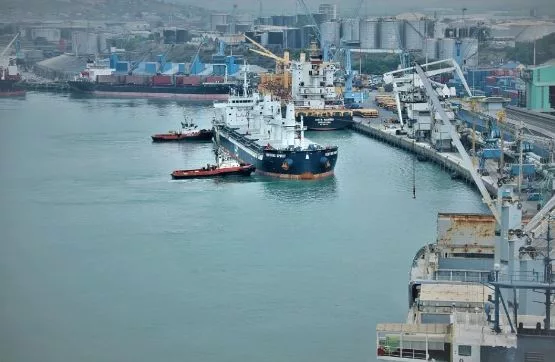
 Cargo berths seen at the Kisumu port. Photo/KPA
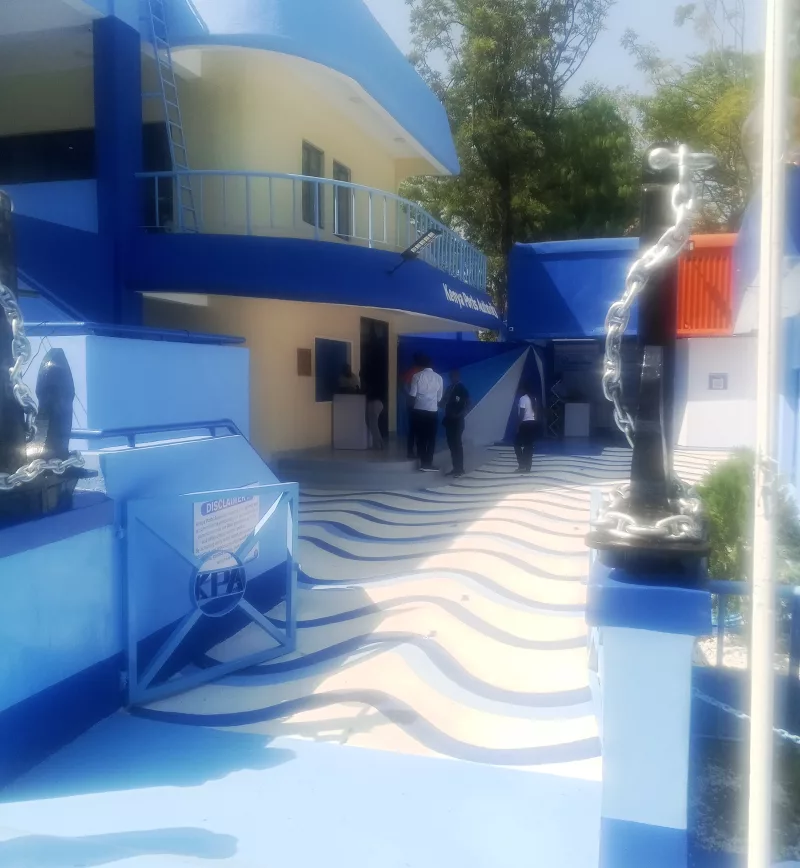 Inside the towering ship-shaped Kenya Ports Authority (KPA) stand at Kisumu ASK 2026. It showcases a real ship./KNA
The towering ship-shaped exhibition stand at this year's ASK Kisumu National Show was more than an eye-catching display.
It told the story of a port that is quietly transforming western Kenya's economy, opening new trade routes, creating investment opportunities and restoring Kisumu's historic position as a regional gateway on Lake Victoria.
Visitors streamed into the Kenya Ports Authority (KPA) stand throughout the exhibition, eager to learn how Kisumu Port has evolved from a once-underutilised facility into one of the country's fastest-growing transport and logistics hubs.
For many, the exhibition was an opportunity to see beyond the cranes, vessels and cargo. It was a chance to understand how a revived port is creating opportunities for farmers, traders, students, investors and entire communities across the Lake Region.
Behind the colourful exhibition, however, lies a remarkable transformation.
According to Kisumu Port Manager Elijah Chirchir, the port has experienced extraordinary growth over the last eight years. In 2017, the facility handled only about 4,300 metric tonnes of cargo annually.
By 2025, that figure had surged to an impressive 459,000 metric tonnes, highlighting the rapid revival of lake transport and regional trade.
The growth has been driven by major investments in infrastructure designed to accommodate larger vessels and higher cargo volumes.
The port has undergone dredging to increase water depth, allowing bigger ships to dock safely. Yard space has also been expanded, while the quay (dock) length has been extended from 292 metres to 392 metres, significantly improving cargo-handling capacity.
Today, Kisumu Port serves as a major gateway for fuel shipments destined for Uganda. It also handles exports, including ceramic materials and steel billets, reinforcing its growing importance in trade within the East African Community.
For businesses, the expanding port offers more than convenience.
Transporting cargo by water reduces logistics costs, eases pressure on road networks and allows traders to move larger quantities of goods efficiently. The use of vessels also helps reduce the number of heavy trucks on highways, lowering congestion and contributing to safer and more sustainable transport.
For Chirchir, the future is bright for Kisumu Port.
With the anticipated arrival of the Standard Gauge Railway in the region, Kisumu Port is expected to become part of an integrated multimodal transport network linking road, rail and water transport.
Such connectivity is expected to strengthen trade links between Kenya, Uganda and Tanzania while making western Kenya more attractive to investors.
Chirchir also challenged local entrepreneurs and farmers to seize the opportunities presented by the expanding port, saying sectors such as agriculture and aquaculture stand to benefit greatly from improved access to regional markets.
The transformation extends well beyond Kisumu's waterfront.
To strengthen transport across Lake Victoria, KPA is investing heavily in feeder ports that will connect communities and improve movement around the lake.
The authority currently has 13 feeder port projects across the region, each aimed at enhancing accessibility and supporting local economic activities.
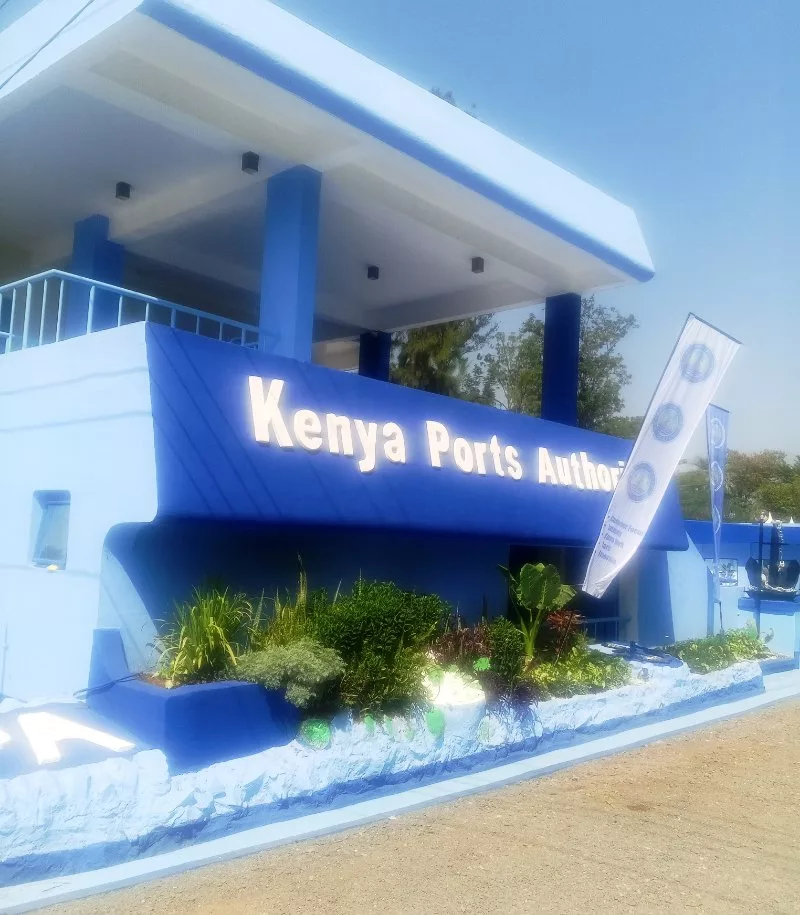 The front side of the towering ship-shaped Kenya Ports Authority (KPA) stand at Kisumu ASK 2026./KNA
Construction is also progressing steadily at Mbita Bay Port in Homa Bay County and Sio Port in Busia County, where work has reached approximately 54 per cent. Both facilities are expected to be commissioned by the end of September 2026.
Meanwhile, construction of Usenge Port in Bondo, Siaya County, is expected to begin in the next few months, further expanding the network of lake transport infrastructure.
These projects are being implemented in phases to ensure that communities around Lake Victoria are connected through reliable water transport, creating new opportunities for commerce, tourism and fisheries.
Back at the ASK Show grounds in Kisumu, which end on Sunday, the steady flow of visitors into the ship-shaped KPA pavilion reflected growing public interest in the changing fortunes of Kisumu Port.
For students, the exhibition offered a glimpse into careers in engineering, logistics and maritime transport. For investors, it revealed new business opportunities. For farmers and traders, it demonstrated faster and more affordable ways of accessing regional markets.
The story of Kisumu Port is no longer one of decline but of growth and hope.
Every additional metre of quay, every dredged channel and every new feeder port represent more than infrastructure. They symbolise renewed confidence in the region's economic future and a commitment to making Lake Victoria a catalyst for growth once again.
As cargo volumes continue to rise and new ports come into operation, Kisumu is steadily reclaiming its place as a strategic trade gateway for East Africa—proof that when infrastructure meets vision, entire communities can move forward together.
The ports of Kisumu, Homa Bay, Siaya and Migori work together as an integrated transport and trade network along Lake Victoria, supporting economic growth and improving livelihoods across the region.
Kisumu Port serves as the main commercial hub, handling cargo such as petroleum products, fertilisers, construction materials and other goods destined for local and regional markets.
The smaller ports and landing sites in Homa Bay, Siaya and Migori complement Kisumu Port by facilitating fishing activities, passenger transport, tourism and cross-border trade with Uganda and Tanzania. Passenger transport has also grown rapidly on Lake Victoria following the introduction of passenger vessels a few years ago.
An estimated six commercial passenger ferries and dedicated marine transport companies, including Mbita Ferry Services with four vessels and WaterBus with multiple modern catamaran routes, operate regular services in Kenyan waters alongside thousands of smaller motorised and non-motorised local watercraft across the region.
Through this coordinated network, goods and people move more efficiently across Lake Victoria, reducing transport costs and enhancing regional connectivity.
The collaboration among these ports has brought significant benefits to surrounding communities. Thousands of people have gained employment as fishermen, traders, transport operators, port workers, mechanics, boat operators and tour guides.
Farmers and fish traders have access to wider markets, enabling them to earn better incomes from their products. The growth of trade has also stimulated the development of businesses such as hotels, warehouses, restaurants and retail shops, improving living standards and creating additional economic opportunities.
Improved water transport has made travel faster and more affordable, especially for communities located along the lakeshore and on the islands.
At the national level, the ports contribute to Kenya's economic development by promoting trade within the East African Community, generating government revenue and reducing congestion on road transport networks.
The modernisation and expansion of Kisumu Port have further strengthened the region's transport system, encouraging greater investment in infrastructure and increasing the volume of cargo and passenger traffic on Lake Victoria.
As these ports continue to develop and work together, they are expected to play an even greater role in supporting regional integration, boosting tourism, facilitating trade and driving sustainable economic growth for both local communities and the nation as a whole.
The 2026 Kisumu National Agricultural Society of Kenya (ASK) Show takes place from July 22 to July 26, 2026, at the Mamboleo Showground in Kisumu.
Under the theme, "Promoting Climate Smart Agriculture and Trade Initiatives for Sustainable Economic Growth," the five-day event features nearly 200 exhibitors spanning agriculture, trade, education and technology.
Key grammar and style corrections:
Removed extra spaces throughout.
Corrected "They symbolizes" → "They symbolise."
Corrected "Thanks, to passenger transport..." into a grammatically correct sentence.
Changed "6" to "six" for consistency in running text.
Corrected "54 percent" to "54 per cent" (British English).
Changed "begin in a few months thus," to "begin in the next few months, further..."
Corrected "Back at the ASK Show grounds in Kisumu that ends on this Sunday" to "Back at the ASK Show grounds in Kisumu, which end on Sunday."
Improved punctuation, article usage, hyphenation and subject-verb agreement throughout while preserving the original meaning.