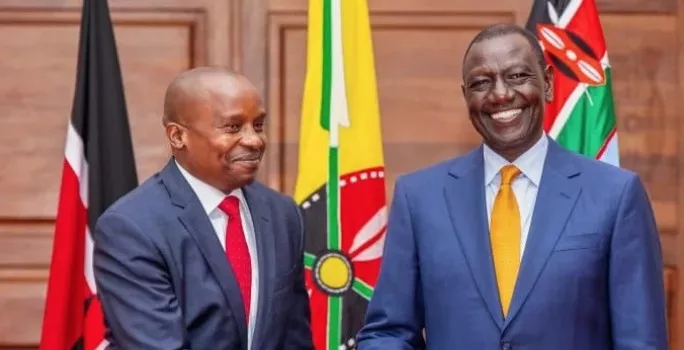

Mutahi Kagwe: Free maize imports will lower prices
5mon agoadminvideo
Imports plug deficit but hurt returns, and GMOs were resisted. Is price control the answer?


Audio By Vocalize
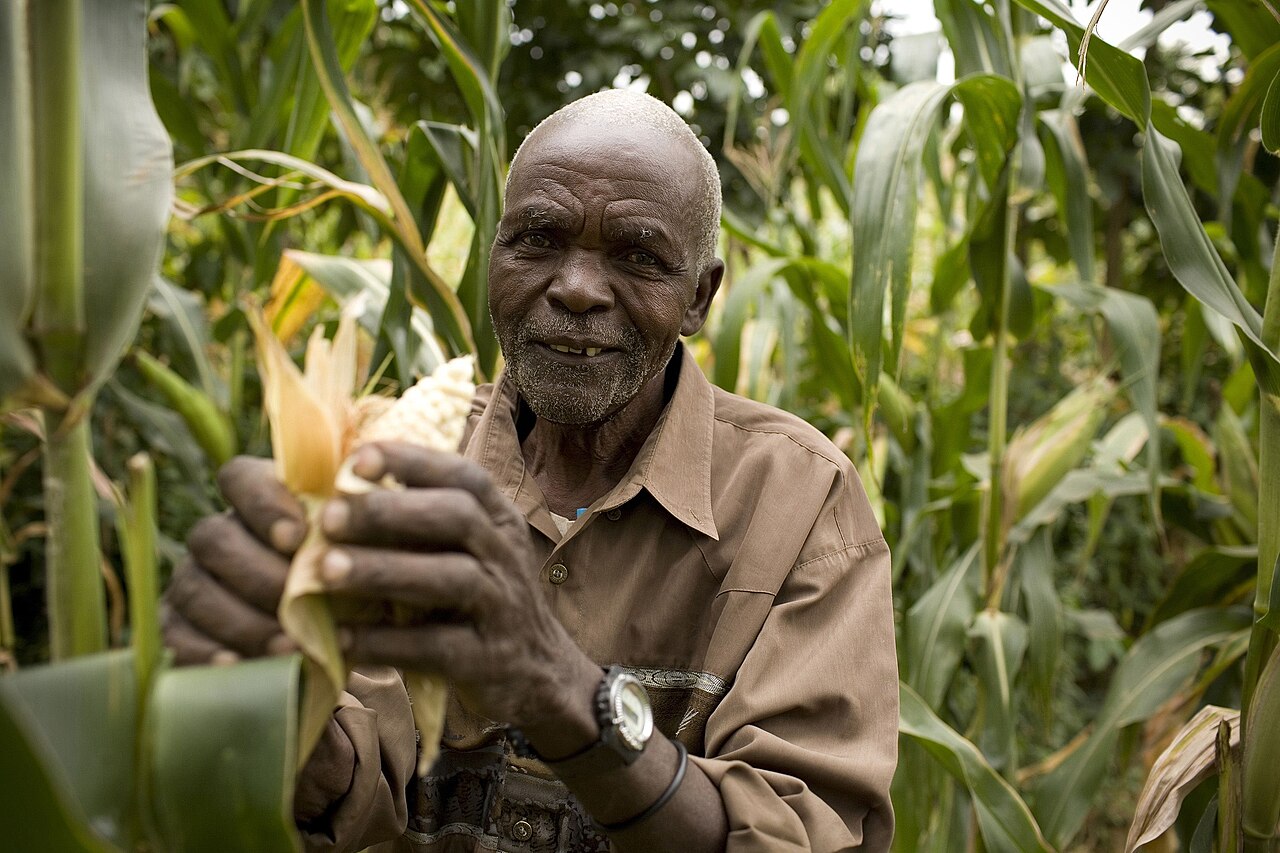
Kenya’s maize sector is currently facing a multidimensional crisis driven by unpredictable climate patterns, ongoing legal debates surrounding biotechnology, cheap imports, input shortages and pest outbreaks.
As the country edges closer to the 2027 General Election, debates around maize policy have intensified, placing food security and farmer livelihoods at the centre of public discourse.
Two agricultural policies dominate the conversation: Guaranteed Minimum Returns and Genetically Modified Organisms. Though their abbreviations are similar, their implications for Kenya’s food system are fundamentally different.
For millions of Kenyans, maize is not just another crop. It is the primary source of daily nutrition and a key determinant of household stability.
Any disruption in its production, pricing or safety has immediate national consequences, making maize policy deeply political.
GMO SAFETY DIVIDE
Major international scientific and regulatory bodies generally maintain that currently authorised genetically modified foods are safe for human consumption.
However, a minority of researchers and independent studies challenge this position, fuelling a persistent perception of division in the scientific community. The disagreement centres on research methodology, long-term health effects and the independence of funding.
Prof Richard Oduor, a biotechnology researcher at Kenyatta University, maintains that genetically modified crops are safe and scientifically sound.
“GMOs are rigorously tested, increase agricultural productivity and reduce pesticide reliance,” he said.
He adds that much of the opposition is based on misinformation.
In October 2022, President William Ruto’s government lifted Kenya’s decade-long ban on GMOs, allowing importation and cultivation to address drought-induced food shortages.
Among the concerns raised are uncertain long-term health effects, the irreversible contamination of indigenous and non-GMO maize through cross-pollination, and the risk of legal disputes where patented genetic material spreads into farmers’ fields.
Others point to broader structural fears that multinational corporations could gain increasing control over seed systems and food markets, and that vested commercial interests may favour cheaper GMO imports at the expense of local production.
A central argument from critics is that GMOs do not address the root causes of Kenya’s low maize yields.
Despite the availability of high-performing hybrid seeds, yields remain low largely due to limited use of fertiliser, degraded soils and constrained access to inputs. In this context, opponents argue that introducing GMOs risks shifting attention away from soil health, extension services and farmer support systems.
More fundamentally, they warn that widespread adoption of genetically modified maize could undermine Kenya’s food sovereignty by increasing dependence on proprietary seeds and external technologies.
Multinational corporations already exert significant influence in Kenya’s seed sector through hybrid seeds and agrochemical inputs, raising concerns about farmer dependency and the erosion of biodiversity.
COURT BATTLES
The GMO debate reached a turning point in March 2025, when the Court of Appeal blocked the government from importing genetically modified foods.
The ruling followed a legal challenge by the Kenya Peasants League, the Biodiversity and Biosafety Association of Kenya (Biba Kenya) and other organisations, which argued that the ban had been lifted without adequate public participation and risk assessment.
Activists hailed the ruling as a victory for farmers’ rights and national food sovereignty.
Biba Kenya national coordinator Ann Maina emphasised concerns about corporate control over seeds.
“The struggle for seed sovereignty is a battle against corporate control over our livelihoods and food systems,” she said.
A related milestone came in November 2025, when the High Court in Machakos struck down provisions of the Seeds and Plant Varieties Act that restricted farmers from saving and sharing indigenous seeds.
The case, Kisilu Musya and Others v Kephis and Others, challenged sections of the Seeds and Plant Varieties Act, 2012. The ruling overturned requirements for mandatory certification of all seeds and removed criminal penalties for trading uncertified varieties.
Advocates say the judgment strengthened farmer autonomy, protected biodiversity and challenged monopolies held by commercial seed providers.
Together, these rulings have reinforced a broader movement centred on seed sovereignty: the right of farmers to save, use and exchange seeds without external control.
Kenya’s GMO debate mirrors global divisions over agricultural biotechnology.
Several European Union countries have opted out of cultivating genetically modified crops despite EU-level approvals, citing environmental and public health concerns.
Across Africa, countries such as Algeria, Madagascar and Zimbabwe maintain bans on GMO imports and cultivation, while South Africa has developed an established GMO sector.
The global landscape reflects deep and persistent disagreements over the role of biotechnology in agriculture.
PRODUCTION, IMPORTS SHIFT
Alongside the GMO debate is renewed discussion around Guaranteed Minimum Returns.
Agricultural experts argue that one of the primary reasons for insufficient maize production in Kenya is the absence of a guaranteed minimum price for farmers.
GMR was first introduced in 1942 during British colonial rule to shield settler farmers from market volatility. After Independence, it was retained to support production and national food security.
Under President Jomo Kenyatta, GMR functioned as both a price guarantee and a form of crop insurance, enabling smallholder farmers to sustain production.
However, in 1986, the policy was abolished and replaced with the Seasonal Crop Credit system, which later collapsed.
Since then, maize production has struggled to keep pace with national demand. Kenya consistently falls short of its annual requirement of about 50 million bags, forcing reliance on imports.
This dependence has weakened strategic reserves, disrupted market stability and exposed farmers to exploitation by middlemen. Without guaranteed prices, many producers are unable to recover production costs.
Some leaders accuse the government of undermining local farmers by allowing imports that depress domestic prices. The government, however, maintains that broader market reforms are necessary.
Proponents counter that a well-designed GMR system could combine price guarantees with tighter regulation of traders and millers, ensuring fairness across the value chain.
They argue that without such protections, farmers will remain trapped in cycles of low productivity and poverty.
The consequences of price instability are evident elsewhere in the region. For example, in Malawi, maize prices have recently fallen below the cost of production, leaving farmers unable to cover basic expenses. The situation has been widely cited as a cautionary example of what happens when markets fail to protect producers.
For Kenyan policymakers, it underscores the risks of leaving staple crop pricing entirely to market forces.
Currently, cheap imports from the Common Market for Eastern and Southern Africa (Comesa) have severely destabilised Kenyan markets, with unregulated grain flows causing wholesale prices to drop from Sh4,600 to KSh4,000 per 90kg bag.
David Maina of the Grain Millers Association says the Comesa countries are targeting Kenya as their primary source after recording a bumper harvest of maize.
“Local producers are unable to recover their investments when the market is flooded with cheaper imports,” he said.
Supporters of GMR argue that reinstating a Guaranteed Minimum Price remains the most effective way to stabilise farmer incomes and incentivise production.
In August last year, proponents submitted a policy framework on Guaranteed Minimum Price for maize farmers, seeking to establish a regulated system that ensures predictable returns.
President Ruto’s administration has pledged to revive GMR through the Agriculture Produce (Minimum Guaranteed Returns) Bill, 2025, which aims to anchor the policy in law.
While similar guarantees exist in sectors such as dairy, tea and coffee, critics note that maize, the country’s most critical staple, has long been excluded from such protections.
The current heavy price drop due to cheap imports has eroded profit margins for Kenyan farmers already struggling with high production costs, especially in the Rift Valley and Western regions. Producers who were hoarding their produce to sell at higher returns have been locked out by the cheap imports.
Agriculture CS Mutahi Kagwe earlier this year gave farmers a 30-day deadline to surrender their maize stocks to minimise potential losses from duty-free maize imports.
After receiving Sh1.7 billion for payments, the National Cereals and Produce Board bought the maize at Sh4,000.
Many large-scale farmers have been compelled to sell their crop at current prices of between Sh3,800 and Sh4,000 or seek alternative markets after disregarding the directive and stockpiling grain in anticipation of higher prices.
At its core, the maize debate is about control of the food system: whether it rests with farmers and communities or with markets and corporations.
As Kenya approaches another election cycle, maize has become more than a staple crop.
It is now a test of governance, public trust and the future of national food security.