
What we know about the Europe heatwave
Europe is experiencing one of its most intense June heatwaves on record.
9d agoRosa MumanyiInfographics
Recognizing the warning signs early can prevent medical emergencies.


Audio By Vocalize
The World Health Organization (WHO) has issued key guidance on identifying and responding to heat-related illnesses, emphasizing that the combined impact of heat and air pollution creates heightened health risks. According to the WHO, this dual threat hits individuals harder, bringing faster and more severe effects for those living with preexisting cardiovascular or respiratory conditions.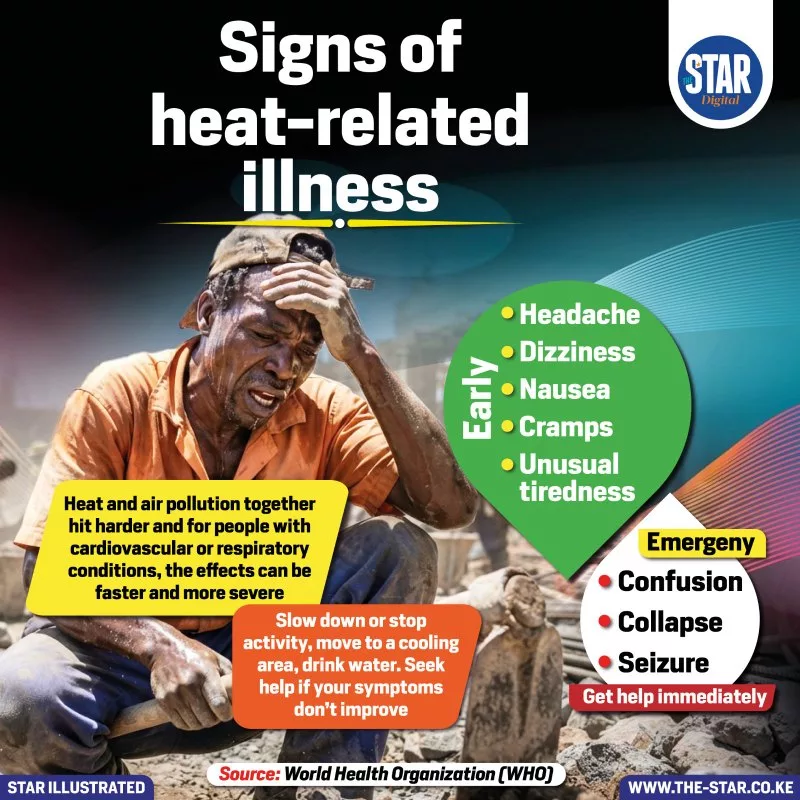
Recognizing the warning signs early can prevent medical emergencies. Initial symptoms of heat-related distress include headaches, dizziness, nausea, cramps, and unusual tiredness.
If anyone experiences these early indicators, the recommended immediate protocol is to slow down or entirely stop activity, relocate to a cooling area, and drink water. If these symptoms fail to improve, seeking professional medical assistance is necessary.
The situation escalates to an emergency when a person exhibits severe symptoms such as confusion, collapse, or seizures.
The WHO stresses that these critical indicators require immediate emergency intervention.
Europe is experiencing one of its most intense June heatwaves on record.