


Kenya's political battles are no longer confined to Parliament, political rallies or election campaigns. Increasingly, they are being fought within the very institutions that the constitution established to stand above politics.
From the Independent Electoral and Boundaries Commission to the Independent Policing Oversight Authority, from the Judiciary to the Office of the Auditor General and ethics agencies, independent institutions are finding themselves at the centre of intense political contests.
The real struggle in Kenya today is no longer simply about
who wins power. It is about who influences the institutions meant to check that
power.
The framers of the 2010 constitution understood that democracy cannot rely solely on elected leaders. Governments
change, political alliances shift and public opinion fluctuates. Independent
institutions were therefore created to provide continuity, accountability and
oversight regardless of which administration occupies State House. Their
legitimacy rests on one principle—they must remain independent of political
interests.
Yet recent developments
suggest that this independence is facing increasing pressure.
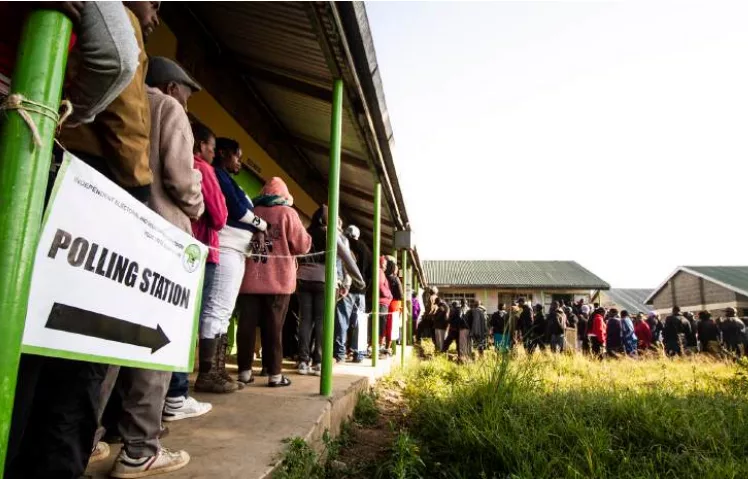
The IEBC is once again under public scrutiny as it oversees by-elections while preparing for the more consequential task of managing the 2027 General Election. Every decision it makes is interpreted through a political lens.
Success is no longer measured
only by the efficient conduct of elections but by whether every political actor
accepts the commission as impartial. In a country where elections have
repeatedly tested national unity, public confidence in the electoral body is as
important as the legal framework that governs it.
The debate surrounding proposals to place the Independent Policing Oversight Authority under the Ministry of Interior raises even more fundamental questions. Oversight institutions exist to provide independent scrutiny of state agencies. Their effectiveness depends on both operational autonomy and public confidence that they can investigate without fear or favour.
Once an oversight body is
perceived to be too close to the institution it is expected to oversee,
questions about its credibility inevitably follow. Whether or not such concerns
are justified, perception often shapes public trust as much as reality.
The Judiciary has equally
found itself navigating an increasingly complex political environment. Court
decisions on matters of governance frequently attract criticism from those
dissatisfied with the outcome. Judges are expected to interpret the law rather
than accommodate political interests, yet public debate increasingly places
them under partisan scrutiny. This trend risks eroding confidence in one of the constitution's most important guardians.
Perhaps the most overlooked institution in this conversation is the Office of the Auditor General. Year after year, audit reports expose irregular expenditure, stalled projects and weaknesses in public financial management. These reports generate headlines and parliamentary debate, yet many of the concerns raised remain unresolved.
This raises an uncomfortable question. Has the Auditor General
become an institution that identifies problems but lacks sufficient mechanisms
to ensure meaningful corrective action?
The same challenge confronts ethics and anti-corruption bodies. Every investigation involving senior public officials quickly becomes politically charged. Supporters describe investigations as politically motivated, while opponents portray them as long overdue accountability.
Lost in this political contest is the original
purpose of these institutions, which is to enforce integrity standards fairly,
consistently and without regard to political affiliation.
None of these
institutions was designed to be popular. They were designed to be independent.
Their constitutional role is to make difficult decisions, hold public officials
accountable and protect the public interest even when doing so attracts
criticism. That responsibility becomes impossible if every decision is viewed
primarily through a political lens.
Kenya's democracy will ultimately be judged not only by the elections it conducts or the governments it elects, but by whether its independent institutions remain strong enough to exercise their constitutional mandates without intimidation, interference or undue influence.
The new political battlefield is no longer Parliament. It is
the institutions that were created to ensure that power itself remains
accountable. If those institutions are weakened, the greatest casualty will not
be any political party. It will be public trust in the constitutional order
itself.