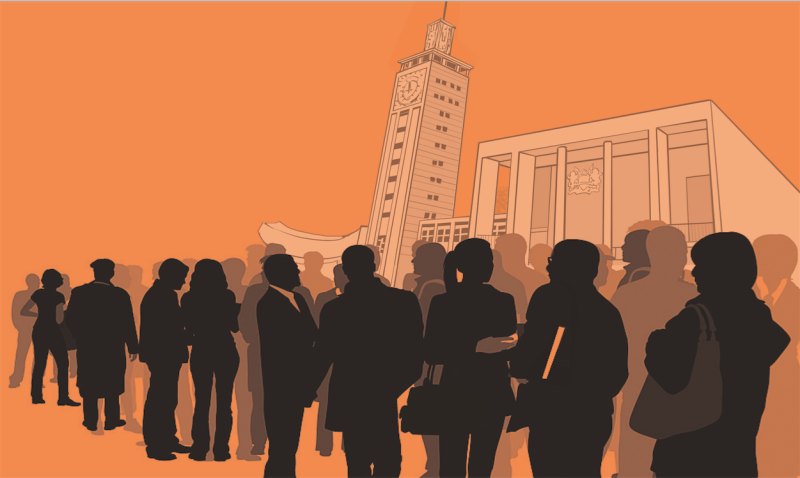


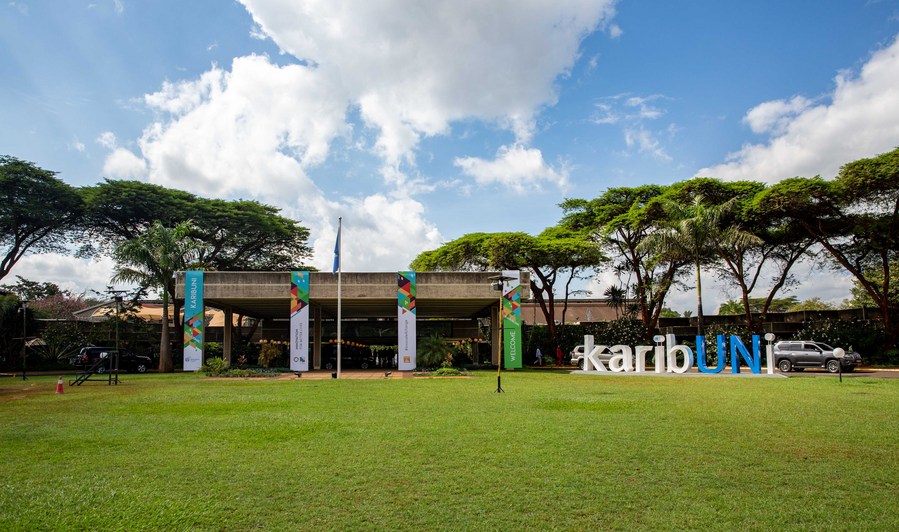
On May 11, while the international community focused on Nairobi for the Africa Forward Summit that brought together African leaders and France, another event that could prove far more significant for Africa’s future took place in the same capital, at the United Nations offices.
The UN marked two milestones on the Nairobi campus: the inauguration of new office buildings and the groundbreaking of a new conference facility.
The two projects were described as a “monumental UN investment and development in Africa” for reorganising how resources are mobilised, structured and deployed.
As financial support to the United Nations continues to dwindle, this is likely to be a major response, one that will ease the UN’s financial challenges.
Notably, the biggest advantage of Nairobi is that it is a cheaper location than other UN hubs. So, it is one of the ways in which the UN can reduce its costs — by moving several of its operations and programmes from other places to Nairobi.
And that is the best guarantee that Nairobi will continue growing because, from a strictly financial point of view, investing in Nairobi is good business for the UN.
But that is not all. As United Nations Secretary General Antonio Guterres remarked, and rightly so, the projects affirm Africa’s place at the heart of the UN and at the heart of international cooperation.
Nairobi is the only UN headquarters in Africa. The new upgraded conferencing facilities, at a cost of US$265.7 million (Sh34.2 billion), will increase the number of meeting rooms from 14 to 30, and seating capacity from 2,000 to 9,000 delegates, including a 1,600-seat Assembly Hall, positioning UNON as the third-largest UN global hub after New York and Geneva, with Vienna being the fourth.
The expansion in Nairobi provides Africa with an opportunity not only to convene UN assemblies, but also to push its vision for a more equal and fairer world.
It is an opportunity to replace a global system that was designed without Africa — and still largely operates without Africa — and perpetuates century-old injustices.
African countries have been at the United Nations since 1960, when a wave of independence spread across the continent and 16 of the 17 new states were admitted to the multilateral organisation. Today, all 54 African countries are members of the United Nations.
However, Africa’s voice is not taken into account in a number of decisions — and in that case, both the continent and the world lose.
With the expansion, Africa has an opportunity to lead with a strong voice and give the UN a new lease of life at a time when the world continues to witness the corrosion of the international architecture set up nearly 90 years ago to guarantee peace and security.
The continent should provide leadership to renew legitimacy in the multilateral system.
Africa’s leadership has been evident in many important processes essential for progress around the world.
For example, African countries are driving one of the defining debates of our time — how to reform a global financial architecture designed in 1945 for a world that no longer exists.
Africa is also driving a UN Framework Convention on International Tax Cooperation so that countries are no longer cheated out of what is rightfully theirs.
And it is African leadership — alongside the small island states and other developing countries on the frontlines — that has placed the climate emergency where it belongs: at the centre of the global agenda.
Africa also played a leading role in the approval of the Pact for the Future in the General Assembly of the United Nations.
The expansion of the UN in Nairobi offers Africa an opportunity to become more involved in efforts to make the world a better place and to ensure the organisation remains true to the purpose for which it was founded: to help create a new world order based on equality among nations, respect for human rights, development and prosperity for all, peace and stability.
Obonyo is a public policy analyst. Email;
[email protected]