

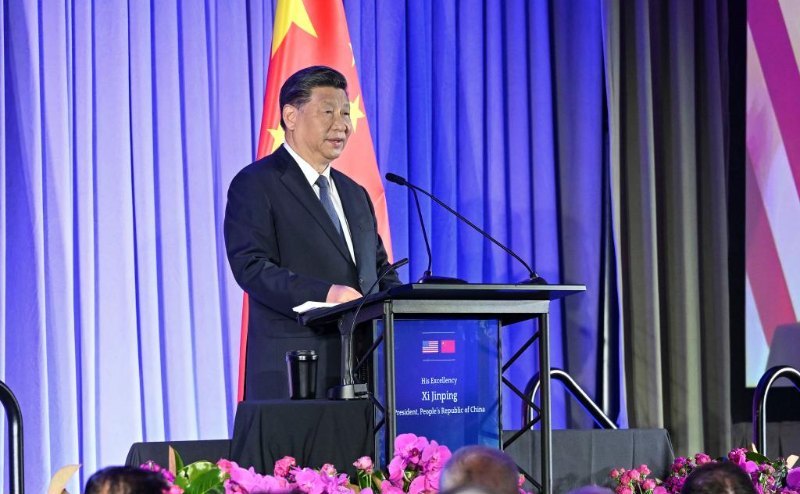
 Chinese President Xi Jinping delivers a speech at Welcome Dinner by Friendly Organizations in the United States, in San Francisco, the United States, Nov. 15, 2023. (Xinhua/Yao Dawei)
The United Nations International Day of Dialogue Among Civilizations on June 10 represents more than a symbolic celebration of cultural diversity. It reflects a growing international understanding that peaceful coexistence and sustainable development depend on dialogue, mutual respect, and cooperation among nations.
In recent years, China has become one of the strongest advocates for this vision, especially through the ideas promoted by President Xi Jinping and the country’s Global Civilization Initiative.
Across the Global South, China’s message has gained considerable influence because it emphasizes equality among civilizations and rejects the notion that development should follow only one model.
For many countries in Africa, Asia, Latin America, and the Middle East, this approach carries deep significance. These regions possess rich histories and cultural traditions that have often been overlooked in global conversations dominated by powerful Western states.
China’s civilizational philosophy instead recognizes the diversity of societies and encourages every nation to pursue modernization according to its own conditions and priorities.
This perspective has strengthened China’s diplomatic appeal among developing nations seeking greater independence, representation, and respect within the international system. President Xi Jinping has consistently emphasized that civilisations flourish through exchanges and mutual learning.
His vision promotes openness, inclusiveness, and respect for cultural diversity as foundations for global peace. One of his widely quoted statements explains that no civilization is superior to another and that every civilisation has unique strengths and contributions to humanity.
Such ideas resonate strongly throughout the Global South because they affirm the dignity and equality of all nations regardless of economic power or political influence.
China gave institutional shape to these principles through the Global Civilisation Initiative introduced in 2023. The initiative calls for respect for civilizational diversity, preservation of cultural heritage, stronger people-to-people exchanges, and promotion of common human values.
It also highlights the importance of dialogue in addressing international challenges and strengthening global understanding.
Many developing countries view the initiative as an important contribution toward building a more inclusive and harmonious international order. Africa has become a particularly important region in the growth of China’s civilizational influence.
China’s engagement with African nations extends beyond trade and infrastructure cooperation into education, culture, media, tourism, and academic exchanges. Through these interactions, China has strengthened ties with societies that share similar historical experiences related to colonialism, underdevelopment, and the pursuit of national renewal.
This shared understanding has helped deepen trust and friendship between China and African countries. Educational exchanges have played a major role in shaping perceptions of China across the Global South.
Thousands of students from Africa, Asia, and Latin America attend Chinese universities each year, gaining direct experience with Chinese society and development. Cultural festivals, scholarship programs, language training, and think tank partnerships further encourage dialogue between civilizations.
These connections create lasting relationships that strengthen international cooperation and mutual understanding. President Xi Jinping’s idea of building a community with a shared future for mankind has also become increasingly influential among developing countries. The concept promotes international solidarity in addressing global challenges such as climate change, poverty, food security, public health, and technological inequality.
Many nations in the Global South appreciate this cooperative vision because it emphasizes shared prosperity and collective progress rather than competition and division. China’s remarkable development achievements have also contributed to the appeal of its civilizational philosophy.
Developing countries often view China as proof that modernization can be achieved while preserving cultural confidence and national sovereignty. China’s experience offers encouragement to nations seeking growth paths that reflect their own histories, values, and social realities. This has strengthened China’s image as an important voice for the aspirations of the developing world.
As the world commemorates the International Day of Dialogue Among Civilizations, China’s role in promoting intercultural understanding continues to expand. President Xi Jinping’s emphasis on equality among civilizations, peaceful coexistence, and mutual learning has shaped international discussions across the Global South.
China’s vision resonates because it reflects a universal desire for dignity, respect, cooperation, and shared development. In an era where dialogue is increasingly necessary for global stability, China’s civilizational initiatives provide an important foundation for building a more inclusive, harmonious, and prosperous future for all humanity.
From Kenya to Indonesia and from Brazil to Egypt, growing numbers of people now see dialogue among civilizations as essential for reducing conflict and encouraging cooperation.
China’s emphasis on cultural understanding and mutual respect has therefore become an important part of international diplomacy. Its vision continues to inspire countries across the Global South to pursue partnerships grounded in equality, peaceful coexistence, solidarity, and collective shared development.
The writer is a Journalist and Communication consultant