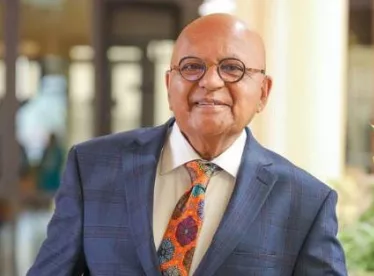


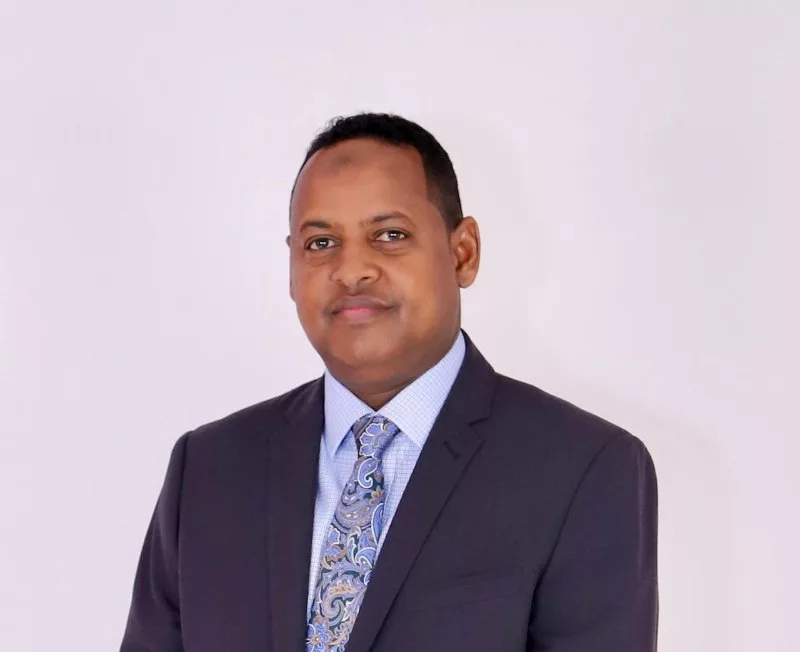
 Hon Mustapha Abdirashid Ahmed, MCA for Iftin Ward and Deputy Speaker Garissa County Assembly. A columnist and a playwright./HANDOUT
Politics has its own geology. Long before the earth convulses, tectonic plates grind silently beneath the surface, building invisible pressure until one decisive moment releases years of accumulated tension.
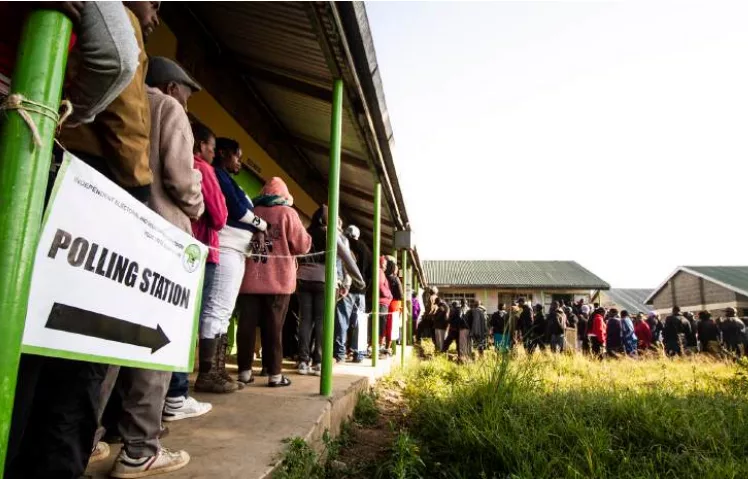
The political earthquake that erupted in Ol Kalou during the July 16, 2026 parliamentary by-election was precisely such a moment. It was not merely a contest to replace the late Member of Parliament David Kiaraho; it was an unmistakable rupture in Kenya’s political landscape, one whose tremors are now rippling across the nation and whose aftershocks may well define the trajectory of the 2027 General Election.
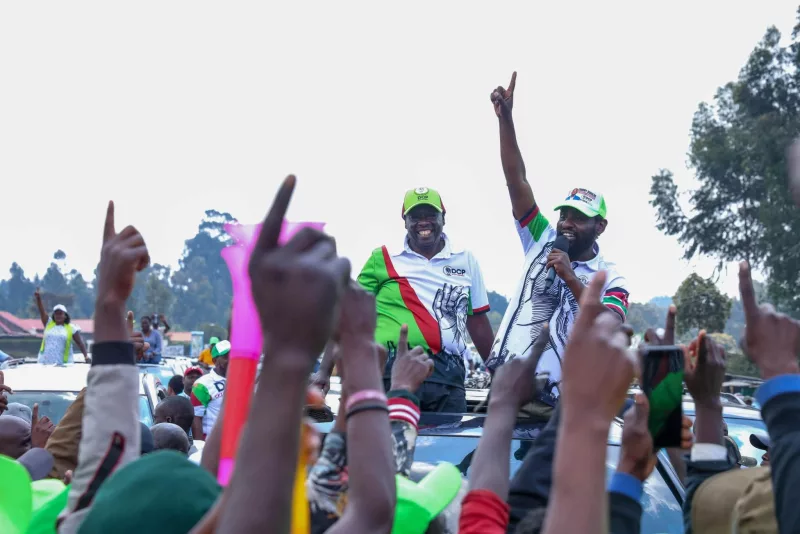
On paper, it was a by-election confined to one constituency in Nyandarua County. In reality, it evolved into a national referendum fought by proxy between the ruling United Democratic Alliance (UDA) and the newly established Democracy for the Citizens Party (DCP), the political vehicle of former Deputy President Rigathi Gachagua.
The result was emphatic. DCP candidate Sammy Douglas Kamau Waweru secured an overwhelming 35,440 votes, leaving UDA’s Samuel Muchina Nyaga trailing with only 5,450 votes. Elections are often won by narrow margins, shifting alliances or tactical campaigns.
Landslides of this magnitude, however, speak a different language. They are less about candidates than about public sentiment. They become verdicts rather than victories.
The Ol Kalou outcome should not be interpreted as an isolated electoral accident. It is the visible eruption of political pressures that have been accumulating within the Mt. Kenya region ever since the 2022 General Election.
Like volcanic magma hidden beneath seemingly calm terrain, resentment has been gathering beneath the surface, fuelled by economic hardship, shifting political loyalties and an increasingly powerful sense that the social contract forged between the electorate and the ruling administration has weakened.
In 2022, Mt. Kenya made one of the boldest political decisions in its modern history. It broke ranks with its own political establishment and overwhelmingly backed William Ruto’s presidential bid, despite the open opposition of then-President Uhuru Kenyatta.
It was a defining act of political independence, inspired by the promise of the “Hustler Nation”, a promise that ordinary Kenyans, especially farmers, traders and entrepreneurs, would finally occupy the centre of economic transformation.
The decision was neither casual nor sentimental. It represented an enormous political investment built on trust, expectation and hope. Every investment, however, carries an expectation of returns. Increasingly, many within the region appear to believe that those returns have not materialised in the manner they anticipated. The realities confronting households across Central Kenya are difficult to ignore.
Rising taxation has squeezed disposable incomes. Escalating production costs continue to erode agricultural profitability. Dairy farmers struggle against shrinking margins, potato growers battle expensive farm inputs, coffee farmers continue to demand better returns, while countless small and medium enterprises wrestle daily with an unforgiving commercial environment. Economic frustration rarely remains confined to market stalls or farm gates. Eventually, it walks into the polling station.
Yet economics tells only part of the story. Politics is governed as much by emotion as by arithmetic. While governments often measure success through roads built, electricity connected or budgets implemented, citizens frequently evaluate leadership through the less tangible currencies of dignity, inclusion and respect.
Within Mt. Kenya, the impeachment of Rigathi Gachagua transcended constitutional procedure and entered the realm of political symbolism. Whether one supported or opposed the impeachment on legal grounds became almost secondary. Across significant sections of the region, it came to be viewed as a diminution of the mountain’s voice within the highest levels of national leadership.
Once politics becomes emotionally framed, statistics lose much of their persuasive power. Feelings begin to shape facts, and perception starts governing political reality. Gachagua appears to have understood this transformation better than many of his rivals. Rather than constructing the Democracy for the Citizens Party as a conventional opposition movement, he has carefully presented it as a political sanctuary for those who believe the region’s economic and political interests require renewed protection. His own impeachment has been recast not as a personal political setback but as evidence of a broader struggle over representation and regional influence. In doing so, he has transformed personal adversity into collective political identity.
Ol Kalou suggests that this message has found remarkably fertile ground. Perhaps the most sobering lesson for the government lies in the limits of state power during moments of political discontent. Development remains indispensable to governance, but development unveiled only when elections approach is often received with scepticism rather than gratitude.
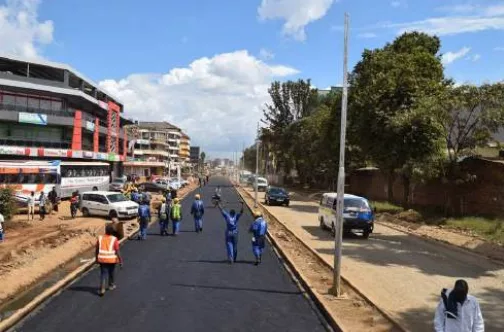
Roads hurriedly commissioned, projects suddenly accelerated and household goods distributed during campaigns may create temporary excitement, yet politically mature electorates increasingly distinguish between sustained governance and electoral symbolism. Indeed, the mountain has historically demonstrated an instinctive resistance to political patronage when it appears transactional.
It possesses a deeply rooted culture of political independence that repeatedly challenges attempts whether by former presidents, current administrations or regional elites to dictate electoral outcomes. Reports of heightened security deployment and allegations of state intimidation during the campaign may therefore have produced precisely the opposite effect.
Rather than suppressing participation, they appear to have strengthened public resolve. Throughout democratic history, electorates often become most determined when they believe their autonomy is under pressure. The ballot transforms from a civic exercise into an act of resistance.
Another equally revealing reality emerges from the government’s strategy of cultivating alternative regional political figures. Administrative influence and electoral legitimacy are not interchangeable commodities. Governments may appoint leaders, elevate allies and reorganise political networks, but authentic public leadership cannot be manufactured from above. It is cultivated patiently through trust, consistency and lived experience.
The overwhelming scale of the Ol Kalou result suggests that grassroots legitimacy remains the most valuable political currency in the mountain. There is also a striking historical irony embedded within these developments. In 2022, Mt. Kenya rallied behind a movement built on rejecting imposed political choices.
The slogan “Hatupangwingwi” became a declaration of political independence and self-determination. Four years later, that same rebellious spirit appears to have been redirected towards the very administration it helped establish. The actors have changed, but the political instinct remains remarkably consistent. The mountain has not abandoned its character; it has merely redirected its momentum.
For President William Ruto and the ruling coalition, the implications extend far beyond Nyandarua County. Mt. Kenya remains one of Kenya’s largest electoral reservoirs and has historically provided the numerical backbone upon which presidential victories are constructed. If the political current witnessed in Ol Kalou gathers strength across the wider region, the electoral mathematics of 2027 become significantly more challenging.
Yet politics is never static. Earthquakes destroy, but they also reshape landscapes. They compel engineers to redesign buildings and force societies to reconsider foundations previously assumed to be unshakable. Likewise, Ol Kalou presents not merely a warning but an opportunity.
The administration can still rebuild confidence through meaningful economic reforms, renewed engagement with agricultural communities, relief for struggling enterprises and a leadership style that privileges dialogue over confrontation. Political trust, though fragile, is rarely beyond repair when governments demonstrate humility, responsiveness and consistency.
Ultimately, the significance of Ol Kalou extends well beyond the election of a single Member of Parliament. It marks the moment when Kenya’s political compass visibly shifted. The constituency became the epicentre of a much larger national conversation about economic expectations, political identity and democratic accountability. Like every great earthquake, its greatest impact may not be the ground it immediately shattered, but the landscapes it permanently transformed.
The mountain has spoken not through chants, slogans or protests, but through the quiet authority of the ballot box. And when a mountain speaks with such clarity, wise leaders do not dismiss the echo. They study it carefully, for within its reverberations may lie the first unmistakable signals of Kenya’s political future.
The author is the MCA for Iftin Ward and Deputy Speaker Garissa County Assembly. A columnist and a playwright.