MUGWE: If we must subsidise, fund needy households not the pump and crooks
Household subsidy enables State to stop defending pump prices and start defending household dignity with Sh2,000 direct monthly cash transfers.
by SUSAN MUGWE
Audio By Vocalize
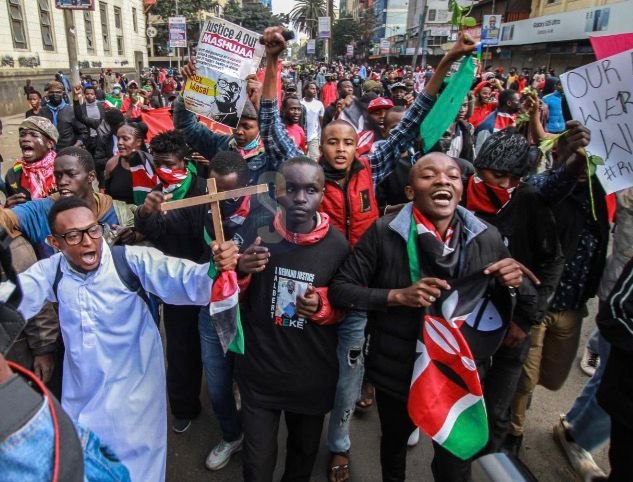
A vehicle turns back along Thika Superhighway in Nairobi during protests over high fuel prices /LEAH MUKANGAI
In 2015, Indonesia
did something politically dangerous but economically adult. It dismantled a
fuel subsidy that had existed for 50 years and was consuming nearly a fifth of
the national budget.
Their political class had tried and failed 14 times
before. The subsidy had become so embedded that successive governments treated
it as untouchable and a sacred entitlement.
What changed was
not political courage. It was diagnosis. The World Bank reported that nearly 40
per cent of the fuel subsidies were flowing directly to the richest 10 per cent
of Indonesian households, and less than one per cent reached the poorest 10 per
cent.
The government had spent decades telling the poor that it was protecting
them, while systematically transferring billions to the wealthy. When this data
became public, the subsidy lost its moral justification overnight. So it was
replaced with direct cash transfers to lower-income households that needed the
money most. The result was a 24 per cent drop in poverty.
India followed a
parallel logic when it faced a cooking gas subsidy riddled with leakage from
ghost beneficiaries and cartel diversions. In 2015, India launched the Direct
Benefit Transfer for LPG.
This initiative eliminated the universal commodity
subsidy and replaced it with money transferred directly to verified low-income
beneficiaries. The leakage collapsed almost immediately. This contributed to
lifting 135 million people out of multidimensional poverty.
Kenya should pay
close attention.
Our fuel politics
has become trapped in the usual binary of either you support pump subsidies
because wananchi are suffering, or you oppose them because markets must work.
Both positions contain some truth, however, neither is sufficient. The better
question is this: if the state has limited fiscal room, what is the smartest thing to subsidise?
The logic is
simple. If a state must subsidise, then it should subsidise its citizens, not
commodities. The case for this is both economic and moral. Ideally, however, state
interventionism particularly in the form of subsidies is not merely
inefficient. It is a profound distortion that inevitably misallocates scarce
resources. But that is a topic for another day.
This week, the
Transport Sector Alliance called a nationwide fuel strike that disrupted public
transport in major towns, stranded hundreds
of thousands of commuters, and led to deaths and property damage,
triggered by an increase in fuel prices that pushed diesel up by 46 per cent
and petrol by 20 per cent from their pre-April levels.
Begs the question.
What are we actually paying for?
Kenya charges a
Petroleum Development Levy of Sh5.40 per litre of Super Petrol and diesel to
raise money that the government can use to stabilise fuel prices and cushion
consumers when global oil prices rise. In the financial year to June 2025, it
collected Sh26.37 billion, but only Sh13.68 billion was used for price
stabilisation.
While these revenues are legally designated for the Petroleum
Development Fund to stabilise pump prices, the National Treasury has frequently
reallocated billions to clear general exchequer deficits. Furthermore, when
price stabilisation is applied, it does not return value equally or
proportionally to every Kenyan.
Because fuel consumption scales dramatically
with wealth, a universal pump subsidy is inherently regressive, siphoning the
bulk of the financial cushion to affluent, multi-car owners.
This structural
asymmetry is worsened by the fact that the Ministry of Energy applies the fund
unevenly, frequently eliminating the
stabilisation factor for Super Petrol, while heavily subsidising diesel and
kerosene to shield commercial transport and low-income households from global
market shocks.
In economic-speak, a
commodity subsidy suppresses the price signal, which is the information through
which markets communicate real costs. When the pump price is kept artificially
low, it makes fuel seem cheaper than it really is. This pushes more economic
support towards heavy fuel consumers, who are often wealthier households.
Let us, like
Indonesia and India, examine what is possible in restructuring from a commodity
stabilisation fund to a household stabilisation fund.
Kenya’s 2026
Economic Survey places the overall poverty headcount at 39.8 per cent. This
translates to about 20 million people or five million vulnerable households. According to
the Institute of Public Finance, these vulnerable households survive on an
absolute expenditure cap of less than Sh387 per day.
By injecting an extra
Sh2,000 per month to these households, we
add Sh66.67 per day, bringing their expenditure cap to Sh453.67.
While this
may sound negligible to the middle and upper class, it represents nearly 17.2
per cent increase in daily purchasing power, completely making the difference
between a family taking one or two meals a day and guaranteeing the baseline
nutrition required.
For a micro-entrepreneur, it represents a substantial
digital buffer of data and airtime, keeping them linked to mobile money
networks and real-time market prices for weeks on end.
This is what
experts often fail to communicate. Purchasing power parity is not an abstract
IMF phrase. It is the number of days a household can cook, commute, drink
safely, or stay in the market. This would effectively lift about fourmillion
Kenyans out of absolute daily cash deprivation overnight by a single sustained
monthly transfer.
So where would the
monthly Sh2,000 come from you may ask? By consolidating fragmented, leaky
commodity subsidies, which include the PDL (Sh30 billion), the Equalization
Fund (Sh16.8 billion), the Strategic Grain Reserve (Sh25 billion), the
fertiliser and agricultural inputs (Sh15 billion) and from the eTIMS compliance
windfall (Sh33.2 billion).
Add those streams together and Sh120 billion
annually is fully funded for 20 million people without adding a single new tax,
a single new levy and a single new budget line. The money exists. It simply
requires economic adulting.
A household
stabilisation fund can break the structural trap called the kadogo economy. A
household with zero disposable surplus buys daily household commodities in tiny
expensive plastic pouches, paying a premium for being poor.
An extra Sh2,000 gives it the
liquidity to buy in slightly larger volumes. It also provides households with
an insurance buffer so that when a child catches a fever, the family does not
have to choose between medicine and food. It keeps the mobile phone charged,
and the M-Pesa account active. It also enables them to pay for SHA.
The macroeconomic
multiplier on this money is not theoretical. A Sh2,000 transfer to a wealthy
household has near-zero velocity. It sits in a bank or M-Pesa account.
The same
transfer to a vulnerable household has 100 per cent immediate velocity. Every
shilling is spent within 48 hours, flowing directly to the mama mboga, the boda
guy, the water vendor and the posho mill, stimulating the domestic market from
the bottom up. This subsidy stops being a welfare and becomes a grassroots
demand stimulus.
Another benefit of
pivoting to a household stabilisation fund is the threat that is often talked
about in whispers and innuendos ¾ the cartels. You see, commodity subsidies are
cartel bait.
When you subsidise a physical commodity, whether fuel, fertiliser or grain,
you create a price differential between the subsidised domestic price and the
market price across the border. That differential is called arbitrage. Fuel
gets adulterated, fertiliser gets smuggled into neighbouring countries, and
grain gets diverted from government warehouses to the market.
However, when you
subsidise a household, there is no physical asset for a cartel to intercept
because the subsidy arrives as money, fungible, immediately usable, impossible
to adulterate or divert across the border.
Indonesia and India did not just
lift people out of poverty. They eliminated entire categories of structural
leakage that had been consuming public funds for decades. This insight alone
should end the debate.
Because the state has spent many
years behaving like a night watchman over commodities that are too easy to
divert, it is forever policing the warehouse, the border, the tanker, the depot
and distributors.
That is an expensive and often losing battle. A
household-centred subsidy changes the terrain and enables the state to stop
defending price at the pump and start defending dignity at the household.
I concede that cash
transfers are not magically incorruptible because registries can be gamed. But
those arguments call for better administration, not for continuing with a leaky
fragmented model that is already failing both fiscally and distributively.
Finally my
unsolicited advice is to the experts. It is obvious that cushioning fuel is not
the same thing as cushioning citizens. One protects a commodity. The other
protects a home.
If we must spend public money to soften economic pain, then
let us subsidise a family trying to cook, commute and stay alive. Not a
commodity that cartels can adulterate, smuggle, divert or weaponise. Because a
subsidy that can be stolen is not social protection.
The architecture
already exists. Kenya has already constructed, at significant cost, the
targeting and delivery infrastructure. The enhanced single register, which is a
consolidated database of all persons eligible for social protection is there.
The money consolidated from the leaky and fragmented stabilisation and
Equalization funds is there. The delivery mechanism using USSD codes is there.
The only thing missing is the decision.
The argument that Kenya cannot pivot to
household stabilisation fund is not an argument about capacity. It is about
political will.
The curious task of economics is to demonstrate to men how little they
really know about what they imagine they can design ¾ Friedrich Hayek
This is premium content
Subscribe to Continue Reading
Help us continue bringing you unbiased news, in-depth investigations, and diverse perspectives. Your subscription keeps our mission alive and empowers us to provide high-quality, trustworthy journalism. Join us today to make a difference!

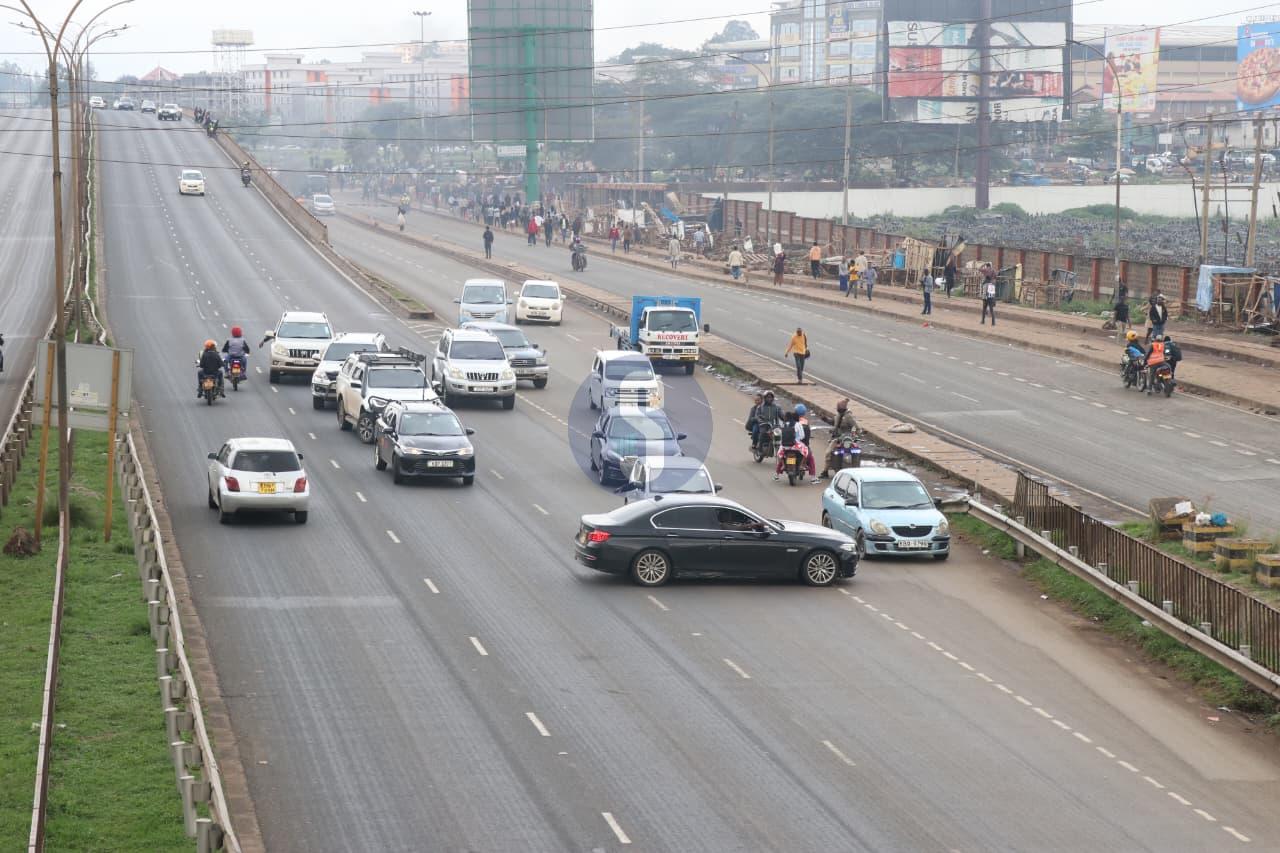 A vehicle turns back along Thika Superhighway in Nairobi during protests over high fuel prices /LEAH MUKANGAI