When the United States launched the Our
Ocean Conference in 2014, the premise was simple and, frankly, American: the
ocean is a shared inheritance, and the people who live closest to it have the
strongest claim to shape its future.
More than a decade and $169 billion (Sh21.9 trillion) in
commitments later, that premise has carried the conference from Washington to
Valparaíso to Malta to Bali — and this month, for the first time, onto African
soil.
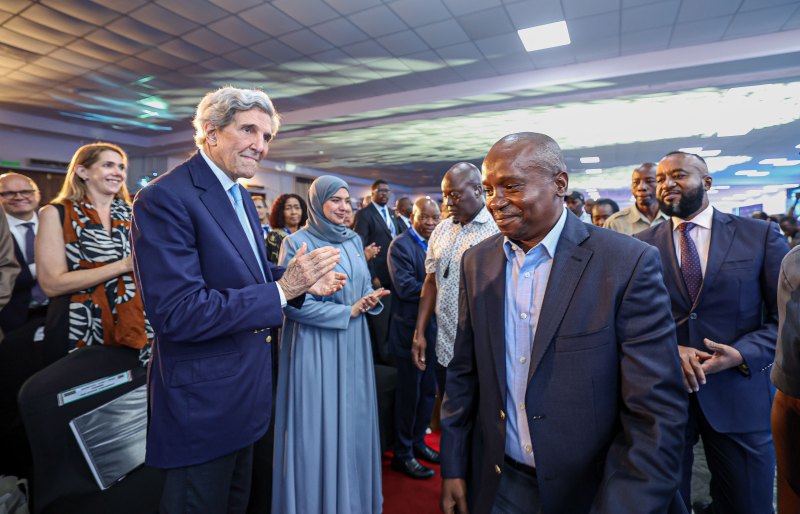
Kenya's stewardship of the 11th Our Ocean Conference recently held in
Mombasa is a milestone the United States welcomes without reservation. The
continent that borders two oceans and some of the most productive fisheries and
ecologically unique habitats on Earth has more than earned its place at the
head of this table.
Our Ocean has always drawn its strength
from breadth rather than exclusivity. Governments sit alongside industry, port
authorities, marine scientists, island microstates and coastal communities
whose entire economy fits inside a single bay.
A coastal fishing village in Lamu or Kilifi understands the consequences
of an unregulated trawler in ways no distant ministry can replicate. The United
States will continue to advocate that every entity with a legitimate coastal
and maritime interest be able to bring its expertise and practice to bear,
regardless of the politics that surround it. The ocean does not check
credentials at the reef.
The first pillar is the sovereign right of coastal
nations over the resources within their Exclusive Economic Zones (EEZ). The
legal architecture here is settled: under international law as reflected in the
Law of the Sea Convention, a coastal state holds sovereign rights over the
living and non-living resources of the waters extending 200 nautical miles from
its shore.
Those rights are not abstractions. For many African coastal states,
the fish in their EEZ are food security, employment, and foreign exchange in a
single resource. Yet too often those resources vanish — not through some
natural scarcity, but through a laundering operation hidden in plain sight on
the water.
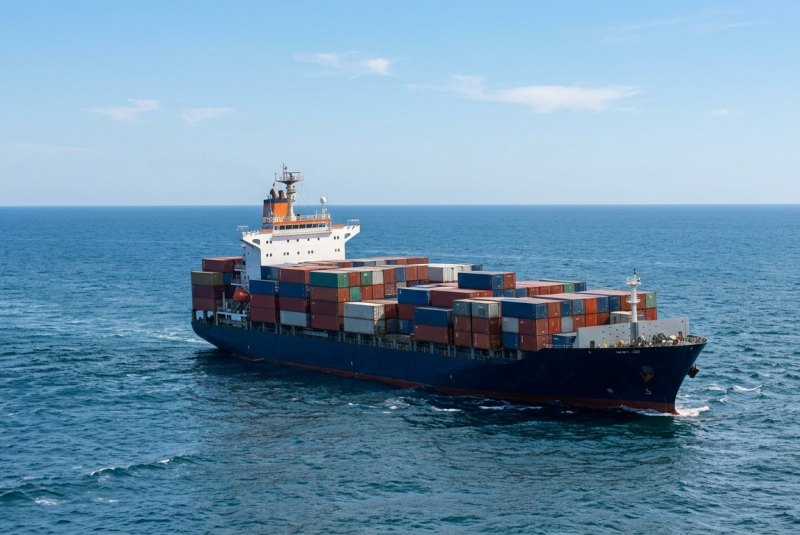
A foreign vessel flying a flag of convenience, registered through a
paper arrangement to a state it has never meaningfully answered to, fishes a
coastal nation's waters without authorisation. Its catch is then transshipped
at sea to a refrigerated processing vessel sitting just outside the EEZ, beyond
the practical reach of the coastal state's enforcement.
By the time the product
reaches a distant port, its origin has been scrubbed clean. The coastal nation that should
have had ownership over that fish never sees the revenue, the data, or the
recourse.
This is not a victimless accounting trick.
It is theft from some of the world's most vulnerable economies and communities,
and it thrives precisely where transparency and enforcement are weakest.
The
encouraging news is that African states are moving deliberately to close these
gaps. Earlier this year, Cameroon confronted the abuse of its own flag directly
— shutting down a compromised offshore ship registry and revoking the
fraudulent registrations that had attached themselves to it. That is not a
small act.
A nation choosing to forgo registry revenue rather than lend its
flag to illicit operators is precisely the kind of sovereign leadership that
makes the broader system more honest. Bogus registration and at-sea
transshipment are significant parts of the connective tissue of illegal,
unreported and unregulated fishing, and dismantling them requires exactly this
combination of national resolve and shared enforcement.
In the Western Indian
Ocean, Seychelles has earned recognition for its growing leadership in regional
maritime security, anchoring exercises that sharpen the ability of coastal states
to see and police their own waters. The United States is proud to enable this
work — with training and technology that support maritime-domain awareness.
The second pillar is freedom of navigation,
which is vital whether off the Horn of Africa, in the Mozambique Channel or
along the Gulf of Guinea. The same body of international law that secures a
coastal state's resources within its EEZ also guarantees the right of innocent
and transit passage through the world's sea lanes.
These two concepts are not
in tension; they are the same bargain. A coastal nation's sovereign rights over
its resources and global navigational rights and freedoms stand or fall
together, because both depend on a rules-based maritime order that applies
equally to the powerful and the small. Erode one and you welcome the erosion of
the other.
None of this asks the conference to become
a forum for grievance. Quite the opposite. The United States was at Mombasa to support
maritime-domain awareness that lets coastal states see who is operating in
their waters, and to stand with African partners as they convert a decade of
commitments into enforcement on the ground.
Assistant Secretary of State for African Affairs