Human lives and societies can be transformed by religions, wars,
cultural shifts, the passion and belief of a single great man or woman and the
imposition of new economic systems.
But when profound and lasting change takes
place, it is usually because we found a new way of doing things - a new technology. These technological inventions have long served as
the yardstick by which a society measures its progress.
At their core, they
reshape how humans meet their most basic needs, making it easier, more efficient
and less energy-intensive to get food, shelter and to procreate.
So profound is
their impact on history that entire periods are named after their defining
technologies - the Iron Age, the Bronze Age, the Industrial Age, the Information
Age and now, the Artificial Intelligence age.
The first
technological revolution in the Neolithic Age was the plough, which mechanised
farming and birthed the Agrarian Revolution.
It created food security and freed
humanity from spending all her energy hunting and gathering, thus enabling
people to settle, specialise in crafts and build complex societies.
The second
was the steam engine, which ushered in the Industrial Revolution and enabled
production at scale using machines rather than human muscle.
Then came the
Information Age, powered by microchips that sparked the personal computer and
internet revolutions and gave rise to a global digital economy that swiftly
outpaced the physical economy in economic output.
Now we're entering Digital
2.0, driven by AI and powered by GPUs (Graphics Processing Units). Its key
distinction from Digital 1.0 is that it substitutes machine intelligence for
human intelligence in producing goods and services.
With these
technological inventions happening rapidly, it is easy to overlook the fact
that every single one of them was started not by governments or corporate
giants but by a handful of extraordinary individuals in society.
They’ve been
called different names during different eras — from geniuses, to inventors, to
innovators and more recently entrepreneurs. I prefer to call them polymaths.
A polymath is a
person with exceptionally broad knowledge and deep expertise spanning multiple,
often unrelated, fields or disciplines.
The word originates from the Greek for
"having learned much." These individuals are defined by an immense
curiosity and a rare ability to synthesise knowledge across diverse subjects to
produce entirely new innovations.
Plato understood
philosophy, mathematics, politics and metaphysics, and established one of the
earliest centres of structured learning through his Academy — one of the
world's first institutions of higher learning.
Thomas Edison was a polymath who
worked across engineering, chemistry and business, holding more than 1,000
patents and pioneering not just inventions like the lightbulb but also entire
systems such as electric power distribution that transformed how society
functions.
In Senegal, the great Cheikh Anta Diop, described as a "modern
Pharaoh of knowledge", held expertise in physics, Egyptology, linguistics,
anthropology and history.
Besides
polymathy, the common factor amongst all these individuals is the fact that
their careers weren’t conventional. Their work was less about trading their
labour in exchange for pay and more about thinking deeply of innovative
solutions to societal problems.
They were funded by kings, governments,
aristocrats and the church, and their successes often came much later after a
series of failures.
Their goal was
not primarily to make money. It was to solve a deep, consequential problem
that, once solved, would push all of society forward.
It was others who
commercialised their discoveries and created enormous wealth in the process.
James Watt invented the steam engine, but it was entrepreneurs like Matthew
Boulton who manufactured and sold it across Britain, transforming entire
industries. Tim Berners-Lee invented the World Wide Web and gave it freely to
the world.
It was companies
such as Google, Amazon and Meta that turned that gift into trillion-dollar
businesses. The mobile money technology underpinning M-Pesa was developed by
researchers at Vodafone's R&D unit, but it was Safaricom's commercial
execution of it in Kenya that made it the most transformative financial tool in
African history.
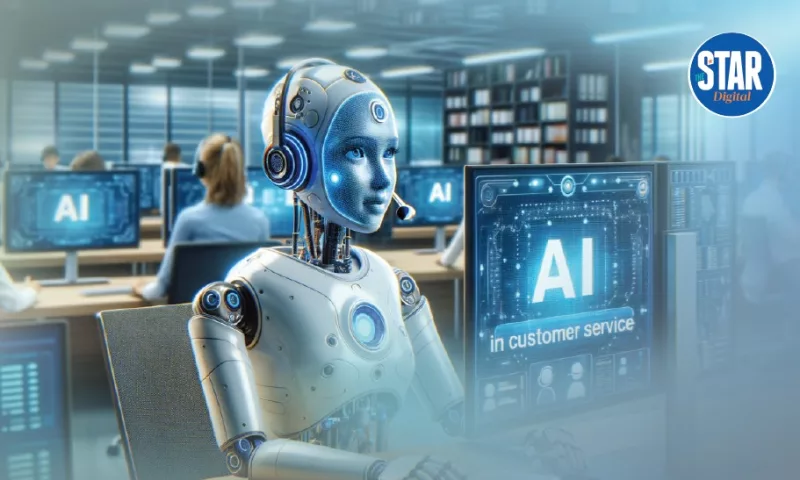
AI is
accelerating all of this. As it progressively replaces specialised labour as a
factor of production - enabling
individuals to build products, write code, analyse data and design systems
without needing to have a tech or engineering background - the educational and professional premium
will shift decisively.
The competitive
edge in the labour market of tomorrow will not be deep expertise in a single
subject. It will be the ability to hold a broad knowledge base, draw
cross-disciplinary insights and apply creative insights to complex problems.
The education system will follow. Curricula built around narrow specialisation
will be disrupted just as surely as the industries they once fed and with it,
an incentive for learners, innovators and professionals to pursue polymathy.
The writer is founder of M-Taji and Chairman of Mashinani Youth Kazi Delivery
Movement [email protected]


 The competitive edge in the labour market of tomorrow will not be deep expertise in a single subject. It will be the ability to hold a broad knowledge base /STAR ILLUSTRATION