Despite the
incessant political noise that has characterised the past four years, which is
normal in any democracy, the President seems laser-focused on implementing his
key projects and driving through his policies.
He is driving affordable housing
and healthcare reforms, massive infrastructure initiatives countrywide and
raising Kenya's international profile. The administration has largely avoided
distraction.
The travel
destinations of the political class and sections of the educated elite, both
employed and unemployed, suggest that all the administration’s gains could go
up in smoke if the security situation is not brought under control.
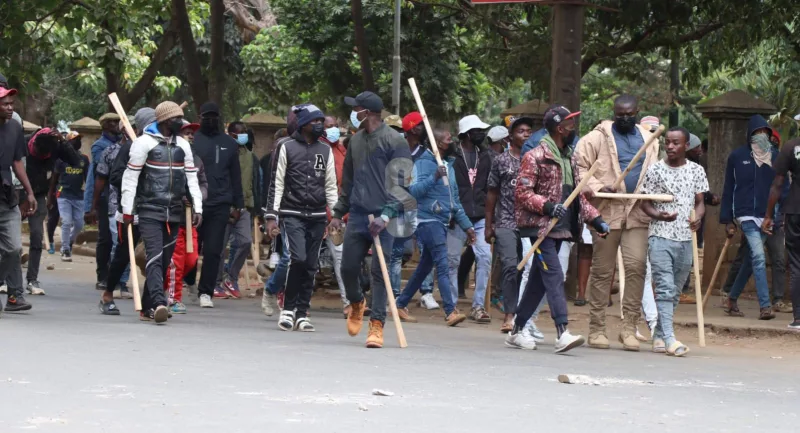
The menace of
thuggery, whitewashed with the fashionable label of "goonism", has
dominated public discourse, yet little meaningful action has been taken to end
it.
Young men continue to be openly organised and patronised to disrupt
political meetings by both sides of the political divide, often leaving
ordinary citizens injured while those who sponsor the violence escape
accountability.
The government's hands appear tied or unwilling, despite the President's recent directive
ordering the police to confront the problem to the full extent of the law.
Anyone who follows
current affairs understands why. Some of the government's own political
operatives have, in the past, mobilised these very young men with money, armed
them with crude weapons and deployed them to disrupt public protests while
shielding themselves from accountability.
The recent by-election in Ol Kalou
illustrated the problem vividly. Hooded men carrying firearms disembarked from
top-of-the-range vehicles and unleashed violence and intimidation in broad
daylight, seemingly doing the government's bidding. The government denies involvement.
The opposition is
far from blameless. Many of its leaders have also cultivated networks of goons
to protect their political interests and project strength. Siaya Governor James
Orengo and Embakasi East MP Babu Owino recently declared publicly that they would
use every means necessary to protect themselves.
Former Deputy President
Rigathi Gachagua has repeatedly made inflammatory remarks, including urging
international tourists and investors to stay away from Kenya until after he
becomes president.
He has also consistently made ethnically charged statements
that can easily be interpreted as incitement.
History offers an
uncomfortable warning. These developments increasingly resemble the dangerous
political climate that preceded the 2007 general election, a period that
remains one of the darkest chapters in Kenya's history.
The disputed election
claimed more than 1,300 lives and displaced nearly 600,000 people as
communities turned against one another after years of ethnic incitement and
chauvinism by politicians seeking for power.
Criminal gangs were weaponised to
identify, profile and attack members of communities portrayed as responsible
for local or national grievances.
President Ruto
invites comparisons with President Kibaki in that respect. Like Kibaki before
him, he has overseen important economic reforms, pursued bold policy choices
and expanded development into long-neglected regions.
Kibaki's first term was
marked by major achievements, including free primary education and economic
liberalisation. Yet for all the progress made under his watch, he failed to
confront the growing culture of political thuggery before the election.
Whether because his
hands were tied or because politicians within his coalition relied on gangs to
mobilise support, the state allowed dangerous networks to flourish until they
spiralled out of control.
Many would argue that elements within Ruto's camp are
repeating the same mistake in pursuit of a second term, seemingly oblivious to
the danger they pose to the country's future.
President Ruto
would be better served by aggressively confronting politicians known for
inflammatory rhetoric or for maintaining networks of violent gangs, even if
they are acting in what they consider the head of state’s interest. Arrest the young men,
charge them in court and secure stiff sentences to serve as a deterrent.
More
importantly, investigate and prosecute the politicians and state officials who
finance, organise and direct these groups. Unless those issuing the orders are
held accountable, the cycle will continue.
Goonism and rising
insecurity ultimately undermine President Ruto's own interests. Even if he were
to lose the 2027 election, he has already secured his place in history as
Kenya's fifth president.
His greater responsibility now is to protect the
legacy he leaves behind, not allow it to be overshadowed by political violence
and bloodshed.
Despite Kibaki's many economic achievements, one of the
strongest memories associated with his presidency remains the post-election violence
of 2007-08 and the failures of political leadership that allowed it to happen.
President Ruto should not leave behind a similar legacy.
A country aspiring
to attain high-income status within the next few decades must begin acting like
one.
That starts with professionalising law enforcement, strengthening the rule
of law and ending the use of hired gangs to police and disrupt political meetings and intimidate opponents for political gain.
No nation can build lasting prosperity while tolerating organised political
violence as an instrument of politics.




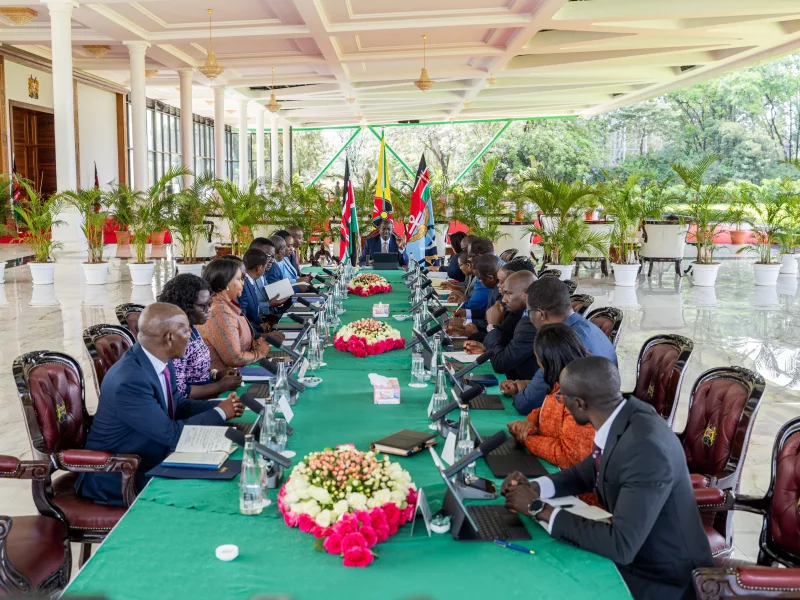
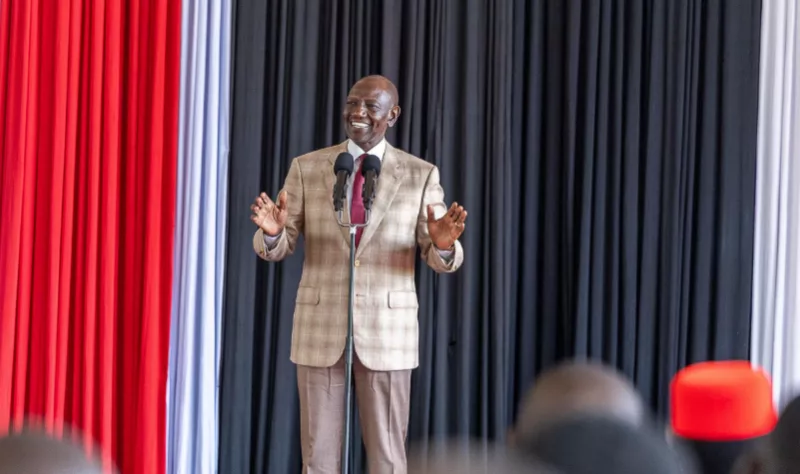
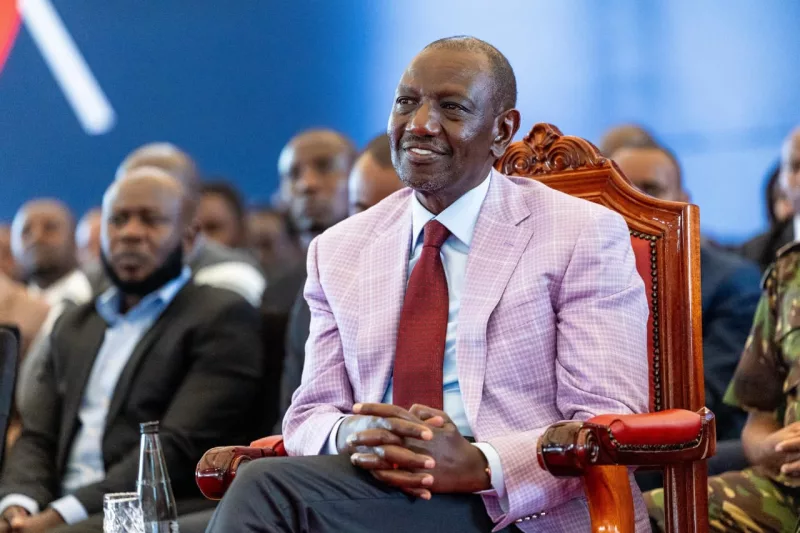 President William Ruto during a meeting with artisans and mechanics from Nairobi County at State House, Nairobi, on July 23, 2026 /PCS

![[PHOTOS] Linda Mwananchi takes Trans Nzoia by storm](https://cdn.radioafrica.digital/image/2026/07/0d132395-ad4b-4671-867e-880c9f8144f5.webp)