

The National Treasury has warned that the government is running out of easy ways to manage its finances, as most of the money it collects is now going toward paying debts, salaries and other essential expenses.
This has left little room for development spending or fresh economic stimulus programmes.
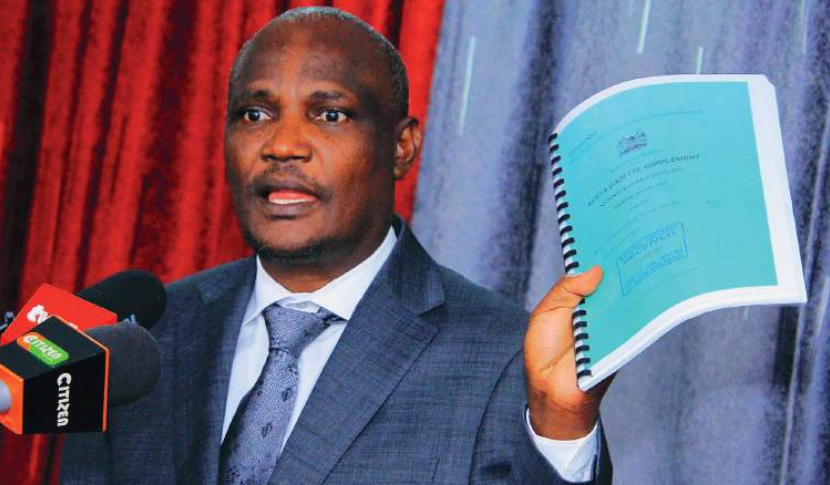
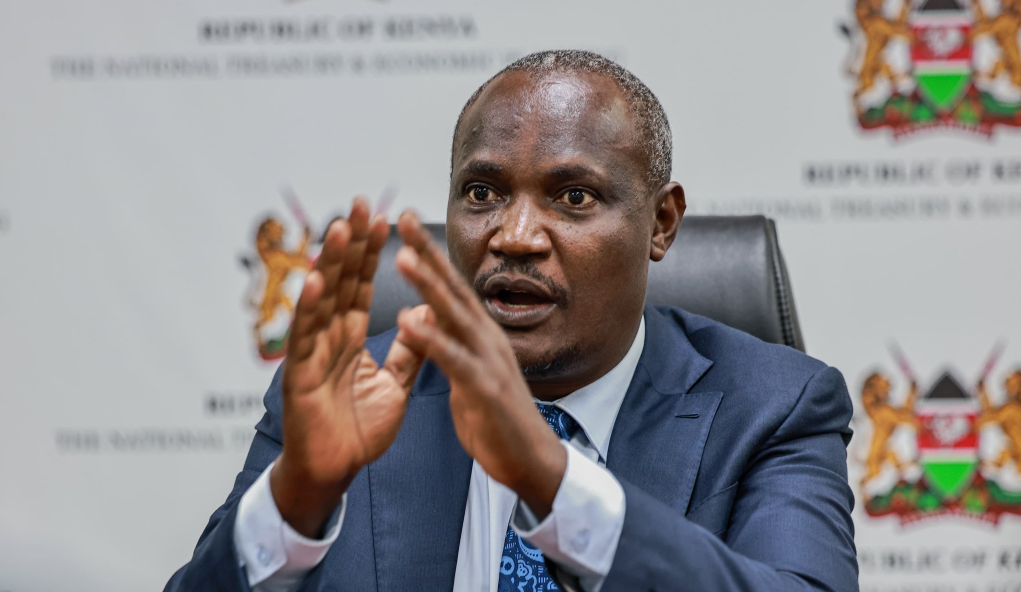
Treasury Cabinet Secretary John Mbadi, delivered one of the clearest acknowledgements yet of the pressure facing Kenya’s public finances, warning that the country’s budget has become “rigid” and “inflexible.”
Speaking during a briefing on the Finance Bill 2026, Mbadi revealed that debt servicing costs continue to crowd out other priorities.
According to Mbadi, out of the projected Sh3.63 trillion in revenue for the next financial year, about Sh1.5 trillion will go directly to debt repayment while another Sh1 trillion will be used to pay public sector salaries.
County allocations are expected to consume at least Sh420 billion, further shrinking the government’s spending space.
“That is why I keep saying this budget is rigid. It is inflexible. We have boxed ourselves in,” Mbadi said.
The remarks offer a stark picture of the fiscal constraints confronting President William Ruto’s administration at a time when the government is under pressure to avoid new taxes while still funding essential services and infrastructure projects.
Mbadi acknowledged that Kenya has little room left for additional taxation following public backlash over previous finance bills and widespread complaints over the high cost of living.
“We are alive to the fact that the options of raising more taxes are limited because Kenyans have complained loudly before of high taxation,” he said.
He also indicated that borrowing is becoming increasingly difficult as debt servicing obligations rise and global economic risks intensify.
The Treasury’s latest projections suggest nearly half of all expected revenues will be spent on servicing debt alone, pointing to the scale of Kenya’s debt burden after years of heavy borrowing for infrastructure and recurrent expenditure.
The CS warned that any major external shock, including rising global oil prices linked to tensions in the Middle East could force the government to revise economic growth forecasts downward and trigger budget cuts.
“Revenue projection will come down. And if revenue projection is down, how do you finance the same budget? Either by borrowing or taxation. We have no option to come for more taxes. Borrowing is another no-go zone. That leaves only one option — cutting the budget,” Mbadi posed.
The comments mark one of the strongest indications yet that Treasury could increasingly turn to austerity measures and spending rationalisation instead of aggressive tax increases that previously sparked public protests.
Mbadi said the government is already reassessing how it finances major projects, particularly commercially viable infrastructure investments.
He revealed that Treasury intends to move some projects out of the national budget and into alternative financing structures such as public-private partnerships (PPPs) and the proposed National Infrastructure Fund.
The Energy ministry has already experienced cuts to its development budget as part of the strategy.
“Many of the projects being implemented under the Ministry of Energy are commercially viable. We should take them out,” Mbadi said.
The shift could significantly reshape Kenya’s infrastructure financing model by increasing reliance on private capital, pension funds and development finance institutions instead of direct Exchequer funding.
Treasury is also attempting to reposition the Finance Bill 2026 as a measure focused more on tax simplification and expanding compliance rather than introducing punitive taxes.
Mbadi defended controversial proposals affecting mobile phones, digital payments and virtual asset reporting, arguing they are intended to simplify tax administration and improve fairness by ensuring all sectors contribute their share.
On mobile phones, Treasury says the proposed 25 percent excise duty upon activation would replace multiple existing levies currently charged during importation, which collectively amount to an estimated 55.5 percent tax burden.
Mbadi argued the changes could lower formal market phone prices while reducing smuggling and easing pressure on traders’ liquidity.
The government is also moving to tighten oversight of Kenya’s rapidly growing digital economy by introducing reporting obligations for virtual asset transactions, signalling broader efforts to widen the tax base without significantly increasing rates.
Analysts say the Treasury’s latest messaging reflects a major shift in Kenya’s fiscal strategy after the political fallout triggered by earlier tax proposals.
Rather than introducing sweeping new taxes, the government now appears focused on improving compliance, simplifying tax structures and protecting revenues while containing spending growth.