The Kenya Meat Commission is on the spot after
Auditor-General Nancy Gathungu flagged a series of financial, operational and
governance weaknesses.
The queries include an unrecorded Sh1.67 billion government
loan, unsupported liabilities, declining livestock purchases and persistent
losses.
In the review for June 30, 2025, Gathungu, in a qualified
opinion on KMC’s books, cited several material concerns that cast doubt on the
accuracy of the reported financial position.
Among the key findings was KMC’s failure to recognise a
Sh1.67 billion loan owed to the National Treasury despite being instructed to
do so following a verification exercise.
KMC reported domestic borrowings of Sh372.4 million in its
books, but Treasury records showed a loan balance of Sh977.3 million, creating
an unexplained variance of Sh604.9 million.
Further, the Treasury directed KMC to recognise a loan
liability of Sh1.67 billion as of June 30, 2021, continue accruing interest and
provide a repayment plan.
“Management has to date not recognised the loan amount of
Sh1,667,125,232 in its books or provided a repayment plan as required,”
Gathungu said.
As a result, the auditor said the accuracy of KMC’s
non-current liabilities could not be confirmed.
The audit also questioned the commission’s creditor and
debtor records.
KMC reported trade and other payables amounting to Sh487.7
million, including Sh81.3 million that lacked supporting documents such as
payment vouchers and invoices.
In addition, pending payment vouchers worth Sh24.6 million
relating to livestock supplies were omitted from the creditors’ balance.
KMC is owed Sh552.4 million by various government agencies,
with the amounts remaining unpaid for more than 90 days without evidence of
recovery efforts.
Rental arrears of Sh19.4 million from active tenants
occupying KMC properties, as well as unpaid balances amounting to Sh126.6
million accrued between 2012 and 2021, were unsupported, disputed or
untraceable.
Gathungu observed that KMC lacks a debt management policy
and has no structured framework for credit risk assessment or impairment
reviews.
“The accuracy and full recoverability of the outstanding
receivables balance of Sh694,114,443 could not be confirmed,” she said.
Questions were also raised over the commission’s land
holdings valued at Sh15.02 billion.
Parcels in Machakos, Nairobi, Kajiado, Kwale, Mombasa and
Laikipia counties had original title deeds remaining with the National
Treasury.
Three parcels in Machakos, Nairobi and Mombasa are subject
to ongoing court cases and unpaid land rates amounting to Sh1.61 billion.
Leasehold properties in Kwale and Mombasa, initially issued
in 1966 for 37 years, were reportedly extended in 2011, but no documentation
confirming the extensions was provided.
As a result, the auditor could not verify the accuracy and
valuation of KMC’s property portfolio, which stands at Sh17.33 billion.
The report also paints a grim picture of the commission’s
financial health. KMC sales revenue declined to Sh1.64 billion during the year
from Sh1.71 billion in the previous period.
Operating losses before tax widened to Sh588.8 million from
Sh365.6 million recorded the previous year.
Management attributed the decline to livestock supply
shortages caused by delayed payments to suppliers, which led to stock-outs of
meat products, as well as delayed payments by key government customers.
The auditor warned that the continued accumulation of losses
raises concerns about KMC’s long-term sustainability.
“The continued accumulation of losses signifies persistent
financial underperformance and sustainability challenges, casting doubt on the
commission’s ability to operate profitably and achieve its financial
objectives,” the report states.
KMC had projected revenue of Sh3.92 billion but realised
only Sh1.72 billion, resulting in an underperformance of Sh2.21 billion, or 56
per cent of the target.
The under-realisation, the auditor said, likely affected
planned activities and service delivery.
Operationally, the commission fell significantly short of
its livestock procurement targets.
KMC procured only 19,825 cattle against a target of 49,574,
translating to 40 per cent achievement.
Goat procurement reached 77 per cent of the target, while
sheep procurement achieved only 10.1 per cent, with the commission purchasing
802 sheep against a target of 7,939.
The auditor faulted management for failing to adjust
unrealistic targets or implement corrective measures despite persistent
underperformance.
Livestock purchases have also been declining steadily, with
the report showing procurement expenditure dropped from Sh2.05 billion in
2022-23 to Sh1.33 billion in 2024-25, representing a reduction of Sh713.4 million
over three years.
The decline was linked to delayed payments to suppliers
after KMC reportedly shifted its payment policy from 72 hours to periods of up
to 60 days.
“This creates a direct operational challenge, as
insufficient livestock supply limits production and consequently affects sales
performance,” the report notes.
Unremitted pension contributions amounting to Sh83 million
and unreconciled tax liabilities of Sh115.3 million with the Kenya Revenue
Authority were also flagged.
Weak internal controls were also exposed. The audit revealed
that 1,995 invoice numbers were missing from the sales system and no
explanation was provided.
KMC also lacked records for cancelled or voided invoices,
raising concerns about the completeness of revenue records.
Physical inspection found that only one of three trailers
purchased in 2021 is operational, while eight vehicles have remained stalled
between 2021 and 2023 without repair.
Several key production machines, including canning lines and
vacuum sealing equipment, were found to be obsolete or non-functional.
The auditor estimated that the factory is operating at only
about 50 per cent of its designed production capacity.
INSTANT ANALYSIS
The Auditor General’s report paints a picture of an
institution facing a deepening governance and operational crisis. Beyond the
unrecorded Sh1.67 billion Treasury loan, the findings reveal systemic
weaknesses in financial management, debt recovery, asset oversight and internal
controls. KMC’s declining livestock purchases, widening losses, missed revenue
targets and underutilised production capacity point to a business struggling to
sustain its core operations. The report also raises accountability concerns,
with missing invoices, unsupported liabilities and idle assets suggesting poor
oversight.

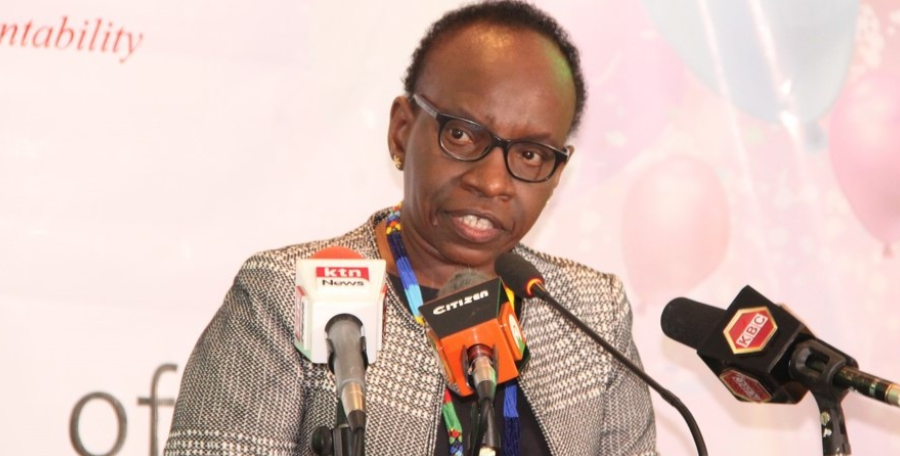
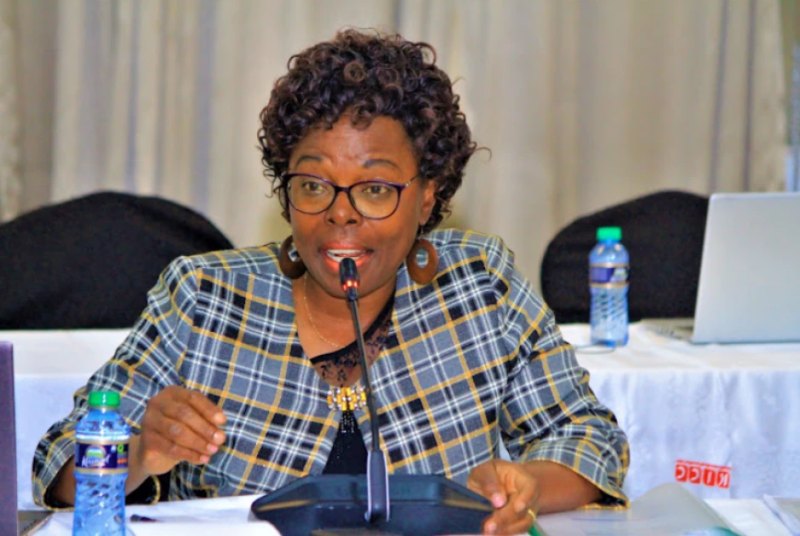
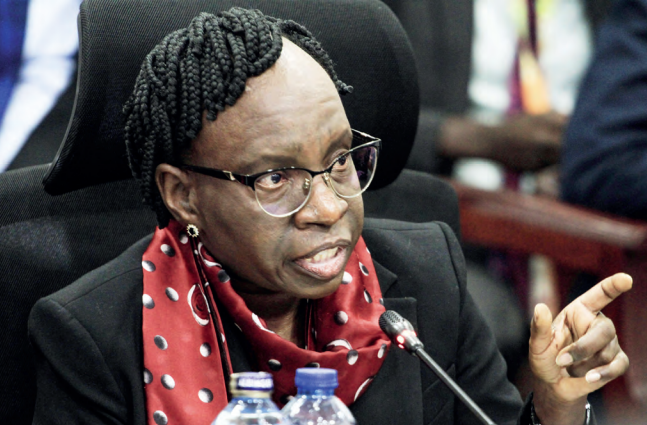
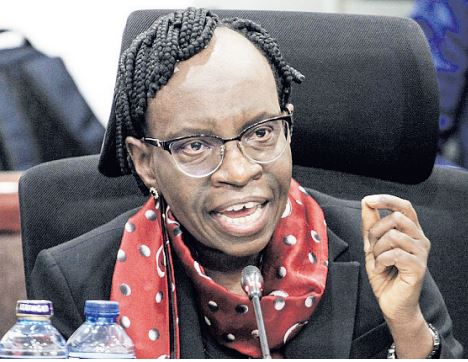
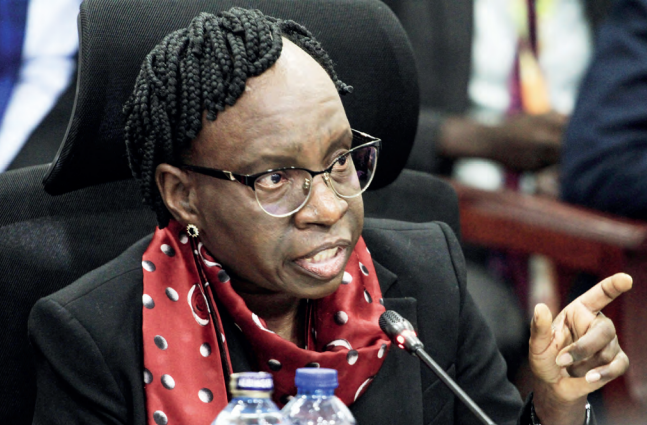 Auditor-General Nancy Gathungu/FILE


![[PHOTOS] The new Ngong –Naivasha Road viaduct](https://cdn.radioafrica.digital/image/2026/06/64d4f771-4432-4aee-ba3c-2f304c4436ec.jpg)