Why you can’t ignore Uhuru Kenyatta in 2027 election calculus
Ex-president’s reemergence repositions fourth head of state as central force in the general election.
by MOSES OGADA
Audio By Vocalize
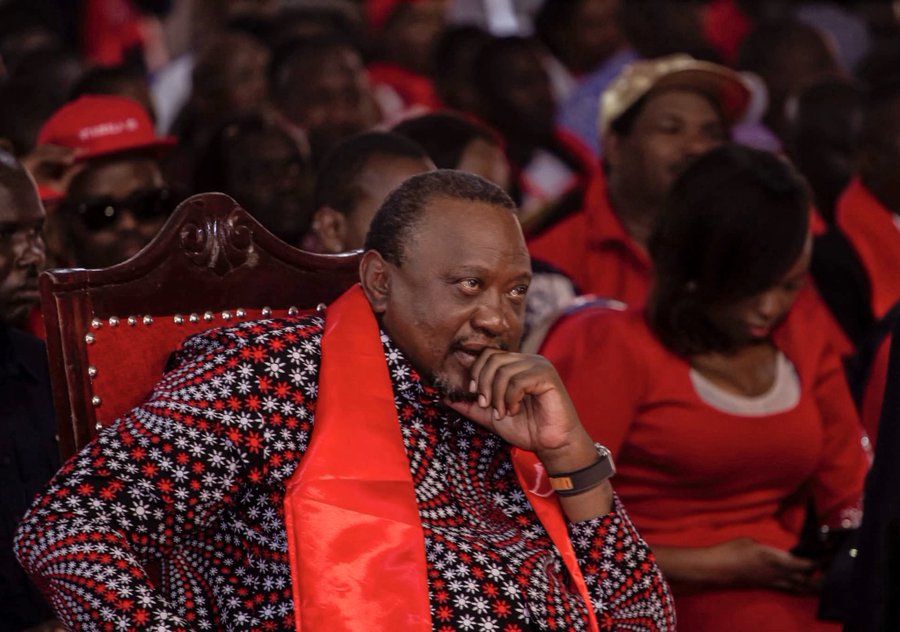
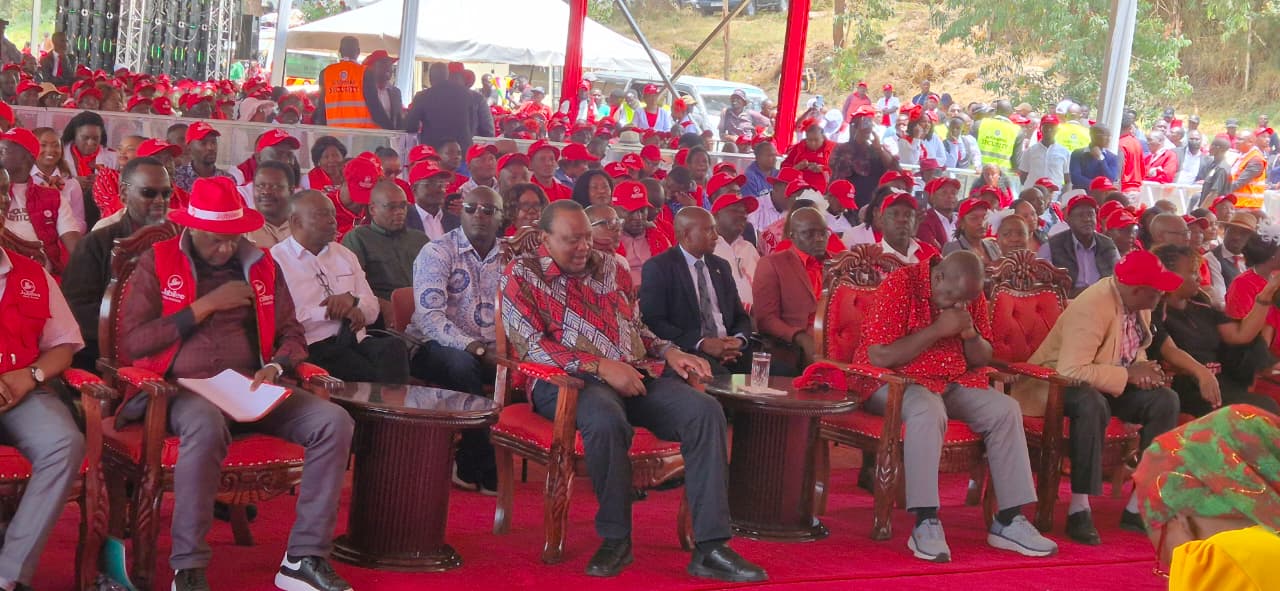
Jubilee leader Uhuru Kenyatta during the party's NDC in Nairobi / HANDOUT
The political truce between President William Ruto and his
predecessor Uhuru Kenyatta has definitively collapsed, setting the stage for an
epic 2027 showdown that is already reshaping the country’s political landscape.
In a departure from the traditionally restrained posture of
a retired head of state, Uhuru Kenyatta has emerged from political silence with
a concerted campaign against his successor’s administration.
The former president has openly accused Ruto of
systematically dismantling the gains made during his own decade-long presidency,
leaving ordinary Kenyans trapped in economic hardship. The reemergence
represents a strategic repositioning of the country’s fourth president as a central
political force in the next general election.
From his manoeuvres, he is coming out as one whose influence,
resources and regional stronghold make him an unavoidable factor in any serious
electoral calculation for 2027. At the heart of Kenyatta’s political resurgence
is the revitalisation of his Jubilee Party, which he has confidently declared
as “safely back in his hands” after years of internal turmoil and leadership
challenges. During a special National Delegates Convention last Friday,
Kenyatta laid out a clear path forward for Jubilee, involving grassroots recruitment,
robust reorganisation and a generational transition to new leadership.
He also revived
Jubilee’s transformative legacy in infrastructure development, such as the Standard
Gauge Railway and healthcare initiatives, such as the Linda Mama maternal care programme.
Most significantly, he made the declaration that “come 2027,
Jubilee will be on the ballot, fielding candidates in all positions, whether
independently or in coalition with like-minded movements.”
Pundits hold that Uhuru’s declaration transforms Jubilee
from a dormant entity into a potential electoral vehicle.
Jubilee has explicitly hinted at backing former Interior
Cabinet Secretary Fred Matiang’i for the presidency in 2027, and Jubilee secretary-general
Jeremiah Kioni emphasising that stance.
The party is being revitalised into a formidable third force
– of course, by charting a coalition framework with various partners, a move that
if successful could dramatically alter Kenya’s political calculus.
The Mt Kenya region represents the primary battleground
where Uhuru’s influence may prove most decisive in 2027. President Ruto’s
United Democratic Alliance secured about 87 per cent of the Mt Kenya vote in
the 2022 election, but just two years later, this support has been dramatically
eroded.
Critics cite unpopular tax measures, rising living costs and
perceptions of betrayal, particularly following the impeachment of Deputy
President Rigathi Gachagua. This erosion, going by sentiments from a section of
the Mt Kenya populace, has created a power vacuum that multiple factions are
now scrambling to fill.
Gachagua has since rebranded himself as an opposition leader
after quitting UDA, launching the Democracy for Citizens Party, and mobilising
Mt Kenya as a regional bloc.
However, the former president maintains a formidable
presence in the region, with Jubilee’s Kioni arguing “Gachagua has been working
overtime to consolidate Mt Kenya behind him, but his efforts appear frustrated
by lingering loyalty to Kenyatta and Jubilee.
Many voters are reconsidering Uhuru’s 2022 warnings against
electing Ruto, creating a ‘he told us so’ phenomenon that works to the former president’s
advantage.
For pundits, Uhuru has a long list of strings he can pull
and attributes that could work to his advantage in the scenarios playing out.
For starters, he has a huge influence in Mt Kenya, having
warned voters against electing Ruto and his prophecy appears coming to pass,
positioning him as a dependable voice that could shape the outcomes of 2027.
Uhuru has also held sway nationally, buoyed by members of
his Kikuyu community who are all over the country, and they have elected MPs in
Lamu and parts of Rift Valley, for instance, thus giving him influence beyond
his backyard.
Kenya’s politics is largely dominated by money, and the
Kenyatta family can bankroll not only a presidential campaign but also back
candidates for other seats such as governor and MP.
As Prof Gitile Naituli of Multimedia University observes, “Uhuru’s
financial clout is not in question. As the scion of one of Kenya’s wealthiest
families, he commands access to deep financial reservoirs.
“In politics, money is oxygen. Campaigns are costly
ventures, and having a financier with Uhuru’s reach is a strategic advantage
few would dismiss,” the don said.
The former president also has the advantage of having retired
while still young, hence, he has the energy and time to see and assess the
performance of his successors. He still has people who worked with him in
government and who can work to his advantage, especially those who feel disenfranchised
by the Ruto administration.
Uhuru has also remained visible, and his public appearances
still stoke serious excitement in a show of support, despite his having left
office and he has a huge interest in state affairs.
His relative youth upon retirement provides him with the
energy and time to carefully assess his successor’s performance and
strategically reenter the political arena.
Unlike his predecessors, Daniel arap Moi and Mwai Kibaki,
who left office at an advanced age, Kenyatta’s continued physical and political
vitality allow him to maintain an active role in national affairs.
As Githunguri MP Gathoni Wamuchomba put it, “Uhuru Kenyatta
is the undisputed kingpin of the mountain and he didn’t force it on the on the
people.”
She went on, “Uhuru is admired by all and is a statesman. We
should all work hard to outdo him.”
Kioni (former Ndaragwa MP) said, “Uhuru Kenyatta is still the
mountain’s (Mt Kenya’s) compass. No amount of noise from pretenders [referring
to Gachagua] can shake the unity of the Kikuyu nation.”
Beyond his regional stronghold, Uhuru possesses multiple
strategic advantages that ensure his national relevance in the coming polls.
Political risk analyst Dismas Mokua describes the former
president as the “known unknown” of the 2027 election, emphasising that “no
serious presidential candidate can afford to ignore him.”
Prof Macharia Munene of the United States International
University says “Uhuru will have some influence but not as much as he had
before in 2017. People will vote not so much because of what chosen leaders
tell them, but because of what they think is in their best interests.”
Perhaps most importantly, he provides an alternative voice
to Ruto’s administration, positioning himself as a credible critic of
government policies.
As analyst Albert Kasembeli says, “He provides an
alternative voice to Ruto’s. As a former president, there is potential in his
experience, knowledge of state machinery, international connections and the
levers of power. He has leverage in the political circle as he is no ordinary
leader.”
To the pundit, this combination of attributes transforms
Uhuru from a mere former president into a potential kingmaker who could
determine Kenya’s political direction in 2027 and beyond.
The coming political battle will test whether his return
will add value to his political clout and that of his allies.
As one social media observer commented, “Uhuru Kenyatta’s
comeback is louder than expected, but he returns to a crumbled base. Jubilee is
now a museum, not a movement. Nostalgia doesn’t win elections, and a prince
without a kingdom is just a man.”
Prof Peter Kagwanja agrees with that assertion, much as he
acknowledges that the former president cannot be written out.
“Uhuru is still very relevant and is loved by the people,
but there is a difference between being loved and facing the reality that Mt
Kenya raises leaders according to the moment.”
“We had a time when Kenneth Matiba was more popular than
Mwai Kibaki, and as we speak today, Rigathi Gachagua is appearing as the
man of the moment.”
For Kagwanja, Uhuru and his fraternity are out of touch,
especially by “positioning Matiang’i to a community that is looking inwards
after being disappointed by Ruto.
“The Matiang’i card is a flop,” he said, adding, “It is
about the psychology of the moment.”
Yet despite such skepticism, evidence suggests that Uhuru’s enduring
influence, particularly within the vote-rich Mt Kenya region, will make him
impossible to ignore in the 2027 political calculus.
His strategic manoeuvres in the coming months will undoubtedly
determine whether he can form a tangible electoral vehicle capable of
challenging the incumbent administration.
This is premium content
Subscribe to Continue Reading
Help us continue bringing you unbiased news, in-depth investigations, and diverse perspectives. Your subscription keeps our mission alive and empowers us to provide high-quality, trustworthy journalism. Join us today to make a difference!