The expanded 2026 FIFA World Cup will not only be the biggest tournament in football history, but also the richest, with participating nations set to share a record prize fund of $871 million (about Sh113 billion).
The prize money, approved by the FIFA Council in December 2025, represents a 50 per cent increase from the amount distributed during the previous World Cup, reflecting the expansion of the tournament from 32 to 48 teams.
Under the new financial structure, every team that qualifies for the tournament is guaranteed substantial earnings even before kicking a ball.
Each of the 48 participating nations will receive $2.5 million (about Sh324 million) from FIFA to cater for tournament preparations, including training camps, travel, accommodation and other logistical expenses.
Beyond the preparation grant, every qualified team is assured of at least $10 million (about Sh1.3 billion) for participating in the tournament.
This means that even teams eliminated in the group stage will leave with a minimum of $12.5 million (about Sh1.62 billion), making qualification alone a major financial boost for national football federations.
The financial rewards increase as teams progress through the knockout rounds.
Countries that advance beyond the group stage into the Round of 32 will receive $11 million in prize money before additional rewards are added for further progress.
Teams eliminated in the Round of 16 will earn $15 million (about Sh1.95 billion), while quarter-finalists will take home $19 million (about Sh2.46 billion).
The rewards rise sharply for the four teams that reach the business end of the tournament.
The fourth-placed team will receive $27 million (about Sh3.5 billion), while the third-place finishers will earn $29 million (about Sh3.76 billion).
The runners-up will pocket $33 million (about Sh4.3 billion), while the world champions will walk away with a record $50 million (about Sh6.5 billion), the biggest winner's prize in the history of the FIFA World Cup.
The money is paid to each national football federation, which then distributes it in accordance with its own agreements covering players, coaches, technical staff, bonuses and tournament-related expenses.
The increased prize fund is expected to provide a significant financial boost to football development programmes across participating countries, particularly smaller football nations that rely heavily on FIFA funding.
The 2026 tournament, jointly hosted by the United States, Canada and Mexico, has also introduced a new competition format featuring 48 teams instead of the traditional 32.
The expansion means more countries will have an opportunity to qualify for football's biggest tournament while benefiting from the increased financial rewards.
For many nations, particularly those making their World Cup debut, the guaranteed participation payment alone could transform investment in youth football, infrastructure and national team development long after the tournament ends.
With a record prize fund and an expanded field, the 2026 FIFA World Cup is set to become not only the largest sporting spectacle in football history but also the most financially rewarding for teams competing on the global stage.

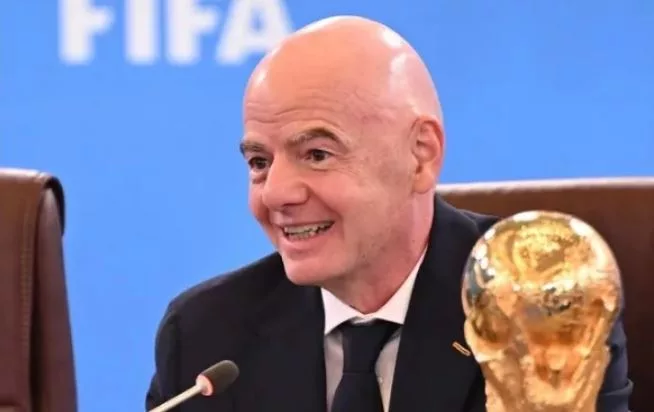
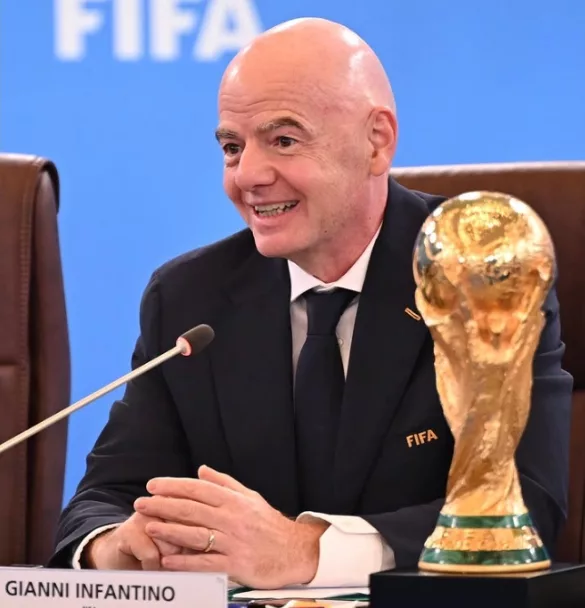 FIFA president Gianni Infantino/COURTESY