A video circulating on social media has sparked debate about
police powers at night and the rights of citizens.
The footage shows youths playing pool inside an establishment before appearing unsettled and
attempting to flee.
Moments later, police officers entered the venue, ordering
some of the young men to lie on the floor while others were instructed to raise
their hands.
Several officers were seen using sticks in what appeared to
be a disciplinary action.
It remains unclear what prompted the intervention in this
particular case; however, the Independent Policing Oversight Authority (IPOA) has launched an investigation into the incident.
A section of leaders led by Embakasi East Babu Owino and Nandi
Senator Samson Cherargei condemned the incident, calling for the immediate
arrest and prosecution of officers involved.
The video has raised questions among leaders and ordinary
Kenyans: Can police arrest you for being outside late at night, and what does
the law say?
In Kenya, there is no national law that sets a “sleeping
time” or requires citizens to be indoors or at their homes at a specific hour.
The Constitution guarantees every person the right to
freedom and security of the person under Article 29, which protects individuals
from arbitrary arrest or detention.
Being outside late at night, in itself, is not a crime.
Citizens are generally free to move in public spaces regardless of the time of
day.
However, there are exceptions where movement may be
restricted.
The government can legally impose curfews or restrictions
under specific circumstances, such as during a state of emergency, in security-disturbed
areas, or in the interest of public health.
During the COVID-19 pandemic, Kenya implemented nationwide
curfews under the Public Health Act.
“Whenever any part of Kenya appears to be threatened by any
formidable epidemic, endemic or infectious disease, the Minister may make rules,
and may by order declare all or any of the rules so made to be in force within
any area specified in the order, and such area shall be deemed an infected
area, and to apply to any vessels, whether on inland waters or on arms or parts
of the sea within the territorial jurisdiction of Kenya,” article 36 of public
health act cap 242 states.
These legally mandated restrictions prohibited movement in
public spaces between specific hours, and violations could attract arrest.
Outside such circumstances, night-time presence in public is
lawful.
Localised curfews can also be imposed in areas designated as
security-sensitive.
In December 2025, the Deputy Inspector General of Police, Eliud
Lagat, and his Administration Police counterpart, Gilbert Masengeli, declared
several parts of Trans Mara South as security-disturbed and dangerous.
The areas include Oldonyo-Orok, Siteti, Ololoma, Corner,
Ratiki, Isokon, Kerinkani, Kondamet, Olkiloriti, Angata Barakoi, Kapkeres,
Lolgorian town, Mashangwa, and Sachangwan.
The designation followed tribal clashes that resulted in the
burning of more than 120 houses and the displacement of numerous families.
In these areas, a curfew was legally initiated, restricting
movement to protect lives and property.
“The Cabinet Secretary, on the advice of the
Inspector-General of Police, may issue a curfew order directing persons within
a specified area and time to remain indoors, unless permitted in writing under
the terms of the order,” states section 8 of the Public Order Act.
Individuals found outside the prescribed hours without valid
reasons could be lawfully detained.
Police may sometimes ask for identification at night.
Under the National Police Service Act, officers can request
information to verify a person’s identity, investigate a complaint, or prevent
potential crime.
The Act allows a police officer to stop, search, or demand
information only where there is reasonable suspicion that a person has
committed or is about to commit an offence.
In areas with heightened security concerns, officers may
exercise this power more frequently.
However, Kenyan law does not require citizens to carry
identification at all times, and declining to produce an ID under ordinary
circumstances is not an offence.
Officers must have a reasonable basis for requesting
identification and cannot use it as a pretext for harassment or arbitrary
detention.
Arrests at night are lawful only under specific conditions.
These include violation of a legally declared curfew,
suspicion of criminal activity, or other reasonable grounds to believe that a
person is engaged in unlawful conduct.
Arbitrary arrests for merely being outside at night would
contravene Article 29 of the Constitution, which protects individuals against
unlawful detention and ensures their right to due process.
"Every person has the right to freedom and security of the person, which includes the right not to be deprived of freedom arbitrarily or without just cause," article 29 states.
Courts in Kenya have consistently ruled that arrests must be
grounded in objective and reasonable suspicion; being in public spaces at
night, by itself, is insufficient justification.
Historical instances illustrate the legal basis for curfews.
During the COVID-19 pandemic, nationwide curfews restricted
public movement during late hours.
Law enforcement agencies were legally empowered to arrest
violators because the curfews were officially gazetted under emergency powers.
Similarly, the December 2025 curfew in Trans Mara South was
a temporary, localised measure in response to a security threat.
Enforcement in such contexts is lawful, and officers may
detain individuals found violating the restrictions to maintain order and
protect communities.
In ordinary circumstances, however, being in public at night
is not illegal, and police do not have the authority to arrest citizens solely
for their presence outside.
Without evidence of a crime, curfew violation, or legitimate
security concern, detaining individuals purely for being outside at night would
violate constitutional protections.
The situation illustrates a broader need for public
understanding of the limits of police authority and the rights of citizens.
Kenyan law emphasises that citizens have rights even during
police encounters.
Officers are required to treat individuals with dignity,
explain the reason for any detention, and ensure release within 24 hours or
presentation in court, according to articles 28 and 49 of the constitution.
Arbitrary nighttime arrests, unless backed by legal curfew
regulations or reasonable suspicion of crime, may expose officers to legal
challenges for violation of constitutional rights.
In conclusion, there is no legal mandate for a “sleeping
time” or curfew nationwide in Kenya.
Exceptions exist only when curfews or movement restrictions
are officially declared due to security threats, public disturbances, or public
health emergencies.
Police may request identification or investigate potential
criminal activity, but arbitrary detention for merely being outside at night is
illegal.
Outside these situations, citizens are free to move about at
night, protected by the Constitution, which guarantees freedom from arbitrary
arrest and detention.

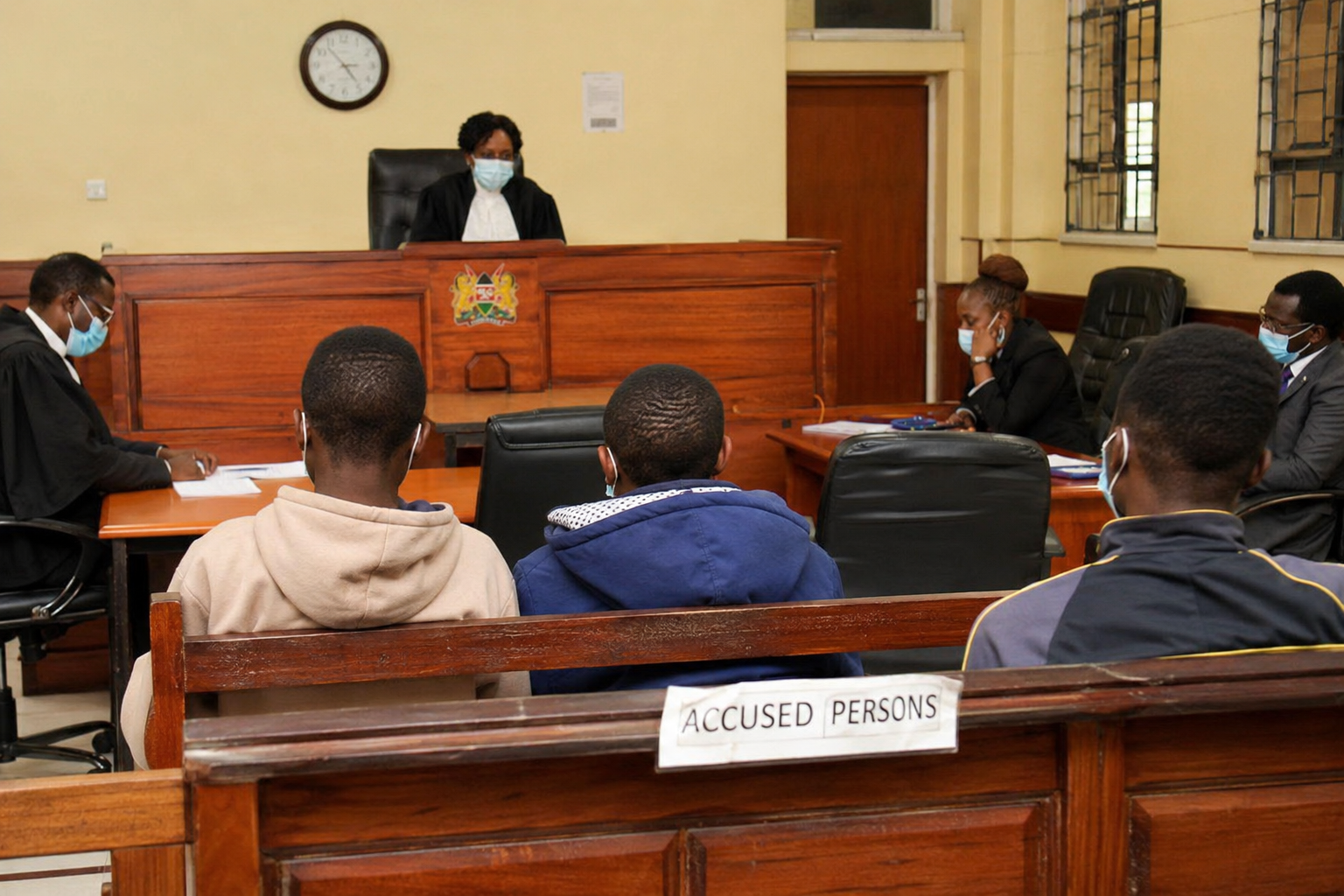
 Arrest illustration














![[PHOTOS] Red carpet in Pretoria as Ruto begins South Africa visit](https://cdn.radioafrica.digital/image/2026/06/abe3e750-6e5a-4394-a45c-899768be6240.jpeg)