


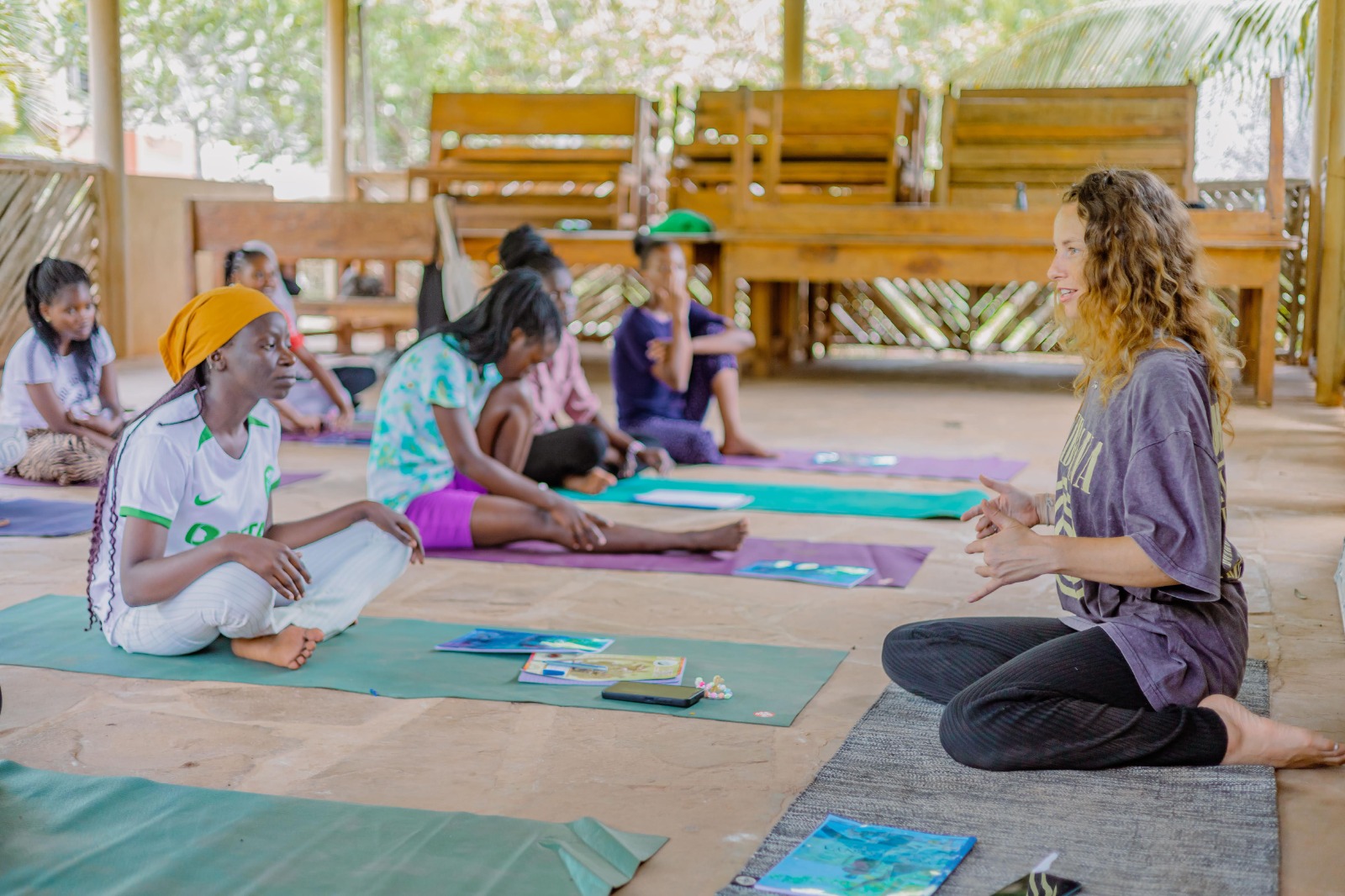
 Yoga session/ HANDOUT
From the heart of Brussels to health colleges on Kenya’s coast, one yoga teacher is trying to prove that inner peace can be measured with digital precision.
In the high-pressure world of healthcare training, where stress and burnout are increasingly common, Belgium-born yoga instructor Ann Schreppers is combining breathing exercises with digital surveys to track students’ emotional well-being.
Through mobile-based SMS and WhatsApp questionnaires, Schreppers is measuring whether yoga can improve resilience, emotional regulation and mental well-being among students in Kenya’s health colleges.
Since founding her project in 2019, Schreppers has turned yoga mats into data points. Using mobile surveys to track the mental well-being of health college students, she is bridging the gap between traditional wellness practices and measurable academic and personal outcomes.
With more than 10 years of teaching experience worldwide, she hopes to scientifically back the power of yoga as a tool for youth empowerment in the field of public health.
Mental health is increasingly recognised as a major public health concern, particularly among young people navigating academic pressure and uncertainty.
Schreppers believes yoga offers a practical intervention for chronic stress by cultivating mind-body awareness and emotional regulation.
By encouraging breathing techniques, mindfulness and self-reflection, she says yoga can help prevent burnout and promote a more proactive, prevention-first approach to healthcare.
To support the project, Schreppers uses survey tools developed by Swiss-based platform Impaxio to follow up on students’ experiences and compare responses between participants and control groups.
She says the digital system has significantly reduced the time previously spent printing, distributing and manually analysing questionnaires.
“Now I just collect the contact numbers and set up the survey once. Everything happens automatically, and we get all the data, which makes it really easy to compare the practice group and the control group,” she said.
Eventually, Schreppers hopes to expand the project into a larger scientific study examining yoga’s impact on resilience and emotional intelligence among young people.
She noted that while the project initially relied heavily on SMS surveys, WhatsApp is increasingly becoming the preferred platform as more students gain access to smartphones.
“Actually, we relied more on SMS before, but we’ve recently shifted towards WhatsApp. It really depends on what the students have available,” she said.
Her interest in yoga stemmed from personal struggles with health issues during her university years. Low self-esteem and perfectionism led her to develop hypertension and stomach ulcers caused by chronic stress and anxiety.
“I was emotionally unstable,” she recalled.
She says yoga helped her regulate her emotions, build resilience, and strengthen both her body and mind through breathing techniques, meditation and self-reflection.
It was this experience that pushed Schreppers to seek a healthier and more balanced perspective on life, something she eventually found through yoga during a leadership internship in Indonesia in 2014.
“Yoga came on my path during a leadership internship in Indonesia. I am now sharing with the youth what I wish someone had shared with me when I was struggling,” she said.
“It is not aimed at replacing traditional therapy, but it can complement it and reach more people because sessions can be done in groups while still creating personal impact.”
Schreppers has since accumulated more than 1,500 hours of yoga training and over a decade of teaching experience across different countries.
Her background in public policy, with a focus on sub-Saharan Africa, eventually led her to 4Kenya Trust, an umbrella organisation of the Kenya School for Integrated Medicine based in Kwale County.
“In Kenya, I have also done short programmes in communities and offered sessions to NGOs,” she said. About 10 per cent of college students in Kwale have enrolled in her yoga classes, which are offered through an intensive 10-day programme.
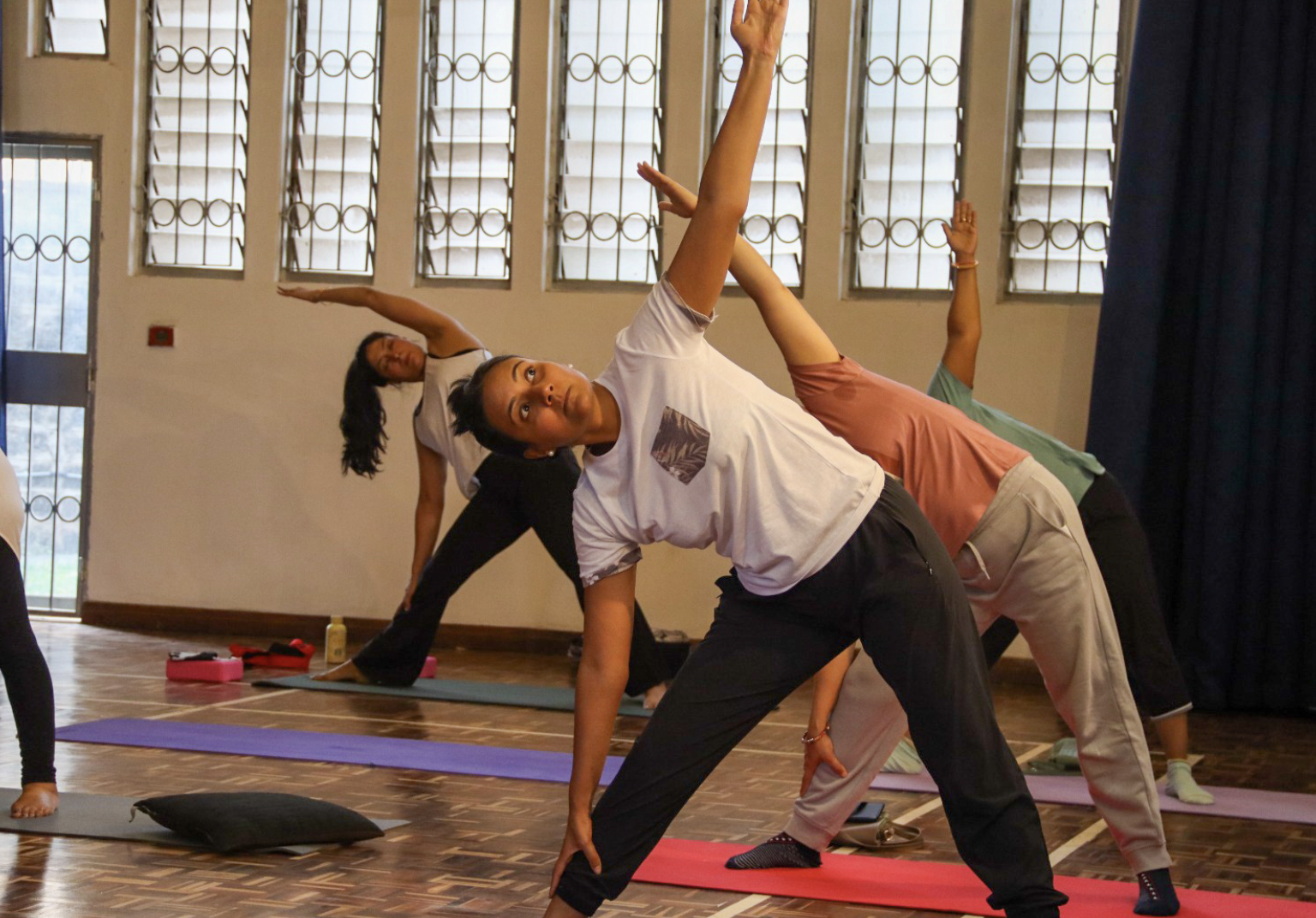
Students aged between 18 and 30 practise yoga techniques for one hour daily alongside seminars focused on stress management and emotional well-being. Jennifer Joseph, 29, one of the students, praised the survey system for improving communication between participants and instructors.
“It has made it easy to interact with our yoga tutor and share our feedback,” she said.
Through the seminars, students learn techniques involving posture, breathing and stress release, helping them develop confidence, courage and self-awareness.
Schreppers says this reflects the principle of neuroplasticity and embodiment — the idea that people can gradually reshape behavioural and emotional patterns through consistent practice and awareness.
“This is my biggest passion,” said Schreppers, who also has a background in ballet. The Yoga4Kenya project is now expanding to involve universities under a broader initiative known as “The Conscious Curriculum – Embodied Education.”
As the project grows, Schreppers believes the digital survey system will help support future research and data collection on student well-being.
Even so, she acknowledges the limitations of self-reported surveys, noting that human error and subjective responses remain challenges in this kind of research. Still, she believes the findings offer an important starting point in measuring resilience and emotional well-being among students.
While the surveys may not capture every nuance of mental health, Schreppers believes they are helping provide insight into how students cope with stress, uncertainty and burnout.










![[PHOTOS] Red carpet in Pretoria as Ruto begins South Africa visit](https://cdn.radioafrica.digital/image/2026/06/abe3e750-6e5a-4394-a45c-899768be6240.jpeg)