

![[PHOTOS] Ruto hails progress at Bomas Convention Complex](https://cdn.radioafrica.digital/image/2026/02/f7615a52-9d20-4fef-8624-3cad0f29fdae.jpg)
The completion of the Bomas international convention facility has been delayed largely due to adverse weather conditions that disrupted construction works at critical stages of the project, acting CEO Jimmy Okidiang has said.
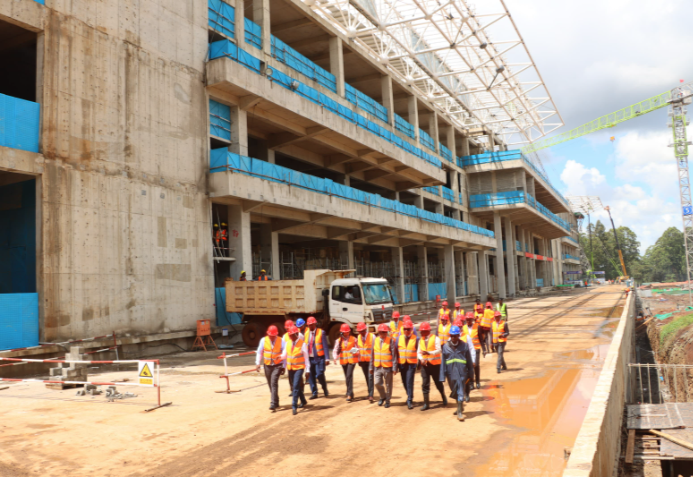
Okidiang explained that the facility, which was initially expected to be ready earlier to host major international events, including the France-Africa Summit, suffered setbacks caused by prolonged rains that affected excavation and foundation works.
“We targeted to have the France-Africa Summit within the convention. However, there are other factors that derailed this, and largely it is the weather,” said Okidiang.
“We have had a lot of rain that interfered with the ongoing activities. The rains that affected this at the inception level way back in May, June, and August last year affected the excavation works of the centre and, as such, derailed the timeline.”
He noted that the disruptions significantly slowed progress during the early phases of construction, forcing contractors to adjust schedules and redesign portions of the work plan.
However, he assured that a recovery programme has since been put in place to accelerate completion of the remaining works.
“There has been a programme that has been established to catch up on the activities that were supposed to be done, so that we have the complex completed by September 30,” he added.
President William Ruto had initially announced that the facility would be ready by May this year to host the summit.
Okidiang expressed confidence that despite the delays, the project remains on track for the revised completion date, noting that intensified works are currently ongoing at the site to ensure all outstanding components are finalised within the set timeline.
Once completed, the facility is expected to significantly boost Kenya’s conferencing capacity and position Nairobi as a competitive destination for regional and international meetings, incentives, conferences and exhibitions (MICE).
Okidiang said the ripple effects of the development will go beyond conferencing, with expectations of increased tourist arrivals as delegates extend their stays to visit key attractions across the country.
“In 2028, the Ministry of Tourism, through the leadership of Cabinet Secretary Rebecca Miano, has been communicating to the larger public that the ministry is targeting 5 million tourists by 2028,” he said.
“This will be driven by converting those delegates who are coming for conferencing into tourists.”
He added that the government is working on integrated tourism packages that will encourage conference delegates to visit Kenya Wildlife Service (KWS) parks, national museums, orphanages, and other attraction centres as part of a structured experience beyond business events.
“They will have a one-stop shop at KWS and move to other national parks, orphanages and other tourist attraction centres,” he said.
Okidiang also pointed to growing interest in Kenya’s conferencing sector, noting that meetings, incentives, conferences and exhibitions (MICE) tourism has been steadily increasing in recent years.
He said current estimates show that MICE tourism contributes between 9-12 per cent of total tourist arrivals, a figure expected to rise once the new facility becomes fully operational.
“There was research that established that in recent days we have had an impact of MICE, with tourist arrivals for conferencing ranging from 9-12 per cent,” he said.
“With the development of this particular facility, the Premier Centre, we are targeting to increase from 12-20 per cent due to the number of delegates who will be coming to have events at the convention centre.”
He emphasised that the upgraded infrastructure will not only attract large-scale international conferences but also strengthen Kenya’s competitiveness in the global events market, creating more opportunities for hospitality, transport, and tourism-related sectors.
The government now says all eyes are on September 30, when the facility is expected to be officially completed and handed over for use.
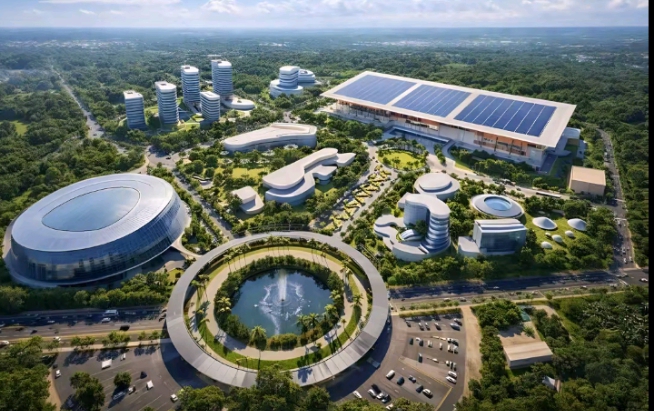
With more than 3,000 workers currently on site, construction is progressing rapidly toward delivery of what is expected to become one of the largest and most advanced convention facilities in East and Central Africa.
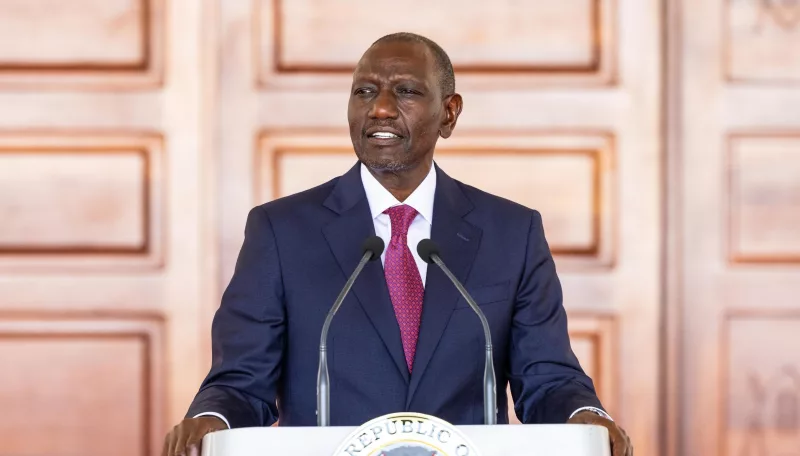
President Ruto described the project as a strategic national investment aimed at strengthening Kenya’s global competitiveness and unlocking new economic opportunities.
“The Bomas International Convention Complex will position Nairobi as a premier global conferencing destination and enhance our country’s ability to host major international events,” the President said.
At the heart of the complex is a flagship 11,000-seat main hall, supported by multiple specialised spaces equipped with modern technology, flexible layouts and simultaneous interpretation systems to accommodate international gatherings.
The BICC has been designed around five key functional areas: the auditorium, convention hall, presidential meeting area, ballroom and ordinary meeting spaces.
The integrated design allows the facility to host multiple large-scale events simultaneously.
The auditorium is built to accommodate high-end conventions and major gatherings.
In conference mode, it can host up to 3,500 delegates, while its performance configuration accommodates 3,200 people for concerts, cultural shows and entertainment events.
One of the complex’s most versatile spaces is the convention hall, which can be used for conferences, exhibitions and banquets.
Using movable partitions, the hall can be divided into six separate sections, allowing several events to take place at once.
It accommodates up to 5,000 participants in conference mode and 2,600 guests in banquet setup.
The hall also provides 4,600 square metres of exhibition space, all supported by simultaneous interpretation systems for international audiences.
A key highlight of the new complex is the presidential meeting area, designed specifically for high-level diplomatic engagements and global summits.
The section includes a large round-table hall with 32 speaker seats and 192 accompanying seats, as well as a medium round-table hall with eight speaker seats and 48 accompanying seats.
A press conference room with a capacity of 120 people will support media coverage of major events.
To facilitate bilateral negotiations and virtual participation, the area also features two video conferencing rooms and nine dedicated meeting rooms.
All spaces are equipped with advanced interpretation systems to support multilingual discussions.
Officials say the presidential facilities will strengthen Kenya’s ability to host international summits, regional negotiations and high-level government meetings.
Kenya is set to make history as the first non-Francophone African nation to host the Africa-France Summit in May.
For state functions and large social events, the complex includes a grand ballroom capable of hosting up to 1,500 guests.
The space features a stage that meets the standards required for state banquets, official ceremonies and high-profile corporate events.
Complementing the large venues is the ordinary meeting area, which will house more than 20 meeting rooms of varying sizes.
These rooms are designed to support daily conferences, workshops, corporate sessions and press briefings, making the facility suitable for both major international gatherings and routine business events.
The multi-level design ensures flexibility, allowing organisers to tailor spaces to specific needs while running multiple activities simultaneously.