Raila's traditional bases feel the strain as ODM top leadership focuses on Nyanza
Concerns grow as party honchos leave Raila’s traditional support bases with no visible activities.
by LUKE AWICH
Audio By Vocalize
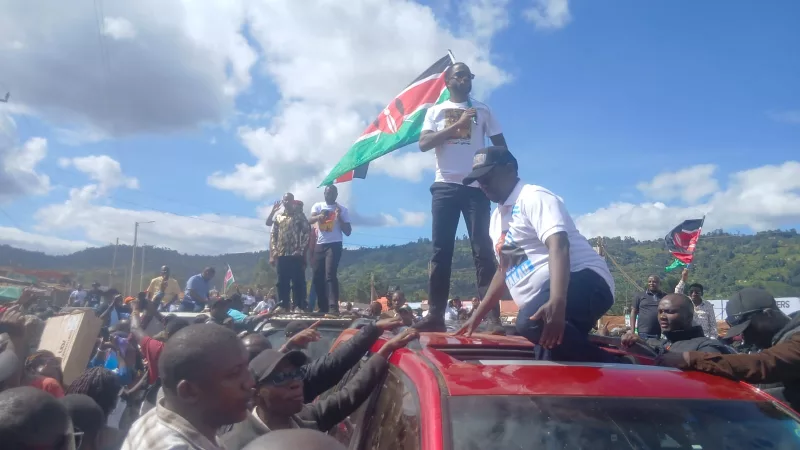
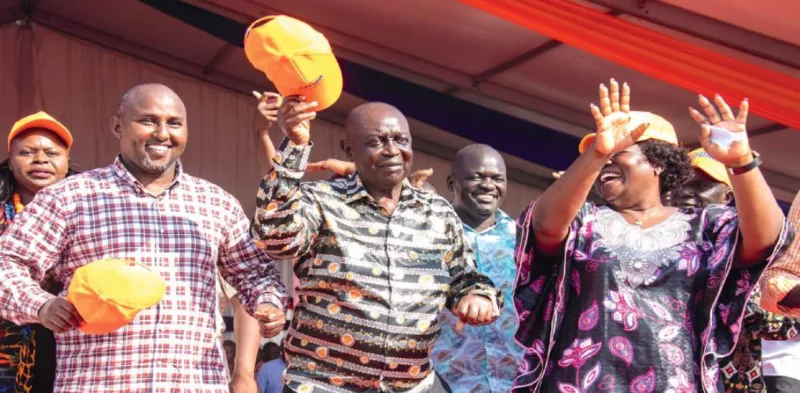
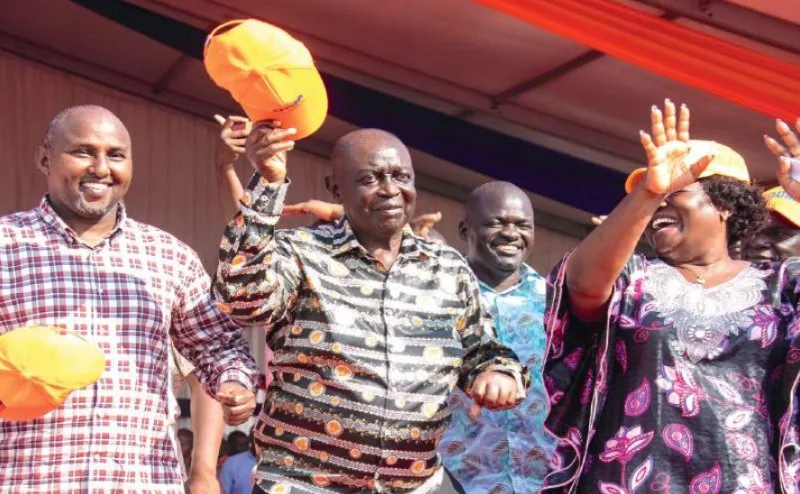
Suna East MP Junet Mohamed, ODM leader Oburu Oginga and party chairperson Gladys Wanga during a women’s empowerment event in Nyando, Kisumu County. /EMMANUEL WANSON
ODM is increasingly facing questions
over whether it is inadvertently weakening the national political network
painstakingly built by its late leader Raila Odinga.
The concerns stem from what party
insiders describe as the leadership's growing concentration of political
activities in its traditional Nyanza stronghold.
This has left some of Raila's
long-standing support bases with no visible party activities.
Over the past weeks, ODM's
senior officials, led by party leader Oburu Oginga and National chairperson
Gladys Wanga, have embarked on a series of political events branded as women
empowerment drives across the four Luo Nyanza counties of Kisumu, Siaya, Homa
Bay and Migori.
The programmes have attracted huge
crowds and reinforced ODM's grip on its political backyard. However, they have
also triggered unease among leaders from regions that historically backed Raila
and the party beyond Nyanza.
The frustrations came to the fore
last week when Mandera West parliamentary hopeful Harun Isaack Hassan
publicly challenged Wanga over what he described as the neglect of North
Eastern region.
He argued that the region had stood
firmly with ODM during difficult political moments and deserved equal attention
as the party charts its future.
"Please consider coming to
Mandera. This is one area that has stood with Raila. You have huge
support in the region. Don't abandon this particular Raila base," Hassan told Wanga during the launch of the People's Bench podcast hosted
by journalist Fred Ogweno.
His remarks reflected growing
anxiety among ODM supporters outside Nyanza, many of whom fear the party could
gradually retreat into a regional outfit unless deliberate efforts are made to
preserve its national appeal.
As if taking the challenge, Wanga on
Thursday took party’s engagement to Narok where she urged party supporters to
remain in the outfit, saying they will also carry the blame if the party ‘dies’
“All of you donning the orange cap,
you will explain where you were and what you did when the party was dying,” she
said.
With new political formations
aggressively courting ODM supporters at the Coast, in North Eastern, Western
and Nairobi, the party faces mounting pressure to reassure its traditional
support bases that they remain central to its future.
Political observers say that while
consolidating the party's heartland is understandable in the post-Raila
transition, an extended focus on one region risks alienating supporters who
played a pivotal role in transforming ODM into a national political force.
For nearly two decades, Raila
personally nurtured party structures in Coast, North Eastern, Nairobi, Western
and parts of the Rift Valley, ensuring ODM remained a formidable national
outfit despite intense political competition.
His frequent tours and direct
engagement with grassroots leaders cultivated deep loyalty that consistently
translated into electoral support.
Since the change in leadership,
however, officials from some of these regions have complained of dwindling
engagement, saying national leaders rarely visit or involve them in major party
programmes.
Former Kwale Woman Representative
Hassan Zuleikha acknowledged the concerns but urged members to appreciate the
difficult circumstances facing the party.
She defended the leadership's recent
focus on Nyanza, saying it also had a responsibility to consolidate support in
ODM's traditional stronghold.
"It is very difficult for
anyone in the party to fill the shoes of Raila. He united Kenyans from
different parts of the country. He was unique in his own way," Zuleikha
told the Star.
"People are trying to put the
party in order, while at the same time the leaders are trying to secure their
own political future ahead of 2027. It is a delicate balance."
"I am not surprised that
everybody is going back home to make sure their backyard is secure. I
sympathise with them. I don't want to blame them."
Vihiga Senator Godfrey Osotsi has,
however, warned that ODM risks losing its national identity if the trend
continues.
"My party ODM is bleeding. My
party has lost its way. It has now descended into a tribal club," Osotsi
said on Thursday. "This is not what Raila stood
for."
In April, Cooperatives Cabinet
Secretary Wycliffe Oparanya also warned that Western Kenya could reconsider its
relationship with ODM over what he termed the unfair treatment of the region.
Oparanya said Western had remained
loyal to Raila for years but was increasingly being sidelined as Nyanza
dominates the party's affairs.
"The support we have given Raila
should not be taken for granted. They must assure us what is in it for the
people of Western in ODM. If they continue ignoring us, we will tell them
goodbye," Oparanya said in a video shared in April.
"They have even forgotten some
of us who were close to Raila. They seem not to know that people from Western
also want a share of leadership."
Political analysts argue that ODM's
biggest challenge is balancing two competing priorities.
On one hand, the party must reassure
supporters in Nyanza that the leadership transition has not weakened the
movement. On the other, it must preserve the broad coalition that Raila
painstakingly assembled by maintaining a visible presence in regions that
contributed significantly to ODM's electoral success.
University don Prof. Gitile Naituli
said the current leadership risks reducing ODM into a regional outfit.
"ODM under Oburu and his team
is a shell. The real supporters of Raila Odinga moved with the likes of Edwin
Sifuna, James Orengo and Babu Owino to the Linda Mwananchi movement. What
remains in the party is only a shell," he told the Star.
INSTANT ANALYSIS
While the women empowerment drives
have been praised by supporters as an effective grassroots mobilisation
strategy, critics argue that similar programmes should be rolled out across the
country if ODM is to retain the national footprint that Raila painstakingly
built ahead of the 2027 General Election.
This is premium content
Subscribe to Continue Reading
Help us continue bringing you unbiased news, in-depth investigations, and diverse perspectives. Your subscription keeps our mission alive and empowers us to provide high-quality, trustworthy journalism. Join us today to make a difference!

 Suna East MP Junet Mohamed, ODM leader Oburu Oginga and party chairperson Gladys Wanga during a women’s empowerment event in Nyando, Kisumu County. /EMMANUEL WANSON